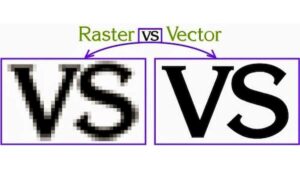
Raster Image Formats

It adds many 3D CAD file formats for storing and transmitting data. CAD file formats are classified in terms of two distinct forms. It offers bitmap or raster format and the vector format. The distinction clarifies the two formats by pointing out the critical difference between them.

The raster format adds images in terms of pixels. On a display monitor, the pixels work as dots that carry colour attributes and levels of intensity in RGB. Raster graphics are suitable for photographic images adding resolution-dependent. One does not need to scale higher resolutions without loss of quality. It uses an image that is grainier by adding image details. The vector format represents images as lines, points, curves and polygons on an algebraic grid. The primitives are utilised to create vector-based images. It scales up to any resolution without loss in quality.

Raster Image Formats in CAD

The essential difference between raster and vector-based images covers raster images when scaled higher than the resolution we create. On the other hand, vector images are scaled up or down without any loss in image quality:

  • Popular raster-based formats include JPEG, PNG, BMP, and TIFF.
  • Popular vector-based formats add EPS, PDFor AI, SVG (Scalable Vector Graphics), WMF (Windows Metafile Format), DXF (Drawing Exchange Format), DRW, and DWG formats.
  • Compound formats come with EPS, PDF, SWF, and PICT and contain pixel and vector-based data.

Raster Image Formats in CAD

It determines whether the raster image format disappears from CAD file systems. This article answers all specific questions:

  • How popular is vector format based on leading CAD vendors?
  • Which CAD file formats come with 3D printing technology?
  • Is any particular CAD file format suited for CAD data exchange?
  • Why raster format remains an essential part of CAD file systems?

How popular is vector format among leading CAD vendors?

It offers modern CAD software packages storing design and drawing information in vector format. To confirm this observation, it’s worthwhile to look at CAD formats that lead to CAD vendors, such like:

  • AutoDesk is used as its native file format, supporting DWG, DXF and more.
  • AutoCADuses the DWG and DXF vector formats.

SolidWorks mainly uses a structured format in which different file formats are embedded. The design data are stored in the DXF vector-based formats covering AI, GCR, and STL. It keeps in a structured layout. The structured format also holds raster formatted images.

Many software applications can convert images between the raster and vector formats. It adds significant images that convert CorelDRAW, Easy Trace, WiseImage, Freehand, VP Software, and others. It leads to CAD vendors that convert between raster and vector file formats. 

Which CAD file formats are most famous for 3D printing technology?

The format used for 3D printing comes with STL (STereoLithography) format. We aren’t sure whether any CAD file format is most suitable for 3D printing. It leads to 3D companies, including Stratasys and 3D Systems, that convert automatically into recognisable CAD files. Further, CAD vendors export their files into STL, including Catia, Autodesk Inventor, SolidWorks, SolidEdge and ProEngineer.

Is there any particular CAD file format best suited for CAD data exchange?

There is no answer to this question. The CAD file exchange software will have the ability to convert between raster and vector formats. The reason requirement comes with a modern CAD file system. It moves towards a structured file format that works better in which both raster and vector file formats are embedded. The contemporary CAD files contain more drawings and design information. It makes sense to come with different file formats stored within a structure adding minimal information lost during file transmissions.

An excellent example is integrating different data types into a CAD file offered by BIM (Building Information Modelling). BIM helps incorporate activities for parties and disciplines involved in a building project. It comes with a synergistic body that exchanges different information types. With other teams working together on a project, it needs to use different file formats that add information exchange.

Also, the Raster formats need visual displays, virtualisation and animation. It’s vector formats that use design drawings which is scalable. BIM offers a valuable extension on the CAD file format that’s not recognised as a CAD file format. The complexities integrate CAD file formats adding necessary coin a different acronym for a unified file format that does not primarily contain CAD information.

The answer to the question “Is any CAD file format best suited for CAD data exchange?” is no, with qualifications. If the CAD data is exchanged strictly in design drawings, the vector format is best suited for the data exchange. It comes with scalability and without loss of data information. The CAD data is exchanged strictly in pictorial views or animation. Then the raster format, created with a high enough resolution, works best suited for the data exchange. 

Why would the raster format remain an essential part of CAD file systems?

Although raster images not scale up without losing data, they are indispensable for conveying pictorial information and producing animations. The current trend helps store CAD data that leans toward structured file format in which different file formats embed. As each primary CAD format has its right, the raster format undoubtedly remains an essential part of CAD file systems.

What is a raster image in CAD?

Raster and vector are two different approaches used in computer-aided design (CAD), each with its own advantages and applications:u003cbru003eu003cstrongu003eRaster CAD:u003c/strongu003eu003cbru003eRaster CAD works with images composed of a grid of pixels, similar to photographs or scanned images.u003cbru003eIt is primarily used for creating and editing images that are based on pixels, such as photographs or digital paintings.u003cbru003eRaster CAD software typically includes tools for editing individual pixels, applying filters, and working with layers.u003cbru003eCommon file formats for raster CAD include JPEG, PNG, TIFF, and BMP.u003cbru003eu003cstrongu003eVector CAD:u003c/strongu003eu003cbru003eVector CAD works with mathematical equations to define shapes and lines, rather than pixels.u003cbru003eIt is used for creating precise drawings and designs that can be scaled to any size without losing quality.u003cbru003eVector CAD software allows users to create and edit shapes using points, lines, curves, and other geometric primitives.u003cbru003eCommon file formats for vector CAD include SVG, DXF, DWG, and AI.

What is a raster image?

A raster image, also known as a bitmap image, is a type of digital image composed of a grid of individual pixels (picture elements). Each pixel contains specific color information, and when arranged together in a grid, they form the visual representation of an image. Raster images are commonly used for photographs, digital artwork, and any other type of image that requires complex color and shading variations.u003cbru003eKey characteristics of raster images include:u003cbru003eu003cstrongu003ePixel-Based:u003c/strongu003e Raster images are composed of pixels, each with its own color value. The resolution of a raster image determines the number of pixels it contains, which in turn affects the image quality and detail.u003cbru003eu003cstrongu003eResolution Dependent:u003c/strongu003e Raster images have a fixed resolution, meaning they have a specific number of pixels per inch (PPI) or dots per inch (DPI). Changing the size of a raster image can result in a loss of quality if the resolution is insufficient.u003cbru003eu003cstrongu003eFile Formats:u003c/strongu003e Common file formats for raster images include JPEG, PNG, TIFF, GIF, and BMP. Each format has its own compression methods and features, suitable for different types of images and purposes.u003cbru003eu003cstrongu003eEditing:u003c/strongu003e Raster images are edited using image editing software like Adobe Photoshop, GIMP, or Paint.NET. Editing operations include adjusting colors, adding filters, cropping, and retouching.u003cbru003eu003cstrongu003eScalability:u003c/strongu003e Raster images are not inherently scalable without loss of quality. Enlarging a raster image beyond its original resolution can result in a loss of sharpness and detail, known as pixelation.
CS

Claire Sutton

Architectural CAD Specialist & Technical Writer · BArch (Hons), QUT · ASTCAD, Brisbane

Claire has 10 years of experience in Revit BIM modelling, architectural documentation, and CAD conversion projects across Southeast Queensland and NSW. She has delivered NCC-compliant documentation for residential, commercial, and industrial facilities.

More articles by Claire Sutton →
Design and drafting Services

The architect developed a stunning 3D printing models

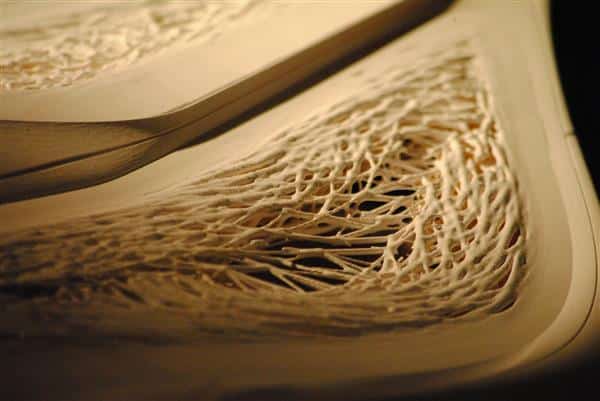
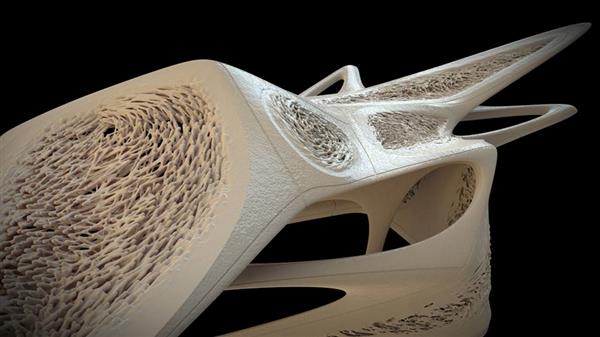
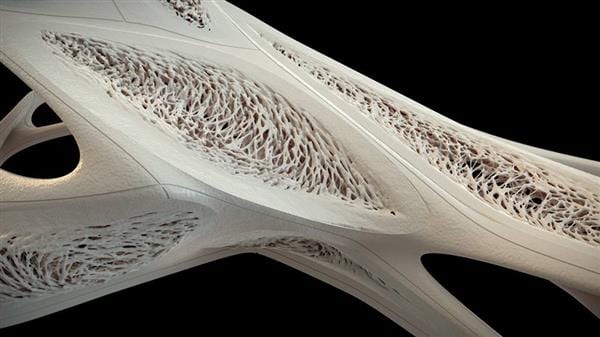
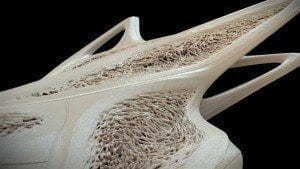
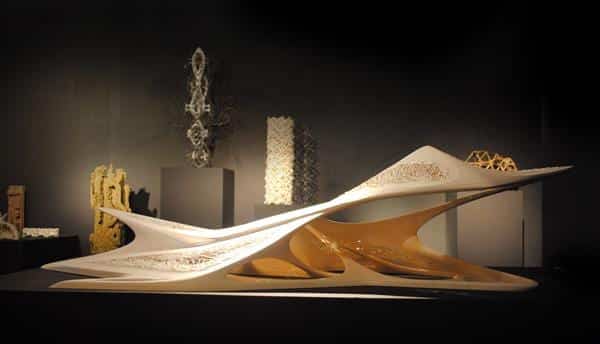
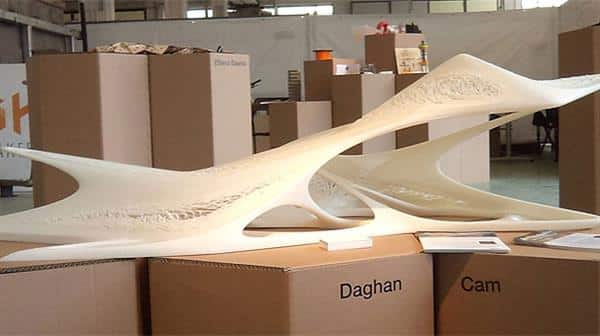
We have seen examples that prove that CAD design would be combined with 3D printing and produce fantastic artworks. It’s like a Turkish architect named Daghan Cam, and it depends on the software creation of art projects. It helps in computer simulation technology, primarily based on advanced algorithms. The robot creates an image processing training with a highly artistic 3D printed structure.

Architect developed a stunning 3D printing models

Daghan Cam is a pretty different architect. He founded his namesake architectural design company is based in London and Istanbul. At the University of London Bartlett School of Architecture faculty. Before this, he worked with famous architect Zaha Hadid, who worked and taught worldwide. In 2012, he receive an honorary Master of Architecture Degree with Distinction. Overall, Daghan Cam is a computational design, mechanical engineering and large-scale 3D printing specialist areas.

three dimensional design

From his architectural design, one can read keywords. One can see from the chart of the design model. It’s the essence design for futuristic and the Sydney Opera House. It is combined with the Milan Design Week to offer wide attention. Cam developed a GPU computing technology and algorithms combined to create fantastic and impressive models. The so-called GPU computing provides an app that calculates the part by heavy-handed GPU processing. It offers the remaining program in the CPU that is on the method. The method achieves unprecedented application performance.

The 3D printing effects comes with its unique programming through image processing robots. The team spent several years using a CUDA parallel programming model using NVIDIA GPU coded to develop these robots.

three dimensional design

Specifically, Cam design week offers an architectural model that use Quadro K6000 graphics and Tesla K40 GPU accelerators to support low accomplished superior computing power. The devices make the algorithm more sufficient to support such a gorgeous 3D shape creation. The Boston Corporation and Belgium 3D print vendors Materialize use the world’s largest stereolithography 3D printer. It prints the overall model time. You might ask that it’s a modern aesthetic that has become an actual building? As a senior architect, the answer is that it uses the least number of materials to reduce construction costs and add structural integrity.

three dimensional design
3d printing models

After the great success of Milan, the Bartlett School of Architecture supports the application of technology to its wider range of projects. The large-scale 3D print manufacturing technology and robotics optimize deep learning algorithms for real-time image processing and robotics.

3d printing models

You need to develop a robot construction technology to effectively build these structures with its own decisions. Some of them still rely on NVIDIA cuDNN and its deep neural network library. Industrial manufacturing robots are mainly used for training.

Finally, Cam explains: “It’s just a prototype or artwork that can be used in the construction industry. It aims to explore the creative fidelity conversion process from intention-to information processing.” It is used as 3D printing innovation to use in the construction industry.

What is a 3D printing model?

A 3D printing model, also known as a digital model or a 3D model, is a virtual representation of a physical object created using computer-aided design (CAD) software or acquired through 3D scanning techniques. These models are typically stored in digital file formats such as STL (stereolithography) or OBJ (object) files.u003cbru003eu003cbru003eThe 3D printing model contains all the necessary geometric information required to produce the object layer by layer using a 3D printer. This information includes the shape, dimensions, and often intricate details of the object.u003cbru003eOnce a 3D printing model is created or obtained, it can be sent to a 3D printer, which interprets the digital information and constructs the physical object by depositing or solidifying material layer by layer according to the specifications outlined in the model.

How do I print a 3D model?

Printing a 3D model involves several steps, but here’s a basic guide to get you started:u003cbru003eu003cstrongu003eChoose or Create a 3D Modelu003c/strongu003e: You can either design your own 3D model using CAD software like Tinkercad, Fusion 360, or Blender, or you can download a pre-made model from various online repositories like Thingiverse, MyMiniFactory, or GrabCAD.u003cbru003eu003cstrongu003ePrepare the Modelu003c/strongu003e: If necessary, use slicing software to prepare the model for printing. Slicing software takes the 3D model and generates the toolpath instructions (G-code) that the 3D printer needs to create the object layer by layer. Popular slicing software includes Cura, Slic3r, and PrusaSlicer.u003cbru003eu003cstrongu003eLoad the Model into Slicing Softwareu003c/strongu003e: Import your 3D model into the slicing software. Adjust settings such as layer height, infill density, and print speed according to your preferences and the capabilities of your printer.u003cbru003eu003cstrongu003eSlice the Modelu003c/strongu003e: Use the slicing software to generate the G-code instructions for your specific 3D printer. This process divides the model into layers and calculates the paths the printer’s nozzle or laser will follow to create each layer.u003cbru003eu003cstrongu003eTransfer G-code to Printeru003c/strongu003e: Save the sliced G-code file to an SD card or connect your computer directly to the 3D printer if it supports USB connectivity. Transfer the G-code file to the printer.u003cbru003eu003cstrongu003ePrepare the Printeru003c/strongu003e: Ensure that your 3D printer is properly calibrated, and the print bed is clean and level. Load the filament (or resin, in the case of resin printers) into the printer according to the manufacturer’s instructions.u003cbru003eu003cstrongu003eStart Printingu003c/strongu003e: Use the printer’s interface to select the G-code file you transferred earlier. Start the printing process, and the printer will begin creating your object layer by layer.u003cbru003eu003cstrongu003eMonitor the Printu003c/strongu003e: Keep an eye on the print throughout the process to ensure everything is proceeding smoothly. Address any issues that arise, such as filament jams or adhesion problems.u003cbru003eu003cstrongu003eRemove the Printu003c/strongu003e: Once the print is complete, carefully remove it from the print bed. Depending on the type of printer and material used, you may need to use tools like a scraper or spatula to assist in removing the object.u003cbru003eu003cstrongu003ePost-Processing (Optional)u003c/strongu003e: Depending on your preferences and the requirements of your print, you may need to perform post-processing tasks such as sanding, painting, or assembly to achieve the desired final result.


CS

Claire Sutton

Architectural CAD Specialist & Technical Writer · BArch (Hons), QUT · ASTCAD, Brisbane

Claire has 10 years of experience in Revit BIM modelling, architectural documentation, and CAD conversion projects across Southeast Queensland and NSW. She has delivered NCC-compliant documentation for residential, commercial, and industrial facilities.

More articles by Claire Sutton →
CAD Conversions

Different Kinds of CAD Conversion

To bring your product to life, you must convert your plans, diagrams, sketches and other files into CAD. Whether you plan on redesigning your home or are working for an engineering firm, using CAD will ensure a successful outcome. Instead of struggling with CAD conversion alone, you can outsource CAD services to an outsourcing service provider. You will not only save money and time but can also enhance your security for sensitive information.[/fusion_text][fusion_text]

CAD Conversions

Apart from these advantages, you can get access to different types of CAD conversion, such as the following:

1. Paper to CAD

Legacy files are difficult to convert into CAD because the input has to be done in specific ways. By opting for the paper-to-CAD conversion services, you can easily send your legacy sketches, hardcopy drawings, blueprints and other such documents to the service provider, who will convert these documents into the CAD format you desire.

2. Images to CAD

Do you need an image to be converted into CAD for your project? With image to CAD conversion, you can transform any image file (JPG, GIF, TIFF, BMP and PNG) into a varying number of CAD formats, be it AutoCAD and more. This saves both time and effort and can give you an accuracy level of 99.9%.

3. 2D to 3D

If you are a part of a design or construction project, you will know the importance of 2D drafts. Blueprints are in fact one of the most popular of these drafts. Very often the need will arise to create 2D documents into a 3D format and for that, you will need expert 2D to 3D CAD conversion services.

4. PDF to CAD

Almost every project requires extensive planning and note-taking. Very often, these are compiled into a PDF format which can be easily used and shared within a company. However, PDF files can be cumbersome and need to be converted into CAD. An expert service provider can convert any PDF (legacy drawings, computer-aided drawings and handwritten specifications) into CAD.

Before you finalize on a CAD service provider, ensure they offer the above four CAD services and other options. You will also need to check if the service provider can guarantee an accuracy of 99.9%. You will need to ask your service provider for data security and privacy.

Read more about the CAD conversion services offered by ASTCAD Design and drafting.

How do I convert a CAD file?

Converting a CAD (Computer-Aided Design) file typically involves exporting it to a different format. The specific method depends on the software you use and the formats you convert between. Here’s a general guide:u003cbru003eu003cstrongu003eOpen the CAD software:u003c/strongu003e Launch the CAD software where the file is located.u003cbru003eu003cstrongu003eOpen the file: u003c/strongu003eLoad the CAD file you want to convert into the software.u003cbru003eu003cstrongu003eExport or Save As:u003c/strongu003e Look for options like u0022Exportu0022 or u0022Save Asu0022 in the menu or toolbar. This is where you’ll find the conversion options.u003cbru003eu003cstrongu003eChoose the output format:u003c/strongu003e Select the format to which you want to convert the file. Common formats include DXF, DWG, STL, OBJ, STEP, IGES, etc.u003cbru003eu003cstrongu003eAdjust settings (if needed):u003c/strongu003e Depending on the software, you may have options to adjust settings such as units, scale, quality, etc. Make any necessary adjustments.u003cbru003eu003cstrongu003eExport the file:u003c/strongu003e Click on the export or save button to convert the file to the chosen format.u003cbru003eu003cstrongu003eVerify the conversion:u003c/strongu003e Once the conversion is complete, verify that the new file format suits your needs. Open it using the appropriate software to ensure everything looks as expected.u003cbru003eu003cstrongu003eSave the converted fileu003c/strongu003e: If everything looks good, save the converted file in the desired location.

How do I convert units in AutoCAD?

Converting units in AutoCAD is typically done using the u0022UNITSu0022 command. Here’s a step-by-step guide:u003cbru003eOpen your AutoCAD drawing.u003cbru003eType u0022UNITSu0022 in the command line and press Enter.u003cbru003eThe u0022Drawing Unitsu0022 dialog box will appear.u003cbru003eIn the u0022Lengthu0022 dropdown menu, select the desired unit you want to convert to (e.g., inches, feet, meters).u003cbru003eOptionally, you can adjust other settings like angle units, insertion scale, and scale objects in the drawing.u003cbru003eClick u0022OKu0022 to apply the changes.


CS

Claire Sutton

Architectural CAD Specialist & Technical Writer · BArch (Hons), QUT · ASTCAD, Brisbane

Claire has 10 years of experience in Revit BIM modelling, architectural documentation, and CAD conversion projects across Southeast Queensland and NSW. She has delivered NCC-compliant documentation for residential, commercial, and industrial facilities.

More articles by Claire Sutton →
SketchUp Services

If you have not yet used SketchUp for your business, then it’s time you used the software and reaped the benefits that it offers. With its accuracy of design and flexibility, builders, landscape designers, construction firms and the engineering industry, in general, have been able to effectively conceptualize, market and present their ideas. With the tool’s wide variety of visualizations, your company too can transform your imaginations into reality.[/fusion_text][fusion_text]Features of SketchUp

  • Easy to install and run, with a simple and uncluttered interface
  • Quick and easy modelling options
  • Rapid prototyping with 3D geometry abilities
  • Support from an active community
  • Comprehensive documentation
  • Wide range of colours and models to choose from
  • Options of pre-drawn components
  • Popular SketchUp modelling services

Cost Effective SketchUp Services

The SketchUp software can be used for a wide range of services, such as the following:

Through SketchUp, you can visualize real-life scenarios with the use of different options in colours, sizes and shapes. SketchUp services are extremely beneficial for architects, engineering firms, construction companies, builders, contractors, and landscape designers.

Benefits of SketchUp services

SketchUp has opened a whole range of design and modelling possibilities. However, if you and your team do not know how to use SketchUp, then learning and mastering the software can take up time and effort. This is where ASTCAD Design & Drafting comes in. Instead of trying to figure out the use of SketchUp on your own or hiring an expensive team of specialists, you now have the option of outsourcing SketchUp services to ASTCAD Design & Drafting. You will immediately get access to a dedicated team of professionals who have expertise in using SketchUp for designing and modelling. Outsourcing SketchUp can help your business leverage the following benefits:

1. Minimized cost

When you outsource to ASTCAD Design & Drafting, you can enjoy cost savings in terms of overhead cost and capital expenditure. You will also not have to make heavy investments in technology or infrastructure. Outsourcing can not only help you widen your profitability but can also help you minimize your cost by 60%.

2. Better resource optimization

Through outsourcing, you can free up your time and resources, while tapping into the expertise on SketchUp artists. Your management can focus completely on your core business activities like sales, marketing and productivity, without having to supervise the outsourced SketchUp services.

3. Fast turnaround time and consistent services

ASTCAD Design & Drafting teams have the capability to work on a 24/7 basis and complete your SketchUp assignments within your timeline and budget constraints. Since the ASTCAD Design & Drafting team will have experience in using SketchUp, they can ensure that all your projects are completed without any setbacks.

4. Access to superior SketchUp skills

SketchUp artists from ASTCAD Design & Drafting have expertise and skill in using all the features of SketchUp. They are also constantly provided with training in order to effectively meet the SketchUp requirements of customers. Outsourcing can give you access to a skilled team of designers who will ensure your project is a success.

Why not give your business a competitive edge by outsourcing SketchUp services? We, at ASTCAD Design & Drafting, will be glad to assist you with your requirements. Get in touch with us for SketchUp services.

What is SketchUp useful for?

SketchUp is a powerful 3D modeling software that’s particularly useful for a variety of design and visualization tasks. Here are some common uses:u003cbru003eu003cstrongu003eArchitectural Designu003c/strongu003e: Architects use SketchUp to create detailed models of buildings, houses, and other structures. It allows them to quickly draft designs, experiment with different concepts, and present their ideas to clients in a visually appealing way.u003cbru003eu003cstrongu003eInterior Designu003c/strongu003e: Interior designers use SketchUp to plan and visualize the layout of rooms, furniture placement, color schemes, and other elements of interior spaces. It helps them communicate their ideas to clients and collaborators.u003cbru003eu003cstrongu003eUrban Planningu003c/strongu003e: Urban planners use SketchUp to create 3D models of cities, neighborhoods, and urban landscapes. They can simulate proposed developments, assess the impact of new construction projects, and explore different urban design scenarios.u003cbru003eu003cstrongu003eProduct Designu003c/strongu003e: Industrial designers and product developers use SketchUp to create 3D models of products, prototypes, and components. It allows them to refine designs, test functionality, and visualize how products will look in real-world settings.u003cbru003eu003cstrongu003eLandscape Designu003c/strongu003e: Landscape architects and garden designers use SketchUp to design outdoor spaces, including gardens, parks, and recreational areas. They can create terrain models, plant layouts, and hardscape features to plan and present their designs.u003cbru003eu003cstrongu003eConstruction Planningu003c/strongu003e: Contractors and construction professionals use SketchUp to plan construction projects, coordinate workflows, and communicate with project stakeholders. It helps them visualize the construction process, identify potential conflicts, and optimize project schedules.u003cbru003eu003cstrongu003e3D Printingu003c/strongu003e: SketchUp supports 3D printing, allowing users to export models in various file formats compatible with 3D printers. This makes it useful for prototyping, creating custom objects, and producing physical models from digital designs.

Why SketchUp is the best?

While calling SketchUp the u0022bestu0022 is subjective and depends on individual needs and preferences, it’s certainly a popular and widely-used software with several standout features:u003cbru003eu003cstrongu003eUser-Friendly Interfaceu003c/strongu003e: SketchUp is known for its intuitive and user-friendly interface, making it accessible to beginners and professionals alike. Its simple tools and controls allow users to quickly create 3D models without a steep learning curve.u003cbru003eu003cstrongu003eVersatilityu003c/strongu003e: SketchUp can be used for a wide range of purposes, including architectural design, interior design, product design, urban planning, and more. Its versatility makes it suitable for various industries and applications.u003cbru003eu003cstrongu003ePowerful Modeling Toolsu003c/strongu003e: Despite its simplicity, SketchUp offers powerful modeling tools that allow users to create complex 3D geometry with ease. From basic shapes to intricate designs, SketchUp provides the tools needed to bring ideas to life.u003cbru003eu003cstrongu003eIntegration with Other Softwareu003c/strongu003e: SketchUp integrates seamlessly with other software and platforms, including Trimble Connect, LayOut, and 3D Warehouse. This interoperability allows users to streamline their workflow and collaborate more effectively with colleagues and clients.u003cbru003eu003cstrongu003eCommunity Supportu003c/strongu003e: SketchUp has a large and active community of users who share tips, tutorials, and resources online. This community support makes it easy for users to find help, learn new techniques, and connect with others in the SketchUp community.u003cbru003eu003cstrongu003eExtensions and Pluginsu003c/strongu003e: SketchUp supports a wide range of extensions and plugins that extend its functionality and capabilities. Whether you need advanced rendering, parametric modeling, or specialized tools, there’s likely a plugin available to meet your needs.u003cbru003eu003cstrongu003eCost-Effectiveu003c/strongu003e: Compared to some other professional 3D modeling software, SketchUp is relatively affordable, especially for the features it offers. There’s a free version available for personal use, as well as paid versions with additional features and support.


CS

Claire Sutton

Architectural CAD Specialist & Technical Writer · BArch (Hons), QUT · ASTCAD, Brisbane

Claire has 10 years of experience in Revit BIM modelling, architectural documentation, and CAD conversion projects across Southeast Queensland and NSW. She has delivered NCC-compliant documentation for residential, commercial, and industrial facilities.

More articles by Claire Sutton →
Australian Design and drafting Services

Do you know, how much it cost to design a home? Here, the answer is quite simple. All you require to do is to outsource ASTCAD Design & Drafting. It helps to avail of cutting-edge 2D design drafting solutions for Australia, without investing in expensive technology or going through tedious recruitment headaches. Below, we have listed the importance of effective 2D drafting and the varied types of 2D drafting services that offer numerous benefits that come with outsourcing to ASTCAD Design & Drafting.

If your firm drawing is designed for a home, office, restaurant, or other type of building, you should be aware of its critical role. The 2D drafting offers a successful outcome of a building. 2D drafting is one step ahead that cannot afford to skip, even though you may encounter other problems while designing. Furthermore, 2D drafting provides time, skill and expertise. Using outsourcing, you need not to worry about 2D drafting anymore. You have to outsource 2D drafting to ASTCAD along with enjoying big savings on cost, time and effort.

How to reduce design and drafting cost?

No matter what type of design plan you’re looking for, you can avail an effective 2D drafting plan. Outsource to ASTCAD Design & Drafting using best mechanical engineers and 2D drafters. Put your skills and knowledge with delivering a cutting-edge 2D draft for your building. Avail 2D drafting services for the following:

  • Architectural drawings
  • Preliminary drawings
  • Millwork drawings
  • Assembly drawings
  • Shop drawings
  • Structural design drawings
  • Engineering (MEP) drawings
  • Presentation drawings
  • Machine drawings
  • Manufacturing drawings
  • Fabrication drawings
  • Structural steel detailing
  • Construction or working drawings

Here’s Why ASTCAD Design & Drafting Is the Preferred Outsourcing For 2D Design Drafting:

  1. Choose the latest 2D drafting software and tools that offer ASTCAD Design & Drafting by employing the latest 2D drafting tools such as, AutoCAD®, MicroStation®, SolidWorks®, Staad Pro®, Ansys®, 3DS Max®, VRay, X-Steel, Revit®, ProE®, Autodesk® Inventor®, CATIA®, and Unigraphics/NX to create world-class 2D drafts.
  2. Skilled 2D drafters: Outsource 2D drafting to ASTCAD Design & Drafting. It gives an access to a dedicated engineers and drafters team by collaborating with your company. We understand your needs and provide satisfactory 2D drafting solution. Our excellent team uses a 2D drafting solution used as preliminary drawing. Therefore, it includes architectural drawing, structural drawing, that develop a firm base for your design plans.
  3. 2D drafting in CAD: ASTCAD Design& Drafting provides an extensive knowledge of 2D drafting in CAD. It is based on exact scaling and specifications that one need to get.
  4. Huge cost savings: Simply cutting down on current cost by 50% while getting access to professionally drawn 2D drafts to meet your expectations.

Outsource to ASTCAD Design & Drafting, and work with the best people in the industry. It uses 2D drafting out of your hands and focus on your design plans. We offer dedicated team of skilled mechanical engineers that use ASTCAD Design & Drafting. It works out a 2D draft for your building ahead of your deadline.

Outsource 2D drafting to ASTCAD Design & Drafting with experiencing freedom from mundane recruitment, payroll or infrastructure-related hassles.

Which 2D drafting service would you prefer if you’re looking to outsource? Have you outsourced 2D drafting before? If yes, how did it went? If you have a question outsource or express your views. Leave your comment in the box below. We, at ASTCAD Design & Drafting, love to hear from you.

Is drafting and design a good career?

rafting and design can be a rewarding career for those who enjoy creative problem-solving, technical drawing, and bringing ideas to life through visualization. Here are some factors to consider when determining if it’s a good fit for you:u003cbru003eu003cstrongu003eInterest and Passionu003c/strongu003e: If you have a genuine interest in design, architecture, engineering, or related fields, drafting and design can be a fulfilling career path.u003cbru003eu003cstrongu003eSkills and Abilitiesu003c/strongu003e: Strong spatial reasoning, attention to detail, and proficiency with design software are essential skills for drafters and designers. If you enjoy working with CAD (Computer-Aided Design) software and have a knack for precision, this career might be a good fit.u003cbru003eu003cstrongu003eJob Opportunitiesu003c/strongu003e: The demand for drafters and designers varies by industry and location, but there are typically opportunities in architecture, engineering, manufacturing, construction, and other sectors. Research the job market in your area to gauge the demand for drafting and design professionals.u003cbru003eu003cstrongu003eCareer Growthu003c/strongu003e: With experience and additional training, drafters and designers can advance to more senior roles, such as lead drafter, CAD manager, or design engineer. Continuous learning and staying updated on industry trends and technologies are essential for career growth in this field.u003cbru003eu003cstrongu003eWork Environmentu003c/strongu003e: Drafters and designers may work in a variety of settings, including architectural firms, engineering companies, construction companies, manufacturing facilities, and government agencies. Consider the type of work environment that aligns with your preferences and lifestyle.u003cbru003eu003cstrongu003eJob Stability and Compensationu003c/strongu003e: While the salary and job stability for drafters and designers can vary depending on factors like experience, location, and industry, many professionals find stable employment with competitive salaries and benefits.

What is drafting and design technology?

Drafting and design technology refers to the use of various tools, techniques, and software applications to create technical drawings, schematics, and plans for the purpose of visualizing and communicating design concepts. This field encompasses a range of industries, including architecture, engineering, manufacturing, construction, and product design.u003cbru003eHere are some key aspects of drafting and design technology:u003cbru003eu003cstrongu003eTechnical Drawingu003c/strongu003e: Drafting involves the creation of detailed, precise drawings that communicate the dimensions, specifications, and other relevant information of a design. This can include architectural drawings, mechanical drawings, electrical schematics, and more.u003cbru003eu003cstrongu003eComputer-Aided Design (CAD)u003c/strongu003e: CAD software allows designers and drafters to create and manipulate digital drawings and models with greater efficiency and precision compared to traditional hand-drawing methods. CAD software is widely used in drafting and design across various industries.u003cbru003eu003cstrongu003e3D Modelingu003c/strongu003e: In addition to 2D drawings, drafting and design technology often involves the creation of 3D models using CAD software. 3D modeling allows designers to visualize designs from different angles, simulate real-world conditions, and detect potential issues before construction or manufacturing begins.u003cbru003eu003cstrongu003eBuilding Information Modeling (BIM)u003c/strongu003e: BIM is a process that involves creating and managing digital representations of physical and functional characteristics of places. It enables collaboration among architects, engineers, contractors, and other stakeholders throughout the entire lifecycle of a building or infrastructure project.u003cbru003eu003cstrongu003eDrafting Standards and Practicesu003c/strongu003e: Drafting and design technology requires adherence to industry-specific standards and practices to ensure the accuracy, consistency, and compatibility of drawings and designs. This includes standards for dimensioning, notation, symbols, and file formats.u003cbru003eu003cstrongu003eCollaboration and Communicationu003c/strongu003e: Effective communication and collaboration are essential in drafting and design projects, as designers often work closely with engineers, architects, clients, and other stakeholders to develop and refine designs.


CS

Claire Sutton

Architectural CAD Specialist & Technical Writer · BArch (Hons), QUT · ASTCAD, Brisbane

Claire has 10 years of experience in Revit BIM modelling, architectural documentation, and CAD conversion projects across Southeast Queensland and NSW. She has delivered NCC-compliant documentation for residential, commercial, and industrial facilities.

More articles by Claire Sutton →
Australian Design and drafting Services

Why you need your raster images to move towards vector images? Read on to find out more about Australian raster to vector conversion.

If you’re looking for a professional and diligent team of experts, we bring the best manual raster to vector conversion. You get the constant need for complex yet accurate drawings from the manufacturing or mechanical engineering industry. We have the best team that offer unique conversion requirements. Raster images show resolution-dependent and do not yield very accurate results. If you still use raster images, it’s time to move towards vector images, as it can generate accurate drawings and images.

Raster to Vector Conversion

With raster to vector conversion, one can effortlessly convert un-editable paper drawings into accurate vector files in the CAD software of your required choice. Later, the converted files can be saved in any vector format (WMF, EMF, AI, or EPS DXF). Once you convert your file into a vector, it can be effortlessly read by any CAD program like AutoCAD, Adobe Illustrator, Corel Draw, Microstation, VectorWorks, FastCAD or TrueCAD. Also, the raster to vector conversion is a direct replacement for traditional tracing and digitizing, which could be less accurate and more time-consuming.

Why use vector images in CAD programs?

We offer top-quality services to retain clients. The CAD programs help to import and display raster files, while you only can look at the file or trace it. Later, you will be unable to change it. It happens when CAD programs only work with vector files. If you want to change a raster file in your CAD program, you need to convert it into a vector file for raster to vector conversion. Once the file converts into a vector file, you can import it into a CAD program and edit it with ease.

How is a file converted from raster to vector?

  • Initially, a paper drawing is scanned using a scanner and created a raster file.
  • The file from raster to vector passes through raster to vector for conversion.
  • Later, the vector file imports into the CAD program.
  • Users can easily edit vector drawing in the CAD program.

Who requires raster to vector conversion?

  • CAD professionals who require a quick scan, convert and edit drawings using popular CAD programs.
  • Mechanical, electrical and architectural engineers do drawings done by hand and edited in CAD software.
  • Professionals convert small faxed drawings into vector drawings.
  • Technical professionals use several bitmap drawings and convert their data into an editable vector format.
  • Photo editing professionals convert photos/artwork into vector files for easy engraving or cutting.

Have you tried raster to vector conversion?

We know raster images consist of pixels and get lose when enlarged. Using raster to vector conversion services can quickly edit a drawing rather than redraw the entire concept from scratch. One can save countless hours on tracing, redrawing and digitizing. In short, vector graphics are defined as geometrical constructions. Why not choose raster to vector conversion for paper drawings right away? Get to know more about our low-cost, precise and super-fast raster to vector conversion services.

Can I convert a raster image to vector?

Yes, you can convert a raster image to a vector image using various software tools, including Adobe Illustrator, Inkscape, CorelDRAW, and online converters. Here’s a general process for converting a raster image to a vector image:u003cbru003eu003cstrongu003eChoose a Softwareu003c/strongu003e: Select a vector graphics editing software that you’re comfortable with or try one of the online converters if you prefer a simpler approach.u003cbru003eu003cstrongu003eImport the Raster Imageu003c/strongu003e: Open the raster image file (such as .jpg, .png, or .bmp) in the vector graphics software.u003cbru003eu003cstrongu003eTrace the Imageu003c/strongu003e: Use the tracing or vectorization tool available in the software to convert the raster image into vector paths. This tool automatically analyzes the colors and shapes in the raster image and creates vector paths based on them.u003cbru003eu003cstrongu003eAdjust Settings (Optional)u003c/strongu003e: Depending on the software you’re using, you may have options to adjust settings such as the level of detail, color threshold, or smoothing to achieve the desired vector output. Experiment with these settings to optimize the conversion process.u003cbru003eu003cstrongu003eRefine the Vector Imageu003c/strongu003e: After tracing the raster image, you may need to refine the vector paths manually. This could involve simplifying complex shapes, adjusting curves, or cleaning up any unwanted artifacts.u003cbru003eu003cstrongu003eSave the Vector Imageu003c/strongu003e: Once you’re satisfied with the vector conversion and refinement, save the vector image file in a vector format such as .svg, .eps, .ai, or .pdf.u003cbru003eu003cstrongu003eReview and Editu003c/strongu003e: After converting to vector, review the image to ensure that it accurately represents the original raster image. You can further edit the vector image as needed, such as changing colors, adding text, or adjusting shapes.u003cbru003eu003cstrongu003eExport and Useu003c/strongu003e: Finally, export the vector image for your intended use, whether it’s for printing, digital design, or further editing in other software.

What is the best tool to convert raster to vector?

The u0022bestu0022 tool for converting raster images to vector images can vary depending on your specific needs, preferences, and level of expertise. However, some popular and widely used software tools known for their raster-to-vector conversion capabilities include:u003cbru003eu003cstrongu003eAdobe Illustratoru003c/strongu003e: Illustrator is a professional vector graphics editor widely used in the design industry. It offers powerful vectorization tools, including the Image Trace feature, which can convert raster images into vector paths with various preset options and customizable settings.u003cbru003eu003cstrongu003eInkscapeu003c/strongu003e: Inkscape is a free and open-source vector graphics editor that provides robust vectorization tools. Its u0022Trace Bitmapu0022 feature allows users to convert raster images into vector graphics using different algorithms and adjustment parameters.u003cbru003eu003cstrongu003eCorelDRAWu003c/strongu003e: CorelDRAW is a professional vector graphics suite known for its comprehensive set of design tools. It includes features for raster-to-vector conversion, such as the u0022PowerTRACEu0022 tool, which offers advanced options for tracing and refining raster images.u003cbru003eu003cstrongu003eOnline Convertersu003c/strongu003e: There are several online tools and websites that offer raster-to-vector conversion services. These tools typically allow you to upload a raster image and receive a vectorized version in return. Examples include Vector Magic, Online Convert, and Convertio.u003cbru003eu003cstrongu003ePotraceu003c/strongu003e: Potrace is a free command-line tool and library for converting bitmap images into vector graphics. While it may not have a graphical user interface like the other options listed above, it provides highly customizable vectorization options and is suitable for more technical users or integration into automated workflows.


CS

Claire Sutton

Architectural CAD Specialist & Technical Writer · BArch (Hons), QUT · ASTCAD, Brisbane

Claire has 10 years of experience in Revit BIM modelling, architectural documentation, and CAD conversion projects across Southeast Queensland and NSW. She has delivered NCC-compliant documentation for residential, commercial, and industrial facilities.

More articles by Claire Sutton →
Get a free quote — 1800 287 223