Convert MCD to DWG

In the world of architecture, engineering, and design, compatibility between file formats is essential. If you’ve ever worked with Vectorworks, you might have encountered files with the .mcd extension. However, most professionals working in AutoCAD prefer .dwg format due to its widespread compatibility. This blog provides a comprehensive step-by-step guide on how to convert MCD to DWG efficiently.

What is an MCD File?

MCD stands for MiniCAD Drawing, a file format used by older versions of Vectorworks (previously MiniCAD). These files contain design data, drawings, and 2D/3D objects used in architecture and engineering drafting. However, the MCD format is now outdated and has been replaced by the .vwx format in newer Vectorworks versions.

Why Convert MCD to DWG?

AutoCAD and many other CAD software programs use the DWG (Drawing) format, making it a standard for sharing design files. Converting your MCD file to DWG ensures:

  • Greater software compatibility
  • Easier collaboration with teams using AutoCAD
  • Simplified project management and archival
  • Access to more editing and annotation tools

How to Convert MCD File to DWG File – Step-by-Step

Follow these detailed steps to convert an MCD file to DWG format successfully:


Step 1: Check the Source Software

To convert MCD files, you will need access to Vectorworks—preferably the version that supports MCD files. If your file is from an older version, you may need to install an older version of Vectorworks first to open the file.

  • If you have a .mcd file, try using Vectorworks 2008 or earlier.
  • Open the MCD file within Vectorworks to confirm the content loads correctly.

Step 2: Save or Export as VWX (Optional but Recommended)

If you’re using a very old Vectorworks version:

  • First, save the MCD file as a VWX file, the newer format supported by recent Vectorworks versions.
  • This will help avoid compatibility issues in the next step.

Step 3: Use Vectorworks to Export as DWG

Vectorworks has a built-in export feature to convert files to AutoCAD DWG format.

To export the file:

  1. Open the MCD (or VWX) file in Vectorworks.
  2. Click on File > Export > Export DXF/DWG.
  3. A dialog box will appear—choose the correct AutoCAD version (e.g., 2013, 2018, or 2021).
  4. Choose the layers, classes, or sheets you want to export.
  5. Click OK to begin the conversion.
  6. Vectorworks will generate a .dwg file that you can now open in AutoCAD.

Step 4: Verify the DWG Output in AutoCAD

Once the file is exported:

  1. Open AutoCAD.
  2. Go to File > Open and select your converted DWG file.
  3. Review the file for accuracy—check dimensions, layers, text, and geometry to ensure everything is intact.
  4. Make any necessary adjustments or layer reassignments within AutoCAD.

Alternative Method: Use File Conversion Software

If you don’t have access to Vectorworks, you can try using third-party file conversion tools or services. Some tools that claim to support MCD to DWG conversion include:

  • AnyConv
  • Zamzar
  • CloudConvert (limited success)
  • Professional CAD conversion services

Note: These tools often have limitations and may not support complex geometry or layer formatting, so use them only if the file is simple or if you have no other option.


Tips for Successful Conversion

  • Backup your original MCD file before conversion.
  • Use the latest compatible version of Vectorworks for better export options.
  • Maintain consistent units (mm/inches) during the export process.
  • Check layer visibility and class settings before exporting to DWG.

Common Issues and Fixes

IssueSolution
File not opening in VectorworksTry using an older version of Vectorworks or contact the file provider.
Exported DWG missing elementsEnable all layers/classes before exporting.
Text or dimensions look offRecheck font compatibility and dimension scale settings.
AutoCAD reports file errorUse DWG TrueView to check and recover corrupted files.

Being able to convert MCD file to DWG file is crucial for professionals dealing with legacy Vectorworks designs and modern AutoCAD workflows. Whether you’re using built-in Vectorworks export features or third-party conversion tools, following this guide ensures accurate and efficient results. Always verify the converted file for formatting, accuracy, and completeness to avoid issues during project development.

What software do I need to convert an MCD file to DWG?

You need u003cstrongu003eVectorworksu003c/strongu003e (preferably 2008 or earlier) to open and export MCD files to DWG format.

Can AutoCAD open MCD files directly?

No. AutoCAD does not support the MCD format. You must convert it to DWG using Vectorworks or another converter.

Is there any free way to convert MCD files to DWG?

There is no fully free method unless you already have access to Vectorworks. Some online tools claim support, but reliability is not guaranteed.

Will the DWG file retain layers and line weights from the MCD file?

Yes, if exported correctly from Vectorworks. Make sure to configure export settings for layers and classes before exporting.

What if I don’t have Vectorworks installed?

You can contact a CAD conversion service provider to convert the MCD file to DWG for you.


CS

Claire Sutton

Architectural CAD Specialist & Technical Writer · BArch (Hons), QUT · ASTCAD, Brisbane

Claire has 10 years of experience in Revit BIM modelling, architectural documentation, and CAD conversion projects across Southeast Queensland and NSW. She has delivered NCC-compliant documentation for residential, commercial, and industrial facilities.

More articles by Claire Sutton →

Architectural Design

Introduction

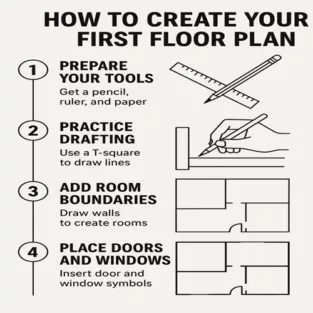
So, you’re ready to dip your toes into the world of Architectural Design & Drafting? Awesome! Creating your first floor plan might sound intimidating, but it’s actually a super rewarding process. Whether you’re planning your dream home or just love design, this step-by-step guide will walk you through everything you need to know — no jargon, just real, beginner-friendly help.

What Is a Floor Plan?

A floor plan is a scaled drawing that shows the layout of a space from a top-down view. It’s the foundation of any architectural project and includes walls, rooms, doors, windows, and sometimes furniture.

Why Floor Plans Are Essential in Architectural Design & Drafting

They help visualize spatial relationships and plan for construction or renovation. In short, no solid structure exists without a solid floor plan first!

Tools You’ll Need to Get Started

  • Graph paper or drafting software
  • Pencil and ruler (or a digital stylus)
  • Measuring tape
  • Computer with CAD software (AutoCAD, SketchUp, or similar)

Preparing for Your Floor Plan

Define the Purpose of the Space

Before you start sketching, ask yourself: What is this space for? Is it a home, office, studio, or something else? Knowing the purpose sets the tone for the entire layout.

Gather Measurements and Site Details

Accuracy is everything! Measure the length, width, and height of the area. If it’s a brand-new space, you can decide your own dimensions, but be realistic.

Choose the Right Scale

Pick a scale that’s easy to manage — typically, 1/4″ = 1′-0″ for residential plans. This makes sure everything fits nicely on your page or screen.

Getting Started with Your Floor Plan

Start with the Perimeter Walls

Think of this like drawing the outer edges of a puzzle. Draw the exterior walls first using straight lines. These define the structure’s boundaries.

Add Interior Walls and Partitions

Once the outer walls are set, sketch in the interior walls to divide rooms. Keep room size functionality in mind — a bedroom shouldn’t be the size of a closet.

Place Doors and Windows

Now make the space usable! Add in doors where you expect entry and exit. Don’t forget windows for natural light. Use standard sizes to keep things realistic.

Detailing the Floor Plan

Adding Furniture and Fixtures

It’s time to make it livable. Add furniture symbols for beds, couches, tables, kitchen counters, etc. This step helps with visualizing the flow of the space.

Labeling Each Room Clearly

Write down the name of each room — Bedroom, Living Room, Kitchen, etc. This makes your plan more readable, especially if you’re handing it off to someone else.

Including Dimensions and Annotations

Mark all wall lengths, door widths, and window sizes. Add notes if needed, like “sliding door” or “double-hung window.” Details matter!

Using CAD Software for Precision

Benefits of Using CAD in Architectural Design & Drafting

CAD tools allow for super-accurate measurements, better visualization, and faster changes. It’s like sketching with superpowers.

Recommended CAD Tools for Beginners

  • AutoCAD LT: Lightweight and beginner-friendly.
  • SketchUp: Great for 3D modeling and easy to learn.
  • Floorplanner: Perfect for quick mockups and planning.

Tips for Creating Clean and Readable Plans

  • Stick to simple line weights.
  • Use consistent symbols for doors and windows.
  • Don’t overcrowd the plan — white space is your friend.

Reviewing and Finalizing Your Floor Plan

Common Mistakes to Avoid

  • Ignoring circulation space (no one wants to bump into furniture)
  • Skipping door swing directions
  • Forgetting to mark window heights and widths

Getting Feedback from a Drafting Professional

Even if it’s your first draft, having a seasoned eye review your plan is gold. They’ll catch errors and offer practical insights you may have missed.

Saving and Exporting in the Right Formats

Save your file in multiple formats like DWG, PDF, and PNG. This ensures it’s easy to share and accessible across different devices and platforms.

Conclusion

Creating your first floor plan is an exciting first step into the world of Architectural Design & Drafting. It’s not just about drawing walls — it’s about creating a space that makes sense, feels good, and functions well. Remember, the key is to plan with purpose, measure carefully, and use the right tools. Start simple, stay curious, and you’ll be designing like a pro in no time!

What software is best for beginners in architectural drafting?

SketchUp and Floorplanner are great for beginners. They’re easy to learn and offer intuitive interfaces with enough features to create detailed floor plans.

Can I create a floor plan without technical experience?

Absolutely! As long as you understand space planning and can follow basic guidelines, you can draft simple and effective floor plans.

How long does it take to create a basic floor plan?

If you’re new, plan to spend 2–4 hours on your first draft. It gets faster as you get more familiar with the tools and techniques.

Is hand-drawing still relevant in architectural drafting?

Yes! While digital tools are popular, many architects still start with hand sketches to brainstorm ideas before switching to CAD.

What’s the difference between a floor plan and a blueprint?

A floor plan shows layout and room placement. A blueprint includes detailed technical drawings like elevations, electrical plans, and construction details.


CS

Claire Sutton

Architectural CAD Specialist & Technical Writer · BArch (Hons), QUT · ASTCAD, Brisbane

Claire has 10 years of experience in Revit BIM modelling, architectural documentation, and CAD conversion projects across Southeast Queensland and NSW. She has delivered NCC-compliant documentation for residential, commercial, and industrial facilities.

More articles by Claire Sutton →
CAD Conversion

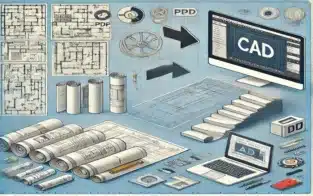
In the fast-paced world of design and engineering, CAD Conversion has become an essential process for enhancing productivity, maintaining data accuracy, and upgrading legacy data. Whether you’re transitioning from paper blueprints or updating old file formats, understanding the basics of CAD Conversion for Beginners can streamline your workflow and reduce costly errors.

In this comprehensive guide, we’ll walk you through the step-by-step process of getting started with CAD conversion, offering essential tips and insights that are perfect for newcomers.

What is CAD Conversion?

CAD Conversion is the process of converting design data from one format to another. This could include:

  • Converting paper-based or scanned drawings (raster) into editable CAD files (vector).
  • Converting between different CAD formats (e.g., DWG to DGN or PDF to DWG).
  • Translating 2D CAD drawings into 3D models.

For many beginners, CAD conversion serves as the first step toward digital transformation in design and manufacturing.

Why CAD Conversion is Important

  • Preserves design data from old blueprints and paper documents.
  • Improves efficiency by enabling quick edits and updates in CAD software.
  • Enhances collaboration across departments or teams using different CAD platforms.
  • Supports compliance with industry standards and digital archiving needs.

Step-by-Step Guide to Getting Started with CAD Conversion for Beginners

Step 1: Identify the Source Material

Begin by gathering all the files or drawings you need to convert. This can include:

  • Hand-drawn paper blueprints
  • Scanned raster images (TIFF, BMP, JPG)
  • Legacy CAD files in older or obsolete formats
  • PDF drawings

Knowing your source will determine the type of conversion technique you’ll use.

Step 2: Choose the Right CAD Software

Many CAD platforms support file conversion, such as:

  • AutoCAD
  • MicroStation
  • SolidWorks
  • Revit
  • BricsCAD

For CAD conversion for beginners, AutoCAD is often a user-friendly choice due to its widespread use and simple interface.

Step 3: Decide Between Manual and Automated Conversion

  • Manual Conversion involves redrawing or tracing the source drawing using CAD tools. This is time-consuming but highly accurate.
  • Automated Conversion uses specialized software to convert scanned images or PDFs into vector format. It’s faster but may require post-editing to fix errors.

Tip: Beginners may start with automated tools but should learn some manual techniques to ensure precision.

Step 4: Clean Up the Source File

Before starting the conversion, clean up the source file:

  • Remove smudges or unwanted marks from scanned images
  • Ensure scanned drawings are high resolution (at least 300 DPI)
  • Correct any distortions or alignment issues

A clean source ensures better accuracy in the final CAD file.

Step 5: Convert and Trace

Depending on your method:

  • Manual Method: Open a blank CAD file and use the Line, Polyline, and Object Snap tools to trace the geometry.
  • Automated Method: Import your raster or PDF file into CAD software and use built-in vectorization tools or plugins to convert to line work.

Once complete, check the geometry for alignment, proportions, and accuracy.

Step 6: Add Layers and Annotations

Organize the drawing using layers (e.g., walls, electrical, plumbing) and add necessary annotations, dimensions, and title blocks. Layer management is crucial for maintaining clarity and readability.

Step 7: Save and Export

Once your drawing is complete:

  • Save it in the desired CAD format (DWG, DXF, etc.)
  • Export or share with your team or client

Consider maintaining both the source and converted files for record-keeping.

Best Practices for CAD Conversion for Beginners

  • Always back up your source files before conversion.
  • Use a naming convention to keep track of different versions.
  • Cross-check converted files with the original for accuracy.
  • Take time to learn layer management and standard symbols used in CAD.
  • If you’re dealing with complex conversions (e.g., mechanical assemblies), seek help from professional CAD conversion services.

Common Challenges in CAD Conversion

  • Loss of quality in scanned images can lead to poor vector conversion.
  • Text recognition errors when converting from PDF.
  • Layer mismanagement may lead to cluttered and unreadable files.
  • Unsupported file types requiring third-party tools or plugins.

Starting simple and gradually increasing the complexity of your projects will help you master the process over time.

Conclusion

Getting started with CAD Conversion for Beginners doesn’t have to be overwhelming. By following a structured approach—starting with understanding your source material, choosing the right tools, and practicing careful conversion techniques—you can build confidence and skill in no time. CAD conversion is a crucial step in modernizing your design workflow, and mastering it opens the door to a world of digital possibilities.

If you’re looking for professional assistance or want to accelerate your CAD conversion journey, ASTCAD offers expert CAD Conversion services tailored to your needs. Contact us today to learn more.

What is the difference between raster and vector files in CAD Conversion?

u003cstrongu003eRaster filesu003c/strongu003e are pixel-based (e.g., scanned images), while u003cstrongu003evector filesu003c/strongu003e are made of paths and objects that can be edited in CAD software. CAD conversion often involves converting raster to vector formats.

Can I convert a PDF drawing into an editable CAD file?

Yes. Most modern CAD software allows you to import a PDF and convert its geometry into editable linework, though you may need to adjust text and dimensions manually.

Is manual CAD conversion better than automated?

Both have their place. u003cstrongu003eManual conversionu003c/strongu003e offers greater accuracy and is ideal for detailed or complex drawings. u003cstrongu003eAutomated conversionu003c/strongu003e is faster and suitable for basic layouts but often needs clean-up afterward.

What file format should I use when saving a converted drawing?

The most common and widely accepted format is u003cstrongu003eDWGu003c/strongu003e. However, if you’re collaborating with users on other platforms, you may need u003cstrongu003eDXFu003c/strongu003e or other specific formats.

Do I need professional help for CAD conversion?

If you’re handling large batches of drawings, dealing with highly technical content, or if accuracy is critical (such as in engineering or architecture), professional u003cstrongu003eCAD Conversion servicesu003c/strongu003e can save time and ensure precision.


CS

Claire Sutton

Architectural CAD Specialist & Technical Writer · BArch (Hons), QUT · ASTCAD, Brisbane

Claire has 10 years of experience in Revit BIM modelling, architectural documentation, and CAD conversion projects across Southeast Queensland and NSW. She has delivered NCC-compliant documentation for residential, commercial, and industrial facilities.

More articles by Claire Sutton →
AutoCAD Drafter

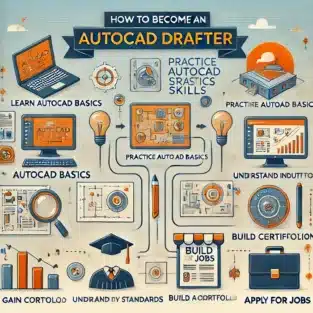
In today’s digitally-driven world, the demand for skilled AutoCAD drafters continues to grow. Whether you’re interested in architecture, engineering, or design, a career as an AutoCAD drafter offers a pathway to exciting opportunities. Here’s a step-by-step guide to help you become an AutoCAD drafter and excel in this rewarding field.

AutoCAD Drafter in Easy Steps

Step 1: Understand the Role of an AutoCAD Drafter

Before diving into the journey, it’s essential to grasp the responsibilities of an AutoCAD drafter. AutoCAD drafters use computer-aided design (CAD) software to create detailed technical drawings and blueprints. These documents guide the construction of buildings, machinery, and other structures. The role requires precision, creativity, and a strong understanding of technical concepts.

Step 2: Obtain the Right Education

To start your journey, pursue a relevant educational background:

  • High School Diploma: Focus on subjects like mathematics, computer science, and drafting.
  • Associate’s Degree: Many aspiring drafters enroll in programs that specialize in drafting, CAD technology, or engineering.
  • Certifications: Consider industry-recognized certifications in AutoCAD drafting to boost your employability. Popular programs include Autodesk Certified User (ACU) or Autodesk Certified Professional (ACP).

Step 3: Learn AutoCAD Software

Mastery of AutoCAD is critical to becoming a successful drafter. Here’s how to gain expertise:

  • Enroll in Training Courses: Sign up for AutoCAD drafter training programs offered by online platforms or local institutions.
  • Practice Regularly: Use tutorials, exercises, and projects to sharpen your skills.
  • Stay Updated: AutoCAD software evolves constantly, so ensure you’re familiar with the latest versions and features.

Step 4: Develop Essential Skills

An AutoCAD drafter needs a blend of technical and soft skills. Focus on:

  • Attention to Detail: Precision is key to creating accurate and functional designs.
  • Mathematics and Geometry: A solid understanding of these subjects is essential for drafting calculations.
  • Problem-Solving: Be prepared to troubleshoot design challenges.
  • Communication: Collaborate effectively with engineers, architects, and clients.

Step 5: Gain Practical Experience

Experience is invaluable in the drafting industry. Build your portfolio by:

  • Internships: Work with established firms to gain hands-on experience.
  • Freelancing: Offer AutoCAD drafter services to small businesses or startups.
  • Personal Projects: Create sample drafts to showcase your skills to potential employers.

Step 6: Network with Industry Professionals

Networking can open doors to job opportunities and mentorship:

  • Join Professional Organizations: Groups like the American Design Drafting Association (ADDA) can connect you with industry experts.
  • Attend Workshops and Seminars: Participate in events to stay informed and meet professionals.
  • Leverage Social Media: Use platforms like LinkedIn to connect with professionals in the AutoCAD drafter field.

Step 7: Secure an AutoCAD Drafter Job

Once you’ve honed your skills and built a portfolio, you’re ready to start job hunting:

  • Create a Resume: Highlight your education, certifications, and experience.
  • Apply Strategically: Look for positions that align with your expertise and interests.
  • Prepare for Interviews: Be ready to discuss your skills and showcase your drafts.

Step 8: Continue Learning and Growing

The drafting field is ever-evolving, so staying ahead is vital:

  • Advanced Certifications: Pursue advanced AutoCAD drafter training or certifications in specialized areas.
  • Learn Related Software: Expand your skill set with tools like Revit, SolidWorks, or SketchUp.
  • Seek Feedback: Regularly review your work and improve based on constructive criticism.

Why Become an AutoCAD Drafter?

An AutoCAD drafter job offers numerous benefits, including:

  • Diverse Career Opportunities: Work in industries like construction, manufacturing, and interior design.
  • Competitive Salary: Skilled drafters are in high demand and command attractive salaries.
  • Creative Fulfillment: Combine technical expertise with artistic creativity.

Final Thoughts

Becoming an AutoCAD drafter is a fulfilling journey that combines technical proficiency with creative problem-solving. By following these steps and leveraging AutoCAD drafter services and training opportunities, you’ll set yourself on the path to a successful career in this dynamic field. Start today and transform your passion for design into a thriving profession.

How do I start drafting in AutoCAD?

To start drafting in AutoCAD, follow these simple steps:u003cbru003eu003cbru003eu003cstrongu003eInstall AutoCAD Softwareu003c/strongu003eu003cbru003eDownload and install AutoCAD from Autodesk’s official website. Use the free trial version or subscribe based on your needs.u003cbru003eu003cbru003eu003cstrongu003eFamiliarize Yourself with the Interfaceu003c/strongu003eu003cbru003eLaunch the program and explore its user interface. Focus on the Ribbon (tools), Command Line, Drawing Area, and Status Bar.u003cbru003eu003cbru003eu003cstrongu003eSet Up Your Workspaceu003c/strongu003eu003cbru003eCustomize the workspace to suit your drafting needs. Choose a workspace type, such as Drafting u0026amp; Annotation or 3D Modeling.u003cbru003eu003cbru003eu003cstrongu003eCreate a New Drawingu003c/strongu003eu003cbru003eClick on u003cstrongu003eFile u003e Newu003c/strongu003e to start a new drawing. Choose a template that fits your project requirements (e.g., Metric or Imperial).u003cbru003eu003cbru003eu003cstrongu003eLearn Basic Commandsu003c/strongu003eu003cbru003ePractice essential commands like:u003cstrongu003eLINEu003c/strongu003e: Draw straight lines.u003cbru003eu003cstrongu003eCIRCLEu003c/strongu003e: Draw circles.u003cbru003eu003cstrongu003eRECTANGLEu003c/strongu003e: Create rectangles.u003cbru003eu003cstrongu003eTRIMu003c/strongu003e: Cut unwanted parts of your design.u003cbru003eu003cstrongu003eZOOMu003c/strongu003e and u003cstrongu003ePANu003c/strongu003e: Navigate your drawing.u003cbru003eu003cstrongu003eSet Drawing Units and Limitsu003c/strongu003eu003cbru003eDefine the units (metric or imperial) and set drawing limits to match the project’s scale and scope.

How do I learn AutoCAD drafting?

To learn AutoCAD drafting effectively, follow these steps:u003cbru003eu003cbru003e1. u003cstrongu003eUnderstand AutoCAD and Its Applicationsu003c/strongu003eu003cbru003eResearch what AutoCAD drafting involves and its applications in industries like architecture, engineering, and manufacturing.u003cbru003eu003cbru003e2. u003cstrongu003eGet the Softwareu003c/strongu003eu003cbru003eDownload and install AutoCAD from Autodesk’s official site. Start with a free trial or student version to explore its features.u003cbru003eu003cbru003e3. u003cstrongu003eTake Online Coursesu003c/strongu003eu003cbru003eEnroll in AutoCAD training programs from platforms like Coursera, Udemy, or LinkedIn Learning. Look for courses tailored to beginners and industry-specific needs.u003cbru003eu003cbru003e4. u003cstrongu003eStart with the Basicsu003c/strongu003eu003cbru003eLearn fundamental commands (e.g., LINE, CIRCLE, TRIM, and DIMENSION). Practice creating basic 2D shapes and combining them into meaningful designs.u003cbru003eu003cbru003e5. u003cstrongu003ePractice Regularlyu003c/strongu003eu003cbru003eDedicate time to practice. Follow tutorials, replicate sample projects, and solve exercises to build your drafting skills.


CS

Claire Sutton

Architectural CAD Specialist & Technical Writer · BArch (Hons), QUT · ASTCAD, Brisbane

Claire has 10 years of experience in Revit BIM modelling, architectural documentation, and CAD conversion projects across Southeast Queensland and NSW. She has delivered NCC-compliant documentation for residential, commercial, and industrial facilities.

More articles by Claire Sutton →
3D Part Modeling

In recent years, 3D printing has revolutionized various industries, and architecture and construction are no exception. This technological advancement offers numerous benefits that enhance creativity, efficiency, and sustainability in the design and building processes. Specifically, 3D part modeling, a technique used in 3D printing, has enabled architects and constructors to bring more complex, precise, and customized designs to life. In this blog, we will explore the impact of 3D printing on architecture and construction, focusing on how 3D part modeling is transforming the industry.

What is 3D Printing in Architecture and Construction?

3D printing, or additive manufacturing, involves creating three-dimensional objects layer by layer from a digital design. In architecture and construction, 3D printing has proven to be a game-changer, allowing architects to design structures with a level of detail and precision previously unattainable using traditional methods. From 3D part modeling for individual components to printing entire buildings, 3D printing offers new opportunities for customization and cost-efficiency.

3D printing in construction can produce complex shapes, intricate details, and even materials that are more sustainable or optimized for specific environmental conditions. This flexibility helps architects and designers push the boundaries of traditional design, while also minimizing waste and improving construction timelines.

The Role of 3D Part Modeling in Architecture

3D part modeling is a crucial element in the 3D printing process. It involves the creation of a digital 3D model of the parts or components that will be printed. In architecture, this means that every element of a building, from structural supports to decorative features, can be modeled and produced with precision. Some key advantages of 3D part modeling in architecture include:

  1. Customization and Precision With 3D part modeling, architects can create highly customized components tailored to the specific needs of a project. Whether it’s a complex, organic shape for a facade or a detailed structural element, 3D printing can produce components that fit perfectly within a design. Traditional construction methods often require costly adjustments during the building phase, but 3D part modeling eliminates much of this uncertainty.
  2. Efficient Prototyping One of the most significant advantages of 3D printing and part modeling is the ability to rapidly prototype designs. Architects can create detailed models of their concepts within a matter of hours or days, rather than weeks. This speed allows for quicker decision-making, reduces the time spent on revisions, and gives clients a better understanding of how the final project will look.
  3. Design Complexity With traditional construction methods, creating complex or intricate designs is often costly and time-consuming. However, 3D part modeling makes it possible to manufacture highly intricate shapes that would be impossible or prohibitively expensive using conventional construction techniques. Curved walls, geometrically complex facades, and organic architectural forms are no longer out of reach.

How 3D Printing Enhances Construction Efficiency

The construction industry is known for its inefficiencies, from delays and budget overruns to material waste. However, 3D printing is bringing significant improvements to this sector, particularly by optimizing the construction process in several key ways:

  1. Faster Construction Times 3D printing enables faster construction times by allowing for the rapid production of building parts. In some cases, entire structures can be printed in just a few days or weeks, compared to months of traditional construction. This can significantly reduce labor costs and project timelines. In addition, 3D printing can function autonomously, requiring less direct supervision and allowing construction workers to focus on other critical aspects of the project.
  2. Reduced Material Waste Traditional construction methods often involve significant material waste. For example, large quantities of excess concrete are usually poured and discarded when building foundations or walls. However, with 3D printing, material is used more efficiently, as only the required amount is printed, layer by layer. This reduction in waste not only benefits the environment but also leads to cost savings for the project.
  3. Cost-Effective Solutions While 3D printers and the initial setup may require significant investment, the long-term cost savings can be substantial. By reducing material waste, improving construction timelines, and cutting down on labor costs, 3D printing can make construction projects more affordable. Moreover, the ability to use alternative materials, such as recycled plastic or sustainable concrete, further reduces costs and environmental impact.
  4. On-Site 3D Printing An emerging trend is on-site 3D printing, where large-scale printers are brought to the construction site to print structures directly. This eliminates the need for transporting heavy building materials, which can save time and reduce logistical challenges. Moreover, on-site printing reduces the dependency on traditional construction methods, which can be influenced by weather, supply chain issues, or labor shortages.

3D Printing and Sustainable Construction

Sustainability is a major concern in modern architecture and construction, and 3D printing is contributing significantly to greener practices. Through 3D part modeling and printing, architects and builders can incorporate sustainable materials, such as recycled plastic, and optimize structures to reduce energy consumption. By using only the necessary amount of material for each component, 3D printing also significantly reduces waste, making it an eco-friendly alternative to conventional construction methods.

Furthermore, 3D printing allows for the creation of energy-efficient designs, such as buildings that are optimized for natural light or passive cooling, without the constraints of traditional building techniques. For example, intricate facades and insulating walls can be 3D printed to meet specific environmental needs, improving the energy performance of buildings.

Challenges and Future Outlook

Despite the many benefits, there are still challenges that need to be addressed for 3D printing to reach its full potential in architecture and construction. One of the main obstacles is the current limitations in material strength and variety, which may make 3D printing unsuitable for certain large-scale or high-strength structural elements. Additionally, the upfront cost of 3D printers can be prohibitive for some firms, although this cost is expected to decrease as the technology becomes more widespread.

As technology advances and more research is conducted, the possibilities for 3D printing in architecture and construction will continue to expand. The development of new materials and the improvement of 3D printing techniques will enable even more efficient, sustainable, and creative building solutions.

Conclusion

3D printing is undeniably reshaping the architecture and construction industries. Through 3D part modeling, architects and builders are able to create highly customized, precise, and complex designs with reduced waste and faster turnaround times. The ability to prototype quickly, coupled with on-site printing and sustainable materials, is making construction projects more efficient and cost-effective. As the technology continues to evolve, it is likely that 3D printing will play an even more significant role in the future of construction, providing innovative solutions to the challenges faced by the industry today.


CS

Claire Sutton

Architectural CAD Specialist & Technical Writer · BArch (Hons), QUT · ASTCAD, Brisbane

Claire has 10 years of experience in Revit BIM modelling, architectural documentation, and CAD conversion projects across Southeast Queensland and NSW. She has delivered NCC-compliant documentation for residential, commercial, and industrial facilities.

More articles by Claire Sutton →
AutoCAD Conversion

AutoCAD conversion is essential for companies across various industries, providing a seamless way to transition between file types, improve accuracy, and enhance collaboration on complex projects. In this blog, we’ll cover the key aspects of AutoCAD conversion, its importance, common conversion types, and tips for optimizing the process.

Why AutoCAD Conversion Matters

AutoCAD conversion is the process of transforming design data into compatible formats, ensuring that all stakeholders—engineers, architects, and designers—can access and use the information effectively. Converting files into AutoCAD-compatible formats is essential in maintaining the accuracy and integrity of design data. Whether it’s legacy data or newer file formats, AutoCAD conversion enables organizations to work with historical records, share files with collaborators, and meet project requirements seamlessly.

Common Types of AutoCAD Conversions

  1. PDF to AutoCAD
    Converting PDFs to AutoCAD is among the most common needs in architecture and engineering. While PDFs provide a snapshot of design documents, converting them into DWG or DXF files allows for editing and modification in AutoCAD. This is especially useful for updating designs, creating as-built drawings, or making revisions.
  2. Image to AutoCAD
    This process involves converting images (JPEG, PNG, TIFF) into vector-based AutoCAD files. Image conversion is valuable when working with scanned blueprints or hand-drawn sketches that need digital precision. Using tools such as raster-to-vector conversion software can make this process faster and more accurate.
  3. 2D to 3D Conversion
    Many industries are moving toward 3D modeling to create highly detailed and accurate designs. Converting 2D AutoCAD drawings into 3D models provides a more comprehensive view of projects, improving analysis, visualization, and accuracy in construction, manufacturing, and design.
  4. Revit to AutoCAD
    Revit is commonly used for BIM (Building Information Modeling) projects, but there may be situations where a Revit file needs to be converted to AutoCAD for use by team members who work within an AutoCAD environment. This conversion allows for easier cross-platform collaboration.
  5. Point Cloud to AutoCAD
    In industries where laser scanning and 3D measurements are essential, point cloud data can be converted into AutoCAD formats. This is particularly beneficial for renovation projects or when precise site measurements are required.

Key Benefits of AutoCAD Conversion

  1. Enhanced Collaboration
    AutoCAD conversion ensures that data can be shared in a compatible format, enabling teams to collaborate effectively. Cross-disciplinary projects often involve stakeholders using different software platforms; converting files into AutoCAD-compatible formats ensures all team members have access to accurate information.
  2. Data Preservation
    Converting legacy data into AutoCAD formats allows businesses to maintain and preserve historical information, ensuring it’s available and usable in future projects. This is especially important for industries with regulatory requirements for archiving project data.
  3. Improved Accuracy and Consistency
    Manual re-drawing of designs from incompatible formats can lead to errors and inconsistencies. AutoCAD conversion minimizes this risk, ensuring that designs are transferred accurately and efficiently without any loss of detail.
  4. Cost and Time Efficiency
    Automating conversion processes reduces the need for manual rework and accelerates project timelines. Instead of redrawing or creating designs from scratch, conversions allow for immediate use and further development, resulting in significant time and cost savings.

Tips for Successful AutoCAD Conversion

  1. Use Specialized Conversion Tools
    Numerous software tools are available to facilitate AutoCAD conversions. Using dedicated conversion software ensures higher accuracy and reduces the likelihood of errors. Tools such as AutoCAD itself, as well as third-party solutions, can efficiently handle various conversion formats, improving productivity and reliability.
  2. Check for File Compatibility
    Not all file types are directly compatible with AutoCAD. Before converting, verify the compatibility between the source and target file formats to ensure a smooth conversion. This may involve pre-processing or cleaning up files to ensure they translate accurately.
  3. Optimize and Clean Up Files Post-Conversion
    Once a file has been converted, it’s crucial to review and clean it up in AutoCAD. Conversion processes may introduce artifacts or misalignments; therefore, verifying dimensions, line work, and object integrity will ensure the converted file is usable and meets project standards.
  4. Work with an Experienced Conversion Partner
    If your company regularly handles large volumes of conversions or complex projects, consider partnering with an AutoCAD conversion service provider. Professionals with experience in CAD conversions bring expertise that can improve accuracy and efficiency, especially with challenging file types or large data sets.
  5. Document the Process
    Keeping a record of the conversion process, including any challenges or settings used, can be valuable for future conversions. This documentation helps standardize procedures, making the process more efficient and repeatable over time.

AutoCAD Conversion Services: Choosing the Right Provider

For companies looking to outsource AutoCAD conversions, selecting the right service provider is critical. Here are factors to consider:

  1. Experience and Expertise
    Look for providers with proven expertise in AutoCAD conversion and a history of delivering high-quality, accurate conversions. A knowledgeable team will be able to handle complex file formats and provide solutions that fit your project needs.
  2. Service Offerings and Capabilities
    Not all conversion services offer the same capabilities. Check if the provider can handle the types of conversions you need, such as 2D to 3D, image to AutoCAD, or point cloud conversions. It’s beneficial to work with a provider who offers a range of services and flexibility.
  3. Turnaround Time
    In fast-paced industries, turnaround time is crucial. Make sure your service provider can meet your project deadlines and offer quick yet accurate conversions.
  4. Quality Control
    Quality control processes are essential in ensuring that converted files meet industry standards and project requirements. A reputable provider should have quality assurance measures in place, such as double-checking files for accuracy and consistency.
  5. Data Security and Confidentiality
    With sensitive project data involved, ensure your service provider follows strict data security protocols. Ask about their data handling and storage policies to confirm they can safely manage your files.

Conclusion

AutoCAD conversion is more than just transforming files; it’s about enhancing collaboration, preserving data integrity, and improving project efficiency. With the right tools, processes, and partnerships, AutoCAD conversion can streamline workflows and ensure that design data is accessible to everyone who needs it. Whether you’re converting PDF files, transitioning 2D drawings into 3D models, or working with legacy data, understanding the fundamentals of AutoCAD conversion helps companies achieve greater accuracy, save time, and reduce costs.

By following best practices and considering professional AutoCAD conversion services, your organization can maximize the benefits of seamless data compatibility across projects. In a world where design data is essential to project success, effective AutoCAD conversion is a powerful asset that keeps your team aligned and your projects on track.

How do I convert a drawing to CAD?

Converting a drawing to CAD involves taking a physical drawing, an image file, or a PDF, and translating it into a digital format that can be edited within CAD software, like AutoCAD. Here’s a step-by-step guide to help you with this process:u003cbru003e1. u003cstrongu003eDigitize Your Drawing (If on Paper)u003c/strongu003eu003cbru003eu003cstrongu003eScan the Drawingu003c/strongu003e: If you have a hand-drawn or printed drawing, start by scanning it at a high resolution (300 DPI or higher) to capture all details. Save the scanned image as a PDF, JPEG, or TIFF.u003cbru003eu003cstrongu003eCheck the Image Qualityu003c/strongu003e: Ensure the scanned file is clear, without any smudges or distortions, as this will impact the quality of your CAD conversion.u003cbru003e2. u003cstrongu003eChoose a CAD Conversion Methodu003c/strongu003eu003cbru003eYou can convert a drawing to CAD either manually (by tracing) or automatically (using specialized software).u003cbru003eMethod 1: Automatic Conversion Using Softwareu003cbru003eu003cstrongu003eUse Raster-to-Vector Softwareu003c/strongu003e: Software like AutoCAD (with its PDF import feature), Scan2CAD, or Adobe Illustrator can automatically convert images or PDFs to vector files.u003cbru003eu003cstrongu003eImport into AutoCADu003c/strongu003e:Open AutoCAD, go to the u0022Insertu0022 tab, and choose u0022Attachu0022 to import your PDF or image.u003cbru003eOnce attached, select the imported file and use AutoCAD’s u0022PDF Importu0022 or similar feature to convert the lines into editable vector objects.u003cbru003eu003cstrongu003eClean Up the Conversionu003c/strongu003e: After conversion, inspect the file for any inaccuracies, overlapping lines, or unneeded elements. Correct any errors and adjust line thicknesses or scales as needed.

How do I convert a CAD file?

Converting a CAD file usually means changing its format (for example, converting a DWG file to a DXF, PDF, STL, or other formats). This can be done directly in CAD software or with specialized conversion tools. Here’s a step-by-step guide to converting a CAD file effectively:u003cbru003e1. u003cstrongu003eIdentify the Target Formatu003c/strongu003eu003cbru003eDetermine the format you need to convert your CAD file to, based on the software you or your collaborators will use. Common conversions include:u003cbru003eu003cstrongu003eDWG to DXFu003c/strongu003e: To maintain compatibility across various CAD programs.u003cbru003eu003cstrongu003eDWG/DXF to PDFu003c/strongu003e: For easy viewing and sharing with clients or stakeholders.u003cbru003eu003cstrongu003eDWG/DXF to STLu003c/strongu003e: For 3D printing.u003cbru003eu003cstrongu003eDWG/DXF to STEP or IGESu003c/strongu003e: For sharing with 3D modeling or CAM software.u003cbru003e2. u003cstrongu003eUse the Built-In Export/Save As Feature in CAD Softwareu003c/strongu003eu003cbru003eMost CAD programs, like AutoCAD, Fusion 360, and SolidWorks, have built-in options to export or save files in different formats.u003cbru003eu003cstrongu003eAutoCADu003c/strongu003e:u003cbru003eOpen the DWG or DXF file you want to convert.u003cbru003eGo to u003cstrongu003eFileu003c/strongu003e u003e u003cstrongu003eSave Asu003c/strongu003e or u003cstrongu003eExportu003c/strongu003e.u003cbru003eChoose the desired format from the dropdown (e.g., PDF, DXF, DWF, etc.).u003cbru003eAdjust any specific options related to the output format (e.g., line weights for PDFs, resolution for STL files).u003cbru003eSave the file in the new format.u003cbru003eu003cstrongu003eFusion 360u003c/strongu003e:u003cbru003eOpen the model or design.u003cbru003eGo to u003cstrongu003eFileu003c/strongu003e u003e u003cstrongu003eExportu003c/strongu003e.u003cbru003eSelect the file type you need (e.g., STEP, IGES, STL).u003cbru003eChoose additional settings for format-specific options.u003cbru003eSave or export the converted file.u003cbru003eu003cstrongu003eSolidWorksu003c/strongu003e:u003cbru003eOpen the CAD file you want to convert.u003cbru003eSelect u003cstrongu003eSave Asu003c/strongu003e.u003cbru003eChoose the desired format, such as DXF, STEP, or IGES, from the dropdown menu.u003cbru003eCustomize the export settings if needed, then save.


CS

Claire Sutton

Architectural CAD Specialist & Technical Writer · BArch (Hons), QUT · ASTCAD, Brisbane

Claire has 10 years of experience in Revit BIM modelling, architectural documentation, and CAD conversion projects across Southeast Queensland and NSW. She has delivered NCC-compliant documentation for residential, commercial, and industrial facilities.

More articles by Claire Sutton →
2D to 3D Conversion

The demand for 2D to 3D conversion is growing rapidly across industries, from architecture to manufacturing. Converting 2D drawings into accurate 3D models is essential for enhancing visualization, improving design accuracy, and streamlining production. However, even experienced professionals can encounter challenges that may hinder the conversion process. To help you achieve flawless results, we’ve compiled expert tips on how to avoid common pitfalls in 2D to 3D conversion services.

2D to 3D Conversion Service

1. Misinterpreting 2D Data

One of the most frequent mistakes during 2D to 3D conversion is misinterpreting the 2D drawings. In 2D designs, some features may be implied through symbols or lines that don’t translate directly into a 3D model. Ensuring a thorough understanding of the 2D blueprint is critical before conversion.

Tip: Carefully review all 2D documentation and engage with the designer or client to clarify ambiguous areas. If necessary, annotate the 2D drawings with notes on how specific details should be modeled in 3D.

2. Overlooking Scale and Proportions

A lack of attention to scale and proportions during the conversion process can lead to major inaccuracies in the 3D model. Misalignment between the 2D design’s scale and the intended real-world dimensions can result in significant rework.

Tip: Verify that the scale in the original 2D drawing is accurate and consistent throughout the design. During the conversion process, ensure that the proportions remain true to the original scale. This is particularly important for complex projects like architectural designs or precision engineering models.

3. Choosing the Wrong Software

The choice of software for 2D to 3D conversion services plays a crucial role in the accuracy and efficiency of the conversion process. Using incompatible or outdated software can introduce errors and slow down the workflow.

Tip: Select specialized software tailored to your industry’s needs, whether it’s AutoCAD, SolidWorks, Revit, or another platform. Ensure that your software supports seamless integration of 2D and 3D elements. Regularly update your tools to take advantage of the latest features.

4. Failing to Optimize Geometry

Converting a 2D drawing into a 3D model without optimizing the geometry can lead to excessive detail or unnecessary complexity in the final model. Overly complex geometry can cause file size issues and complicate manufacturing processes.

Tip: Simplify the geometry wherever possible while maintaining accuracy. Remove redundant details that do not contribute to the functionality or aesthetic of the final 3D model. Streamlining the design can lead to faster rendering and easier modification.

5. Ignoring Design Intent

A common pitfall is focusing solely on the technical conversion of 2D to 3D while overlooking the overall design intent. Misinterpreting how the 3D model should look or function can lead to a final product that doesn’t align with the project’s objectives.

Tip: Always keep the design intent in mind during the conversion process. Collaborate with stakeholders to ensure that the final 3D model meets the design’s functional and aesthetic goals.

6. Lack of Collaboration with Experts

Attempting to handle 2D to 3D conversion without the guidance of skilled professionals can result in costly errors. Conversion requires a combination of technical expertise, industry-specific knowledge, and precision.

Tip: Work with experienced 2D to 3D conversion services to ensure that the process is handled efficiently and accurately. Professional services can offer valuable insights, reduce conversion time, and eliminate errors that may arise from misinterpretation.

Conclusion

Avoiding these common pitfalls in 2D to 3D conversion can help you achieve flawless results and enhance the overall quality of your projects. By paying attention to detail, selecting the right software, and collaborating with experts, you can streamline the conversion process and produce accurate, functional 3D models. When in doubt, partnering with a reliable 2D to 3D conversion service like ASTCAD can ensure that your project is in capable hands, delivering exceptional outcomes with minimal hassle.

What is the process of 2D to 3D image processing?

The process of u003cstrongu003e2D to 3D image processingu003c/strongu003e involves converting a flat, two-dimensional image into a three-dimensional representation. This is used in various fields such as medical imaging, animation, gaming, architecture, and more. The process typically follows these steps:u003cbru003eu003cbru003e1. u003cstrongu003eImage Collectionu003c/strongu003eu003cbru003eThe first step is gathering the necessary 2D images, drawings, or scans that will be used for conversion. These could be technical drawings, photos, or medical scans (like MRIs or CTs), depending on the application.u003cbru003eu003cbru003e2. u003cstrongu003eImage Preprocessingu003c/strongu003eu003cbru003eBefore conversion, the 2D images are cleaned up and optimized for better accuracy in the 3D model. This might include:u003cbru003eu003cstrongu003eEnhancing contrast or brightnessu003c/strongu003e to highlight features.u003cbru003eu003cstrongu003eNoise reductionu003c/strongu003e to remove unwanted artifacts.u003cbru003eu003cstrongu003eEdge detectionu003c/strongu003e to define boundaries and contours more clearly.u003cbru003eThis step ensures the image quality is sufficient for accurate 3D rendering.

What is 3D image processing techniques?

u003cstrongu003e3D image processing techniquesu003c/strongu003e involve methods and algorithms that analyze, manipulate, and enhance 3D images or data to extract valuable information or create detailed visual representations. These techniques are widely used in fields such as medical imaging, computer vision, virtual reality, robotics, and scientific research. Below are the key techniques involved in 3D image processing:u003cbru003eu003cbru003e1. u003cstrongu003e3D Reconstructionu003c/strongu003eu003cbru003eThis technique converts 2D images or slices into a 3D model by estimating depth and structure. It’s often used in medical imaging (like CT and MRI scans) or computer vision. Common methods include:u003cbru003eu003cstrongu003eStereoscopic reconstructionu003c/strongu003e: Using two images from different viewpoints to build a 3D model.u003cbru003eu003cstrongu003eShape-from-shadingu003c/strongu003e: Infers depth from lighting and shading in a single 2D image.u003cbru003eu003cstrongu003ePhotogrammetryu003c/strongu003e: Creates 3D models from a series of photographs taken from different angles.u003cbru003eu003cbru003e2. u003cstrongu003ePoint Cloud Processingu003c/strongu003eu003cbru003eA u003cstrongu003epoint cloudu003c/strongu003e is a set of data points in 3D space representing the external surface of an object. Processing point clouds involves:u003cbru003eu003cstrongu003eRegistrationu003c/strongu003e: Aligning multiple point clouds from different angles or positions into a unified coordinate system.u003cbru003eu003cstrongu003eDownsamplingu003c/strongu003e: Reducing the number of points while maintaining the object’s shape to optimize processing.u003cbru003eu003cstrongu003eSegmentationu003c/strongu003e: Identifying and separating meaningful parts of the object from the point cloud.


CS

Claire Sutton

Architectural CAD Specialist & Technical Writer · BArch (Hons), QUT · ASTCAD, Brisbane

Claire has 10 years of experience in Revit BIM modelling, architectural documentation, and CAD conversion projects across Southeast Queensland and NSW. She has delivered NCC-compliant documentation for residential, commercial, and industrial facilities.

More articles by Claire Sutton →
Landscape Development Design

Landscape development design plays a crucial role in transforming outdoor spaces into beautiful, functional areas. Whether it’s a residential garden, commercial space, or public park, well-planned landscape development can enhance aesthetic appeal, increase property value, and contribute to environmental sustainability. In this guide, we’ll cover the essential aspects of landscape development design, highlighting how to create balanced, practical, and visually stunning landscapes.

What is Landscape Development Design?

Landscape development design is the process of planning, organizing, and executing the physical layout of outdoor spaces. It encompasses various elements, such as plantings, structures, pathways, lighting, and water features. The goal is to create outdoor environments that meet both the functional and aesthetic needs of the users while respecting the natural surroundings.

A Landscape Development Design Service provides professional assistance in designing these outdoor spaces. Experts collaborate with clients to develop personalized, sustainable solutions that align with the site’s characteristics, environmental considerations, and desired functionality.

Key Elements of Landscape Development Design

1. Site Analysis and Planning

The first step in landscape development design is to assess the site. This involves analyzing the topography, soil quality, climate, sunlight exposure, and existing vegetation. A thorough site analysis helps determine what can realistically be achieved within the space and sets the foundation for the design process. Understanding the natural layout and constraints is critical in developing a successful landscape.

2. Hardscaping

Hardscaping refers to the non-plant elements in a landscape, such as pathways, patios, retaining walls, and other structures. The right hardscaping elements can add structure and usability to an outdoor space, while complementing the overall design aesthetic. When planning hardscaping, consider materials that blend well with the natural environment and enhance the functionality of the space.

3. Plant Selection and Softscaping

Softscaping involves the living elements of the landscape, including plants, trees, and grass. Selecting the right plants for your design is critical not only for aesthetics but also for sustainability. Native plants are often preferred because they are well-adapted to the local climate and soil, require less water, and promote biodiversity. Additionally, plants should be selected based on their growth patterns, seasonal changes, and compatibility with the overall design theme.

4. Water Features

Adding water elements, such as fountains, ponds, or streams, can elevate a landscape design. Water features introduce a sense of tranquility and movement into the space, while also helping with water management. Proper placement and sizing of water features should be carefully planned to ensure that they fit the scale of the landscape.

5. Lighting

Effective lighting enhances the beauty of a landscape after dark, creating a sense of ambiance and safety. Pathway lights, spotlights for key features, and ambient lighting around seating areas can help highlight the best parts of the design. Lighting can also contribute to the security of the space by illuminating dark areas.

The Role of a Professional Landscape Development Design Service

Hiring a Landscape Development Design Service can make a significant difference in the outcome of your project. Professionals bring expertise in design principles, horticulture, and construction, ensuring that the design is both aesthetically pleasing and functional. A professional service provides the following benefits:

  • Tailored Solutions: Professional landscape designers consider your preferences and lifestyle, creating custom designs that match your vision. They ensure that the space is functional, easy to maintain, and aligned with the natural characteristics of the site.
  • Sustainability: Sustainable landscape development is becoming increasingly important, with a focus on conserving resources and protecting the environment. Experts can help you incorporate water-saving features, energy-efficient lighting, and eco-friendly plant selections.
  • Cost-Effective Execution: With a professional service, you can avoid costly mistakes and delays. Experts can foresee challenges during the planning stage, ensuring that the project runs smoothly and stays within budget.
  • Long-Term Maintenance: A well-thought-out landscape development design will require ongoing care to maintain its beauty and functionality. Many services offer maintenance plans to keep your outdoor space looking its best year-round.

Benefits of Well-Executed Landscape Development Design

Investing in a thoughtful landscape development design offers many advantages, both immediate and long-term. Here are some key benefits:

1. Enhanced Aesthetic Appeal

A well-designed landscape significantly improves the appearance of a property. It can serve as an inviting entryway to a home or a pleasant, serene environment for a commercial or public space. The combination of hardscaping and softscaping elements creates a visually appealing space that complements the architecture.

2. Increased Property Value

A beautifully designed landscape adds value to your property. Curb appeal plays a major role in real estate, and homes or commercial spaces with professional landscape development often command higher market prices.

3. Improved Functionality

Functional outdoor spaces can improve quality of life. Well-designed landscapes provide areas for recreation, relaxation, or work, creating additional space for various activities. For businesses, a well-landscaped outdoor area can also serve as a welcoming environment for clients and employees.

4. Environmental Impact

By incorporating eco-friendly elements like native plants, water-efficient irrigation systems, and sustainable materials, landscape development design can have a positive impact on the environment. Green spaces contribute to air purification, provide habitats for wildlife, and help manage stormwater runoff.

Tips for Successful Landscape Development Design

If you’re planning to undertake a landscape development project, here are a few essential tips to keep in mind:

  • Start with a Vision: Clearly define your goals and preferences for the space. Whether you want a low-maintenance garden, an entertainment area, or a peaceful retreat, having a vision will guide your design decisions.
  • Balance Aesthetics with Functionality: A beautiful landscape should also be practical. Consider how you intend to use the space and prioritize elements that serve both form and function.
  • Plan for the Future: Landscapes evolve over time. Select plants and materials that will age gracefully and require minimal maintenance as the landscape matures.
  • Focus on Sustainability: Incorporate water-wise plants, efficient irrigation systems, and eco-friendly materials to create a landscape that is both beautiful and environmentally responsible.

Conclusion

A well-executed Landscape Development Design can transform any outdoor space into a harmonious blend of beauty and functionality. By considering essential elements such as plant selection, hardscaping, and sustainable practices, you can create a space that enhances the quality of life for its users while adding long-term value to the property. Whether you’re working on a small garden or a large public area, professional Landscape Development Design Services can help you bring your vision to life with expert guidance and practical solutions.

What is a development landscape?

A u003cstrongu003edevelopment landscapeu003c/strongu003e refers to the overall context, environment, or ecosystem in which development—whether it be software, infrastructure, or real estate—takes place. It encompasses the various factors, stakeholders, resources, and constraints that influence the development process. The term can be applied in different industries with specific meanings:u003cbru003eu003cbru003e1. u003cstrongu003eSoftware Development Landscapeu003c/strongu003eu003cbru003eIn software or technology, the u003cstrongu003edevelopment landscapeu003c/strongu003e refers to the environment and tools used to create, test, and deploy software applications. This includes programming languages, frameworks, development methodologies (like Agile or DevOps), platforms, version control systems, and deployment environments. Additionally, the landscape also refers to the trends and challenges in the field, such as cloud computing, AI integration, and cybersecurity.u003cbru003eu003cstrongu003eKey componentsu003c/strongu003e of a software development landscape include:u003cbru003eu003cstrongu003eTools and Technologiesu003c/strongu003e: Programming languages, IDEs, cloud services, etc.u003cbru003eu003cstrongu003eMethodologiesu003c/strongu003e: Agile, Scrum, DevOps, etc.u003cbru003eu003cstrongu003eEcosystemsu003c/strongu003e: Platforms like mobile (Android/iOS) or web development.u003cbru003eu003cstrongu003eTrendsu003c/strongu003e: AI, microservices, containerization (e.g., Docker), etc.u003cbru003eu003cbru003e2. u003cstrongu003eReal Estate or Urban Development Landscapeu003c/strongu003eu003cbru003eIn real estate or urban planning, the u003cstrongu003edevelopment landscapeu003c/strongu003e refers to the physical and regulatory environment in which land or property development occurs. This includes land use policies, zoning regulations, environmental considerations, local economies, and infrastructure planning.u003cbru003eu003cstrongu003eKey componentsu003c/strongu003e of a real estate development landscape include:u003cbru003eu003cstrongu003eRegulations and Zoning Lawsu003c/strongu003e: Rules governing what can be built and where.u003cbru003eu003cstrongu003eMarket Conditionsu003c/strongu003e: Economic factors that affect demand and pricing.u003cbru003eu003cstrongu003eEnvironmental Factorsu003c/strongu003e: Sustainability, green building practices, and impact assessments.u003cbru003eu003cstrongu003eCommunity and Stakeholdersu003c/strongu003e: Input from local residents, businesses, and governments.

What is design development in landscape architecture?u003cbru003e

u003cstrongu003eDesign development in landscape architectureu003c/strongu003e is a crucial phase in the overall landscape design process, bridging the gap between conceptual ideas and the final, detailed plans used for construction. It involves refining the initial conceptual design, developing detailed layouts, and selecting specific materials, plantings, and features. This phase ensures that the vision for the landscape is practically achievable, aesthetically cohesive, and aligned with functional requirements.u003cbru003eu003cbru003eHere’s a breakdown of what design development entails in landscape architecture:u003cbru003e1. u003cstrongu003eRefining the Conceptual Designu003c/strongu003eu003cbru003eIn the conceptual design phase, broad ideas and themes are explored. During u003cstrongu003edesign developmentu003c/strongu003e, these ideas are fine-tuned and brought to a more tangible level. This includes:u003cbru003eu003cstrongu003eDetailed site analysisu003c/strongu003e: Further analysis of the site conditions, such as topography, soil quality, climate, and drainage, to ensure the design is appropriate for the location.u003cbru003eu003cstrongu003eFunctional layoutu003c/strongu003e: Defining specific spaces and their intended use, such as seating areas, gardens, walkways, water features, and gathering spaces.u003cbru003eu003cstrongu003eCirculation and flowu003c/strongu003e: Determining how people will move through the landscape and ensuring that pathways and access points are functional and accessible.u003cbru003eu003cbru003e2. u003cstrongu003eMaterial and Plant Selectionu003c/strongu003eu003cbru003eDuring the design development phase, the specific u003cstrongu003ematerialsu003c/strongu003e and u003cstrongu003eplantsu003c/strongu003e that will be used in the project are selected. This includes:u003cbru003eu003cstrongu003eHardscape materialsu003c/strongu003e: Choosing the types of paving, stone, wood, or other materials for paths, walls, decks, and structures.u003cbru003eu003cstrongu003eSoftscape elementsu003c/strongu003e: Selecting the types of trees, shrubs, grasses, and other plantings that will work best for the site’s climate, aesthetics, and sustainability.u003cbru003eu003cstrongu003eWater features and lightingu003c/strongu003e: Determining the types and locations of water features (like fountains or ponds) and outdoor lighting.


CS

Claire Sutton

Architectural CAD Specialist & Technical Writer · BArch (Hons), QUT · ASTCAD, Brisbane

Claire has 10 years of experience in Revit BIM modelling, architectural documentation, and CAD conversion projects across Southeast Queensland and NSW. She has delivered NCC-compliant documentation for residential, commercial, and industrial facilities.

More articles by Claire Sutton →
Construction Drawings

Construction drawings are the backbone of any construction project. They translate the architect’s vision into a detailed plan that builders, contractors, and engineers can follow. Understanding these drawings is crucial for ensuring that a project is executed accurately and efficiently. In this guide, we’ll break down the process of understanding construction drawings, making it easier for you to navigate through the complexities of these essential documents.

Construction Drawings Tips and Tricks

1. Start with the Title Block

The title block is usually located at the bottom right corner of a construction drawing and contains key information such as the project name, drawing number, date, and scale. This is where you can find out who created the drawing and when it was last updated. The scale indicates the ratio between the drawing’s dimensions and the actual dimensions of the building, which is vital for accurate interpretation.

2. Understand the Different Types of Drawings

Construction drawings come in various forms, each serving a specific purpose. The most common types include:

  • Site Plans: Show the overall layout of the construction site, including the position of the building, landscaping, roads, and utilities.
  • Floor Plans: Detail the layout of each floor, showing walls, windows, doors, and other architectural elements.
  • Elevation Drawings: Provide a view of the building from the outside, showing the height and external materials.
  • Section Drawings: Cut through the building to show the internal structure, including walls, floors, and roofs.
  • Detail Drawings: Focus on specific components or assemblies, providing a more detailed view of complex areas.

Familiarizing yourself with these types of drawings is essential to grasp the full scope of a construction project.

3. Learn the Language of Symbols and Notations

Construction drawings are filled with symbols and notations that convey important information. These symbols represent various elements like doors, windows, electrical outlets, and plumbing fixtures. Learning what these symbols mean is crucial for understanding the drawing. Additionally, notations provide details such as material specifications, dimensions, and construction methods.

Invest time in studying the legend or key that accompanies the drawings, as it will help you decode the symbols and notations used.

4. Interpreting Dimensions and Scale

Dimensions are typically indicated in feet and inches (or metric units), and they define the size and placement of objects within the drawing. Understanding how to read dimensions and scale is vital for accurate construction. The scale is particularly important when transferring the measurements from the drawing to the actual construction site. For instance, a 1:50 scale means that 1 unit on the drawing equals 50 units in reality.

Make sure to double-check dimensions and scales to ensure that everything aligns with the construction specifications.

5. Review Notes and Specifications

Construction drawings are often accompanied by notes and specifications that provide additional guidance on materials, construction techniques, and safety requirements. These notes are critical to ensuring that the project is built to the desired standards. Always review these sections thoroughly to avoid any misunderstandings during the construction process.

6. Cross-Referencing Drawings

A single construction project may involve multiple drawings that need to be cross-referenced. For example, a floor plan might need to be compared with an elevation drawing to ensure consistency in the design. Cross-referencing helps in identifying potential conflicts or discrepancies between different parts of the project. This step is crucial for coordinating various trades, such as plumbing, electrical, and HVAC, ensuring that they work together seamlessly.

7. Consulting with Professionals

If you encounter any uncertainties while interpreting construction drawings, don’t hesitate to consult with architects, engineers, or a construction drawings service. These professionals have the expertise to clarify complex details and ensure that the project is built according to the design intent.

Conclusion

Understanding construction drawings is a skill that takes time and practice to master. By following this step-by-step guide, you’ll be better equipped to interpret these vital documents, leading to smoother project execution and fewer errors on the construction site. Whether you are a builder, contractor, or project manager, having a solid grasp of construction drawings will enhance your ability to contribute to the successful completion of any project.

For more professional assistance, consider using a construction drawings service like ASTCAD to ensure that your project’s drawings are accurate, detailed, and compliant with industry standards.

How to get better at construction drawing?

Getting better at construction drawing involves a mix of developing technical skills, understanding industry standards, and practicing effective communication. Here are some steps you can take to improve your abilities:u003cbru003eu003cbru003e1. u003cstrongu003eMaster the Basicsu003c/strongu003eu003cbru003eu003cstrongu003eLearn Drafting Fundamentals:u003c/strongu003e Start with a solid understanding of basic drafting techniques, including line types, scale, and the use of symbols and notations common in construction drawings.u003cbru003eu003cbru003eu003cstrongu003eFamiliarize Yourself with CAD Software:u003c/strongu003e Proficiency in computer-aided design (CAD) software is essential. Spend time mastering the tools and features of the software you use, whether it’s AutoCAD, Revit, or another platform.u003cbru003eu003cbru003e2. u003cstrongu003eStudy Industry Standardsu003c/strongu003eu003cbru003eu003cstrongu003eUnderstand Building Codes and Regulations:u003c/strongu003e Familiarize yourself with local building codes and industry standards, such as those set by organizations like the American Institute of Architects (AIA). Knowing these standards ensures your drawings are compliant and professionally recognized.u003cbru003eu003cstrongu003eReview Real-World Examples:u003c/strongu003e Study existing construction drawings from real projects. Analyze how professionals approach different aspects of a project, such as site plans, floor plans, elevations, and sections.u003cbru003eu003cbru003e3. u003cstrongu003ePractice, Practice, Practiceu003c/strongu003eu003cbru003eu003cstrongu003eWork on Real Projects:u003c/strongu003e The best way to improve is by doing. If possible, get involved in real construction projects, even if on a small scale. Practical experience will expose you to real-world challenges and nuances that can’t be fully captured in a classroom or textbook.u003cbru003eu003cstrongu003eTake on Complex Challenges:u003c/strongu003e Don’t shy away from complicated projects. Challenging yourself with complex designs, multi-story buildings, or intricate detailing will push your skills further.u003cbru003eu003cbru003e4. u003cstrongu003eEnhance Your Technical Knowledgeu003c/strongu003eu003cbru003eu003cstrongu003eLearn Structural and Mechanical Systems:u003c/strongu003e Understanding the structural, electrical, and plumbing systems within a building will help you create more accurate and functional drawings. Consider taking courses or reading up on these topics.u003cbru003eu003cstrongu003eStay Updated on Technology:u003c/strongu003e The field of construction drawing is constantly evolving with new technologies. Stay current with the latest software updates, tools, and best practices in drafting.u003cbru003eu003cbru003e5. u003cstrongu003eImprove Your Attention to Detailu003c/strongu003eu003cbru003eu003cstrongu003eDouble-Check Your Work:u003c/strongu003e Mistakes in construction drawings can lead to costly errors during construction. Develop a habit of reviewing your work thoroughly, checking dimensions, annotations, and consistency.u003cbru003eu003cstrongu003eFocus on Clarity:u003c/strongu003e Ensure that your drawings are clear and easy to understand. Use consistent symbols, clear labels, and maintain an organized layout to communicate your design effectively.

What makes good construction drawings?

Good construction drawings are the foundation of any successful construction project, providing clear and precise instructions that guide the construction process. Here are the key qualities that make construction drawings effective:u003cbru003eu003cbru003e1. u003cstrongu003eClarity and Legibilityu003c/strongu003eu003cbru003eu003cstrongu003eClear Layout:u003c/strongu003e The drawings should be organized in a logical manner, with a clean and readable layout. This includes consistent use of fonts, line weights, and symbols that are easy to understand.u003cbru003eu003cstrongu003eUnambiguous Information:u003c/strongu003e There should be no room for interpretation. All elements, from dimensions to annotations, should be straightforward and easy to read.u003cbru003eu003cbru003e2. u003cstrongu003eAccuracyu003c/strongu003eu003cbru003eu003cstrongu003ePrecise Dimensions:u003c/strongu003e Measurements must be exact, with no rounding errors. Accurate dimensions ensure that all components will fit together as planned during construction.u003cbru003eu003cstrongu003eCorrect Scale:u003c/strongu003e The drawings should be to scale, and the scale should be appropriate for the level of detail required. This allows for accurate interpretation of the drawing’s elements.u003cbru003eu003cbru003e3. u003cstrongu003eComprehensive Detailu003c/strongu003eu003cbru003eu003cstrongu003eComplete Information:u003c/strongu003e Good construction drawings include all necessary information, such as materials, dimensions, installation details, and finishes. They should cover every aspect of the construction process.u003cbru003eu003cstrongu003eDetailed Sections and Elevations:u003c/strongu003e Including detailed sections and elevations helps to clarify complex areas of the project, providing insight into how different components interact.


CS

Claire Sutton

Architectural CAD Specialist & Technical Writer · BArch (Hons), QUT · ASTCAD, Brisbane

Claire has 10 years of experience in Revit BIM modelling, architectural documentation, and CAD conversion projects across Southeast Queensland and NSW. She has delivered NCC-compliant documentation for residential, commercial, and industrial facilities.

More articles by Claire Sutton →

CAD Conversion Service

In today’s digital age, CAD conversion services have become an essential component for industries ranging from architecture and engineering to manufacturing and construction. Choosing the right CAD conversion service can be a daunting task, given the myriad options available. This guide will help you navigate through the process of selecting a CAD conversion service that best suits your needs.

Understanding CAD Conversion Services

CAD conversion services involve the transformation of paper drawings, PDFs, or other digital formats into precise and editable CAD files. These services are crucial for maintaining accuracy, improving collaboration, and enhancing productivity in various projects. By outsourcing CAD conversion, businesses can focus on their core competencies while ensuring that their design data is accurately digitized.

Key Factors to Consider

When choosing a CAD conversion service, several factors need to be considered to ensure you get the best value for your investment.

  1. Accuracy and Precision: The primary goal of CAD conversion is to achieve high accuracy and precision in the converted files. Look for a service provider with a proven track record of delivering error-free conversions. Check for testimonials, case studies, and client reviews to gauge their reliability.
  2. Experience and Expertise: Experience matters significantly in CAD conversion services. Companies with extensive experience are more likely to understand the nuances of different industries and the specific requirements of your projects. Ensure that the service provider has expertise in the type of conversion you need, whether it’s architectural, mechanical, or civil engineering drawings.
  3. Technology and Tools: Advanced technology and tools are vital for efficient CAD conversion. Ensure that the service provider uses the latest CAD software and conversion tools. This not only ensures high-quality output but also faster turnaround times. Additionally, inquire about their data security measures to safeguard your sensitive design information.
  4. Customization and Flexibility: Every project is unique, and so are its CAD conversion requirements. A good service provider should offer customizable solutions tailored to your specific needs. Whether you need conversions in specific file formats or require particular details to be highlighted, the ability to customize is crucial.
  5. Turnaround Time: Time is often a critical factor in project completion. Discuss the turnaround time with potential service providers to ensure they can meet your deadlines. Reliable CAD conversion services should be able to provide quick yet accurate conversions without compromising on quality.
  6. Cost-effectiveness: While quality should never be compromised, cost-effectiveness is also a significant factor. Compare the pricing structures of different service providers and look for a balance between quality and affordability. Be cautious of extremely low prices, as they may indicate subpar quality or hidden costs.
  7. Customer Support: Efficient customer support is essential for addressing any issues that may arise during the conversion process. Choose a service provider that offers robust customer support, including easy communication channels, quick response times, and knowledgeable support staff.
  8. Reputation and Reviews: A service provider’s reputation in the industry can give you insights into their reliability and quality of work. Look for reviews and ratings on independent platforms and ask for references from previous clients. A reputable company will have positive feedback and a solid client base.

Steps to Selecting the Right CAD Conversion Service

  1. Define Your Requirements: Clearly outline your CAD conversion needs, including the type of drawings, required file formats, and any specific details. This will help you communicate your expectations to potential service providers.
  2. Research and Shortlist: Conduct thorough research to identify potential CAD conversion service providers. Shortlist a few based on their experience, technology, and reviews.
  3. Request Samples: Ask for sample conversions to evaluate the quality of their work. This will give you a firsthand look at their precision and attention to detail.
  4. Evaluate Proposals: Compare the proposals from different service providers, considering factors like cost, turnaround time, and customization options.
  5. Check References: Contact references provided by the service providers to get insights into their reliability and quality of work.
  6. Make an Informed Decision: Based on your evaluation, choose the CAD conversion service that best aligns with your requirements and budget.

Conclusion

Choosing the right CAD conversion service is crucial for the success of your projects. By considering factors such as accuracy, experience, technology, customization, turnaround time, cost-effectiveness, customer support, and reputation, you can make an informed decision. Remember, the right service provider will not only meet your conversion needs but also contribute to the overall efficiency and success of your projects.

Investing time in selecting the right CAD conversion service will pay off in the long run, ensuring that your design data is accurately and efficiently digitized, allowing you to focus on what you do best—bringing your projects to life.

What is CAD file conversion?

CAD file conversion involves transforming design data from one Computer-Aided Design (CAD) file format to another. This process is essential for ensuring compatibility between different CAD software applications, facilitating seamless collaboration among teams using diverse software tools, and enabling efficient data sharing and integration across various stages of a project.u003cbru003eu003cbru003eu003cstrongu003eKey Aspects of CAD File Conversion:u003c/strongu003eu003cbru003eu003cstrongu003eFormat Compatibilityu003c/strongu003e:u003cbru003eDifferent CAD software programs use various file formats (e.g., DWG, DXF, DGN, STL).u003cbru003eConversion ensures that files can be opened, viewed, and edited across different platforms.u003cbru003eu003cstrongu003eData Integrityu003c/strongu003e:u003cbru003eAccurate conversion maintains the integrity of the original design data, including geometry, layers, dimensions, and annotations.u003cbru003eIt avoids data loss or corruption during the conversion process.u003cbru003eu003cstrongu003eEfficiencyu003c/strongu003e:u003cbru003eAutomated conversion tools streamline the process, saving time compared to manual re-drawing or data entry.u003cbru003eEnhances productivity by enabling quick adaptation to clients’ or collaborators’ software requirements.

How do you convert CAD to step?

Converting CAD files to STEP (Standard for the Exchange of Product model data) format is a common requirement for interoperability between different CAD software or for compatibility with other systems. Here’s a general guide on how to convert CAD to STEP:u003cbru003eu003cbru003eu003cstrongu003eOpen the CAD Fileu003c/strongu003e: Start by opening your CAD software and loading the file you want to convert to STEP format.u003cbru003eu003cstrongu003eExport or Save Asu003c/strongu003e: Look for an option like u0022Exportu0022 or u0022Save Asu0022 in the menu. This option may be under the File menu or in a specific export submenu depending on your CAD software.u003cbru003eu003cstrongu003eSelect STEP Formatu003c/strongu003e: When prompted to choose the file format for export, select u0022STEPu0022 or u0022STP.u0022 This format is typically listed among other common formats like DWG, DXF, or STL.u003cbru003eu003cstrongu003eSet Export Optionsu003c/strongu003e: Depending on your CAD software, you might have options to configure during export, such as choosing a specific version of STEP (AP203, AP214, etc.), defining units, or specifying tolerance settings. Ensure these settings match your requirements.u003cbru003eu003cstrongu003eExport and Saveu003c/strongu003e: After setting the export options, proceed to export the file. Choose a location on your computer to save the STEP file and give it a descriptive name.u003cbru003eu003cstrongu003eVerify the Exportu003c/strongu003e: Once the export is complete, it’s good practice to open the exported STEP file in a STEP viewer or another CAD software that supports STEP to verify that the conversion was successful and that the geometry and data are intact.


CS

Claire Sutton

Architectural CAD Specialist & Technical Writer · BArch (Hons), QUT · ASTCAD, Brisbane

Claire has 10 years of experience in Revit BIM modelling, architectural documentation, and CAD conversion projects across Southeast Queensland and NSW. She has delivered NCC-compliant documentation for residential, commercial, and industrial facilities.

More articles by Claire Sutton →
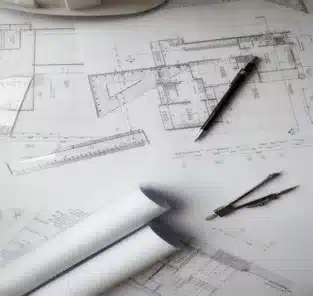
Get a free quote — 1800 287 223