AutoCAD

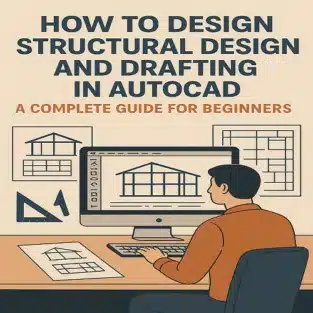
Structural design and drafting are the backbone of any construction or engineering project. With the rise of digital tools, AutoCAD has become one of the most powerful and widely used software platforms for creating precise 2D and 3D structural drawings. Whether you are an aspiring civil engineer, architect, or draftsman, learning Structural Design and Drafting in AutoCAD will open countless career opportunities and help you work efficiently on real-world projects.

In this complete guide, we’ll walk you through the basics of structural drafting in AutoCAD, key tools, best practices, and FAQs to help beginners get started.


What is Structural Design and Drafting in AutoCAD?

Structural design involves planning, analyzing, and designing the load-bearing framework of a building, bridge, or any structure. Drafting, on the other hand, is the process of creating detailed technical drawings that communicate the design intent to builders, engineers, and contractors.

AutoCAD allows engineers and draftsmen to create precise and scalable structural drawings digitally. It replaces manual paper drawings, saving time and reducing errors while providing flexibility for modifications and collaboration.


Why Use AutoCAD for Structural Design and Drafting?

  1. Accuracy and Precision – AutoCAD ensures millimeter-level accuracy in structural drawings.
  2. 2D & 3D Modeling – It offers both 2D drafting and 3D modeling for a complete design experience.
  3. Standardization – AutoCAD supports industry standards, symbols, and templates.
  4. Easy Editing – Unlike manual drawings, changes can be made quickly and efficiently.
  5. Compatibility – AutoCAD drawings can be shared in multiple formats (DWG, DXF, PDF) for collaboration.

Getting Started with Structural Drafting in AutoCAD

If you are a beginner, follow these essential steps to start creating structural drawings in AutoCAD:

1. Learn the Basics of AutoCAD Interface

  • Explore the ribbon menu, command line, and drawing workspace.
  • Familiarize yourself with layers, object snaps, and coordinate systems.

2. Understand Structural Drafting Standards

  • Learn common structural symbols (beams, columns, foundations, reinforcements).
  • Follow BIS, AISC, or regional drafting standards.

3. Create the Structural Grid

  • The grid forms the base of any structural drawing.
  • Use LINE and OFFSET commands to set up grids.

4. Draft Structural Elements

  • Columns – Draw using rectangles or polylines.
  • Beams – Use lines or polylines aligned with the grid.
  • Footings & Foundations – Represent with rectangles and hatch patterns.
  • Slabs & Reinforcement – Use hatches and layers for clarity.

5. Use Layers Effectively

  • Assign beams, columns, slabs, and dimensions to separate layers.
  • Helps in organizing and editing the drawing.

6. Add Dimensions and Annotations

  • Use the DIMLINEAR and TEXT commands for clarity.
  • Ensure all drawings are readable with proper scale.

7. Create 3D Structural Models (Optional)

  • AutoCAD’s 3D tools can be used to visualize the structure.
  • Commands like EXTRUDE and REVOLVE help in creating 3D models.

8. Finalize and Export Drawings

  • Double-check alignment, dimensions, and standards.
  • Export in PDF/DWG format for engineers and contractors.

Best Practices for Beginners

  • Always start with proper units and scales.
  • Use blocks for repetitive elements like column sections.
  • Keep drawings clean and organized with layers.
  • Save your work frequently to avoid data loss.
  • Learn keyboard shortcuts to speed up drafting.

Benefits of Learning Structural Design and Drafting in AutoCAD

  • Enhances employability in civil engineering, architecture, and construction industries.
  • Saves time compared to manual drafting.
  • Helps in creating error-free, professional drawings.
  • Builds a strong foundation for learning advanced software like Revit or STAAD Pro.

Final Thoughts

Learning Structural Design and Drafting in AutoCAD is a rewarding skill that empowers beginners to create accurate, professional, and standardized drawings for construction projects. By mastering the basics—grids, columns, beams, dimensions, and annotations—you can progress toward advanced modeling and even BIM applications.

AutoCAD remains one of the most in-demand tools in engineering and construction, making it a valuable career asset. Whether you are a student, fresher, or professional, this guide gives you a roadmap to start your journey in structural drafting.

What is structural design and drafting in AutoCAD?

Structural design and drafting in AutoCAD involves creating detailed structural drawings of buildings, bridges, or other infrastructures. These drawings include plans, elevations, sections, and reinforcement details that help engineers and contractors understand the design.

Why is AutoCAD important for structural drafting?

AutoCAD provides precision, speed, and flexibility in creating 2D and 3D drawings. It allows engineers to produce accurate designs, make quick modifications, and share files easily with clients or contractors.

Can beginners learn structural drafting in AutoCAD?

Yes. Beginners can start with basic 2D drafting, learn layer management, dimensioning, and gradually move to structural detailing. With practice and tutorials, they can create professional-level drawings.

What skills are needed to start structural design in AutoCAD?

Basic knowledge of construction drawings, understanding of structural elements (like beams, columns, and foundations), and familiarity with AutoCAD commands are essential to begin.

What types of structural drawings can be created in AutoCAD?

AutoCAD can be used to create foundation plans, column layouts, beam details, reinforcement drawings, steel structure details, and 3D structural models.



JH

James Hartley

Senior Mechanical Engineer · BEng (Mechanical), UQ · Member, Engineers Australia · ASTCAD, Brisbane

James has 14 years of hands-on experience delivering CAD design, structural drafting, and engineering documentation across Australia’s mining, oil & gas, and manufacturing sectors. He specialises in SolidWorks, Autodesk Inventor, and AutoCAD for complex multi-discipline projects.

More articles by James Hartley →
3D Mechanical Parts in AutoCAD

Designing 3D Mechanical Parts in AutoCAD is an essential skill for engineers, designers, and manufacturers who want to bring their ideas to life with precision and efficiency. AutoCAD, developed by Autodesk, is one of the most widely used CAD software applications for creating detailed mechanical drawings, models, and assemblies. Whether you’re designing machine components, tools, or industrial equipment, AutoCAD provides a robust platform to create accurate 3D models that streamline prototyping and manufacturing processes.

In this guide, we’ll walk through the basics of designing 3D Mechanical Parts in AutoCAD, share practical tips, and answer some frequently asked questions.


Why Use AutoCAD for 3D Mechanical Parts?

AutoCAD is not just for 2D drafting—it’s a powerful tool for 3D modeling as well. Here’s why it’s ideal for mechanical part design:

  • Precision and Accuracy: AutoCAD allows you to create models down to the finest detail, ensuring every hole, slot, and dimension aligns perfectly.
  • Compatibility: Files can be exported in various formats (e.g., .STL, .STEP, .IGES), making it easy to integrate with 3D printers, CNC machines, and other CAD/CAM software.
  • Visualization: 3D models provide a realistic preview of mechanical parts, helping to detect design flaws before production.
  • Efficiency: The parametric and feature-based design tools allow for quick modifications, saving time in the design iteration process.

Steps to Design 3D Mechanical Parts in AutoCAD

1. Start with a Concept

Before diving into AutoCAD, have a clear idea of the part you want to design. Gather sketches, technical requirements, and measurements. This will help guide your 3D modeling process.

2. Set Up the AutoCAD Workspace

  • Switch to a 3D Modeling workspace by going to the workspace settings in AutoCAD.
  • Familiarize yourself with the 3D tools panel: Extrude, Revolve, Sweep, Loft, and Boolean operations (Union, Subtract, Intersect).

3. Create a 2D Sketch

Every 3D model starts with a 2D sketch:

  • Use commands like LINE, CIRCLE, RECTANGLE, and POLYLINE to draw the base profile of your part.
  • Ensure that dimensions are accurate using the DIMENSION tool.

4. Convert 2D Sketches into 3D Models

  • EXTRUDE: Turn a closed 2D profile into a 3D solid by pulling it along the Z-axis.
  • REVOLVE: Rotate a 2D sketch around an axis to create cylindrical or spherical parts (useful for gears, pulleys, or shafts).
  • SWEEP and LOFT: Create complex parts by sweeping a profile along a path or lofting between multiple shapes.

5. Modify 3D Models

Once you’ve created the basic shape, refine it with modification tools:

  • FILLET and CHAMFER: Add smooth edges or beveled corners.
  • SHELL: Hollow out parts to reduce weight.
  • BOOLEAN operations: Combine or subtract solids to create complex designs.

6. Add Details

Mechanical parts often require features like holes, threads, or slots. Use the following:

  • HOLE or CYLINDER tool for drilled holes.
  • ARRAY tool to create repetitive features like bolt patterns.
  • PRESSPULL tool to cut shapes into surfaces.

7. Apply Materials and Rendering

Assign materials (metal, plastic, etc.) to your part for realistic visualization. AutoCAD’s rendering tools help you see how your design will look in real-world conditions.

8. Check and Export Your Design

  • Use MEASURE tools to verify dimensions.
  • Export in formats like .STL for 3D printing or .STEP/IGES for manufacturing.

Best Practices for Designing 3D Mechanical Parts in AutoCAD

  • Start Simple: Break down complex parts into smaller, simpler shapes before combining them.
  • Use Constraints: Apply geometric and dimensional constraints to maintain design accuracy.
  • Organize with Layers: Assign different parts or features to layers for easier editing.
  • Regularly Save Versions: Keep backups as you progress to avoid losing work.
  • Simulate Movements: If designing assemblies, test how parts move and fit together.

Common Applications of 3D Mechanical Parts in AutoCAD

  • Automotive components (gears, engine parts)
  • Industrial machinery and equipment
  • Aerospace components
  • Consumer products (electronics housings, tools, etc.)
  • Prototypes for 3D printing and CNC machining

Final Thoughts

Designing 3D Mechanical Parts in AutoCAD allows engineers and designers to create highly accurate and functional models that bridge the gap between concept and reality. By mastering the core 3D tools, understanding best practices, and practicing regularly, you can unlock AutoCAD’s full potential in mechanical design.

Whether you are a beginner or a professional, AutoCAD equips you with the tools to design, visualize, and prepare your mechanical parts for real-world applications.

Can beginners design 3D Mechanical Parts in AutoCAD?

Yes! AutoCAD is beginner-friendly, and with practice, you can quickly learn to design simple parts before progressing to more complex mechanical assemblies.

What file format should I use for 3D printing mechanical parts?

The most common format is u003cstrongu003e.STLu003c/strongu003e, but u003cstrongu003e.STEPu003c/strongu003e or u003cstrongu003e.IGESu003c/strongu003e files are better for sharing designs with manufacturers.

How do I ensure accuracy in my 3D models?

Use the u003cstrongu003eDIMENSION and SNAP toolsu003c/strongu003e, and apply constraints while sketching. Always double-check measurements before extruding or modifying shapes.

Can AutoCAD simulate stress or load on mechanical parts?

AutoCAD itself has limited simulation features. For advanced stress analysis or FEA (Finite Element Analysis), you can use Autodesk Inventor, Fusion 360, or other specialized software.

Is AutoCAD better than SolidWorks or Fusion 360 for mechanical design?

AutoCAD is excellent for drafting and modeling simple to moderately complex parts. However, SolidWorks and Fusion 360 offer more advanced mechanical design features like parametric modeling, assemblies, and simulation tools.


JH

James Hartley

Senior Mechanical Engineer · BEng (Mechanical), UQ · Member, Engineers Australia · ASTCAD, Brisbane

James has 14 years of hands-on experience delivering CAD design, structural drafting, and engineering documentation across Australia’s mining, oil & gas, and manufacturing sectors. He specialises in SolidWorks, Autodesk Inventor, and AutoCAD for complex multi-discipline projects.

More articles by James Hartley →
Engineering Drawings in AutoCAD

Creating precise and professional engineering drawings in AutoCAD is a fundamental skill for engineers, architects, and designers. AutoCAD has become the industry standard software for technical drafting, allowing professionals to transform concepts into detailed 2D and 3D drawings. Whether you’re a beginner or someone looking to refine your drafting skills, learning how to prepare engineering drawings in AutoCAD step by step will give you a strong foundation.

In this guide, we’ll cover the process of creating engineering drawings in AutoCAD, along with essential tips to help you get started.


What Are Engineering Drawings in AutoCAD?

Engineering drawings are technical representations that communicate design ideas clearly and accurately. These drawings serve as blueprints for manufacturing, construction, or product development. AutoCAD simplifies this process by offering tools for precision, scaling, annotations, and dimensioning, ensuring that the drawings meet industry standards.

With AutoCAD, beginners can create mechanical parts, architectural floor plans, structural layouts, and electrical schematics with ease.


Step-by-Step Guide: How to Create Engineering Drawings in AutoCAD

Step 1: Launch AutoCAD and Set Up the Workspace

  • Open AutoCAD and select a new drawing file.
  • Configure the drawing units (millimeters, centimeters, or inches) using the UNITS command.
  • Set up the drawing limits with the LIMITS command to define your workspace.

This ensures that your engineering drawing is created with the right scale and measurement system from the beginning.


Step 2: Create Layers

Layers help organize different components of your drawing. For example, walls, dimensions, annotations, and centerlines can each have separate layers.

  • Use the LAYER command to create and manage layers.
  • Assign colors and line types for better readability.

Organized layers make your drawing professional and easy to interpret.


Step 3: Start with Basic Geometry

  • Use commands like LINE, CIRCLE, RECTANGLE, and POLYGON to create the basic shapes.
  • Snap and grid settings ensure accuracy by locking points to intersections or midpoints.
  • The OSNAP feature is particularly useful for precision.

This step forms the skeleton of your engineering drawing.


Step 4: Add Dimensions and Annotations

Dimensions are critical in engineering drawings. They define sizes, distances, and tolerances.

  • Use the DIMLINEAR, DIMANGULAR, and DIMALIGNED commands for different types of dimensions.
  • Add text using the TEXT or MTEXT command for notes, labels, and instructions.

This ensures that your drawing communicates technical details effectively.


Step 5: Apply Hatching and Section Views

  • Use the HATCH command to apply patterns to cross-sections, helping to identify materials or cut areas.
  • Section views can be created to show internal features of objects, especially in mechanical drawings.

This makes the drawing more informative and professional.


Step 6: Insert Title Block and Border

Every engineering drawing needs a title block that includes information such as:

  • Project name
  • Designer’s name
  • Date
  • Scale
  • Revision number

AutoCAD allows you to create custom title blocks or use pre-defined templates.


Step 7: Final Checks and Plotting

  • Verify layers, scales, and dimensions.
  • Use the AUDIT and PURGE commands to clean up unused items.
  • Plot or print your drawing using the PLOT command, ensuring that line weights and scales are correct.

Your engineering drawing is now ready for professional use.


Tips for Beginners in AutoCAD Engineering Drawings

  1. Practice with simple projects like bolts, floor plans, or brackets before moving to complex designs.
  2. Use keyboard shortcuts to speed up your drafting process.
  3. Save versions of your file frequently to avoid losing progress.
  4. Refer to drafting standards (ISO, ANSI, or BIS) to make your drawings universally acceptable.
  5. Leverage AutoCAD tutorials and templates to learn industry-specific drawing techniques.

Why Use AutoCAD for Engineering Drawings?

  • Accuracy: AutoCAD allows exact measurements, which is crucial in engineering.
  • Efficiency: Reusable blocks, layers, and templates speed up drawing creation.
  • Collaboration: DWG files can be shared easily across industries.
  • 3D Capabilities: Beginners can start with 2D drawings and gradually move into 3D modeling.

Conclusion

Learning how to create engineering drawings in AutoCAD is a crucial step for anyone entering the engineering or design field. By following a structured process—setting units, creating layers, drafting geometry, adding dimensions, and finalizing with title blocks—you can produce professional-grade drawings. With practice and attention to detail, beginners can master AutoCAD and unlock opportunities in various technical industries.

Is AutoCAD difficult for beginners?

AutoCAD may seem overwhelming at first, but with consistent practice and step-by-step learning, beginners can create professional engineering drawings within weeks.

Do I need to know engineering concepts before using AutoCAD?

Yes, having basic engineering knowledge helps. AutoCAD is a tool, and understanding technical standards ensures your drawings are accurate and meaningful.

Can I use AutoCAD for both 2D and 3D drawings?

Yes. AutoCAD is versatile and supports both 2D drafting and 3D modeling, making it ideal for engineering applications.

How do I learn shortcuts in AutoCAD?

Start with commonly used commands like u003cstrongu003eLu003c/strongu003e (Line), u003cstrongu003eCu003c/strongu003e (Circle), u003cstrongu003eTRu003c/strongu003e (Trim), and u003cstrongu003eCOu003c/strongu003e (Copy). Over time, you’ll build speed and efficiency.

Which industries use engineering drawings in AutoCAD?

Industries like mechanical, civil, electrical, architectural, and manufacturing rely heavily on AutoCAD for precise technical drawings.


JH

James Hartley

Senior Mechanical Engineer · BEng (Mechanical), UQ · Member, Engineers Australia · ASTCAD, Brisbane

James has 14 years of hands-on experience delivering CAD design, structural drafting, and engineering documentation across Australia’s mining, oil & gas, and manufacturing sectors. He specialises in SolidWorks, Autodesk Inventor, and AutoCAD for complex multi-discipline projects.

More articles by James Hartley →
AI in Engineering

The integration of Artificial Intelligence (AI) in engineering has revolutionized various disciplines, and one of the most promising applications lies in CAD (Computer-Aided Design) drafting. As industries continue to demand faster, smarter, and more accurate design processes, AI in engineering CAD drafting is emerging as a game-changer.

From automating repetitive tasks to offering intelligent design suggestions, AI is not just a tool but a transformational force that will shape the future of engineering drafting. This blog explores how AI is influencing engineering CAD drafting and what the future holds.

How AI is Changing Engineering CAD Drafting

1. Automating Repetitive Tasks

Traditionally, CAD drafters spend hours on manual tasks such as dimensioning, annotation, and creating standard components. AI-powered drafting tools now automate these repetitive steps, allowing engineers to focus on design innovation.

2. Enhanced Error Detection

AI systems use predictive analytics and machine learning to scan designs for inconsistencies, errors, or clashes in real time, reducing design errors and ensuring higher accuracy in project delivery.

3. Generative Design Capabilities

By inputting design constraints and goals, AI algorithms can generate multiple design alternatives that meet functional requirements, allowing engineers to evaluate the most efficient and structurally sound options.

4. Improved Collaboration

Cloud-based AI tools allow seamless collaboration between engineers, architects, and other stakeholders, automatically syncing changes, highlighting revisions, and providing real-time feedback.

5. AI-Powered Design Recommendations

AI can analyze massive datasets from previous engineering projects and offer intelligent design suggestions for better materials, optimized structural integrity, and reduced unnecessary components.

Future Trends of AI in Engineering CAD Drafting

  • Natural Language Processing (NLP) — Engineers will interact with CAD software using natural language commands.
  • Voice and Gesture Recognition — Hands-free operation especially beneficial in VR/AR CAD environments.
  • Predictive Maintenance — AI evaluates lifespan and failure points during the drafting phase.
  • Digital Twins Integration — AI integrates real-world data into CAD models for lifecycle simulation.

Benefits of AI in Engineering CAD Drafting

  • Time Efficiency: Speeds up drafting through automation.
  • Accuracy: Minimises human error with intelligent checking.
  • Cost Savings: Reduces rework through optimal design suggestions.
  • Innovation: Enables generative design and smart simulations.

By adopting AI in engineering CAD drafting today, companies can future-proof their workflows, enhance project outcomes, and maintain a competitive edge in the rapidly evolving digital landscape.

The future of engineering CAD drafting lies in embracing AI in engineering to drive smarter, faster, and more innovative design processes. Contact ASTCAD to discuss how AI-enhanced drafting can benefit your projects.

What is AI in Engineering CAD Drafting?

AI in engineering CAD drafting refers to the use of artificial intelligence technologies like machine learning, automation, and data analytics to enhance design accuracy, automate drafting tasks, and improve decision-making in engineering projects.

How does AI benefit CAD drafters?

AI assists CAD drafters by automating repetitive tasks, reducing errors, offering smart design suggestions, and enabling faster revisions, thus increasing efficiency and creativity.

Can AI replace human drafters?

No, AI is designed to assist, not replace. Human creativity, problem-solving, and engineering judgment remain irreplaceable.

What skills do engineers need to work with AI in CAD drafting?

Engineers should have a good understanding of CAD tools, basic knowledge of AI concepts, and adaptability to learn new AI-powered software features.

What is the future of AI in engineering?

The future of AI in engineering includes more intelligent design automation, integration with digital twin and IoT, real-time collaboration tools, and increased use of predictive analytics in drafting and modelling.


JH

James Hartley

Senior Mechanical Engineer · BEng (Mechanical), UQ · Member, Engineers Australia · ASTCAD, Brisbane

James has 14 years of hands-on experience delivering CAD design, structural drafting, and engineering documentation across Australia’s mining, oil & gas, and manufacturing sectors. He specialises in SolidWorks, Autodesk Inventor, and AutoCAD for complex multi-discipline projects.

More articles by James Hartley →
AI in Drafting

As the architecture, engineering, and construction (AEC) industries continue to evolve, the role of AI in drafting has become increasingly important. In 2025, artificial intelligence is no longer a futuristic concept—it’s a practical, everyday tool for CAD professionals aiming to streamline workflows, reduce errors, and enhance creativity.

What is AI in Drafting?

AI in drafting refers to the use of artificial intelligence technologies to automate, optimize, and assist with various tasks in computer-aided design (CAD) drafting. This includes intelligent drawing suggestions, automated layer management, real-time error detection, and generative design capabilities.

Why AI Matters for CAD Professionals in 2025

1. Increased Efficiency

AI-powered tools automate repetitive tasks like dimensioning, annotations, symbol placement, and file conversions, freeing up valuable time for designers to focus on creativity.

2. Fewer Errors

AI in drafting detects inconsistencies, design clashes, and structural errors in real-time, helping drafters avoid rework and reduce project costs.

3. Intelligent Recommendations

AI understands design intent and offers smart suggestions based on context, historical data, and industry best practices, significantly improving design accuracy and productivity.

4. Seamless Collaboration

AI-integrated drafting platforms include cloud-based solutions enabling multiple team members to collaborate in real-time with AI-supported version control and change tracking.

5. Adaptive Learning

Modern AI systems learn from the user’s behaviour and improve over time. As the software adapts to the drafter’s style and preferences, workflows become smoother and more intuitive.

Key AI Tools Used in CAD Drafting Today

  • Autodesk’s AI Assistant: Intelligent drawing recommendations and automated complex tasks.
  • BricsCAD’s BIM AI Tools: Detect and repair broken geometry, automate tagging.
  • SolidWorks AI Drafting Assistant: Generative design options and error detection.
  • Chatbot Integration: AI chatbots assist with command prompts directly within the CAD interface.

How to Start Integrating AI in Your Drafting Workflow

  1. Upgrade Your Software: Use the latest AI-enabled CAD platforms such as AutoCAD, Revit, or BricsCAD.
  2. Take Online Courses: Platforms like Coursera, Udemy, and Autodesk Learning Hub offer updated AI drafting courses.
  3. Use AI Plugins: Install AI-based plugins tailored to your specific drafting needs.
  4. Practice with AI Features: Try automated drawing tools, clash detection, and layout optimisation.
  5. Collaborate with AI Experts: Join forums where professionals share insights about using AI in drafting.

The Future of AI in Drafting

Predictive modelling, real-time collaboration with augmented reality, and deeper integration with BIM systems will become standard. Drafters will spend less time on technical details and more on design strategy and creativity.

Embracing AI today prepares CAD professionals to stay relevant, efficient, and competitive in the ever-changing design landscape.

AI in drafting is not just a trend—it’s the future of CAD design and a vital tool for professionals in 2025 and beyond. Talk to ASTCAD about integrating AI into your drafting workflow today.


JH

James Hartley

Senior Mechanical Engineer · BEng (Mechanical), UQ · Member, Engineers Australia · ASTCAD, Brisbane

James has 14 years of hands-on experience delivering CAD design, structural drafting, and engineering documentation across Australia’s mining, oil & gas, and manufacturing sectors. He specialises in SolidWorks, Autodesk Inventor, and AutoCAD for complex multi-discipline projects.

More articles by James Hartley →
AI for 2D Drafting & Drawing

In the world of architectural, mechanical, and civil design, 2D drafting remains a foundational element of any successful project. But with increasing pressure to deliver high-quality drawings faster and with greater accuracy, professionals are now turning to AI for Automated 2D Drafting & Drawingto streamline workflows, minimize errors, and increase productivity.

AI for Automated 2D Drafting & Drawing

AI technologies are revolutionizing traditional CAD processes, automating repetitive tasks, and intelligently suggesting or even generating complete design elements. If you’re looking to integrate AI into your drafting process, this step-by-step guide will walk you through the essential stages.


Step 1: Understand the Capabilities of AI in 2D Drafting

Before diving into automation, it’s important to understand what AI can do in the context of 2D drafting and drawing:

  • Auto-generation of floor plans and layouts based on parameters.
  • Intelligent object recognition and annotation.
  • Real-time error detection and correction.
  • Layer management and standardization.
  • Drafting suggestions based on learned design patterns.

AI tools don’t replace designers—they enhance their capabilities by taking over time-consuming tasks, allowing engineers and architects to focus on creativity and precision.


Step 2: Choose the Right AI-Powered Drafting Software

To get started with AI for 2D Drafting & Drawing, you need software that integrates AI-driven features. Some popular tools include:

  • AutoCAD with Autodesk AI enhancements
  • BricsCAD with AI-assisted BIM and drafting tools
  • ZWCAD with smart voice and drawing commands
  • ArCADia BIM for architecture-focused automation

Ensure the software supports your file formats, industry standards, and offers integration with existing tools in your workflow.


Step 3: Train or Upload Existing Drawing Data

AI becomes more effective when it has access to a rich dataset. Most platforms allow you to upload previous drawings or standard templates so the AI can:

  • Learn recurring patterns.
  • Understand layer usage.
  • Automate recurring annotations or dimensioning styles.

Feeding your system with historical data increases the relevance and accuracy of the automated suggestions.


Step 4: Set Automation Parameters

Depending on your project type, you can set rules or parameters for:

  • Dimensions and tolerances.
  • Layer styles and naming conventions.
  • Text annotations and callouts.
  • Symbol libraries and object standards.

This ensures AI-generated drawings adhere to your firm’s standards or specific project requirements.


Step 5: Automate Repetitive Drafting Tasks

Once your AI system is trained and set up, you can begin automating:

  • Title block insertion and sheet numbering.
  • Layer assignment and visibility control.
  • Auto-dimensioning of standard components.
  • Repetitive component placement (e.g., windows, beams, fixtures).

This saves hours on tasks that were once manually done, especially in large projects.


Step 6: Use AI-Based Error Detection

One of the most powerful applications of AI for 2D Drafting & Drawing is error detection. AI can:

  • Identify misaligned objects.
  • Detect missing dimensions or annotations.
  • Flag inconsistencies in layer usage.
  • Highlight overlaps or potential conflicts.

This real-time feedback dramatically reduces costly revisions and improves drawing quality.


Step 7: Collaborate and Review

Many AI-powered drafting platforms include cloud or team-based review features. Use these to:

  • Share AI-generated drafts for feedback.
  • Track design suggestions and corrections.
  • Collaborate with remote teams and make decisions faster.

AI can also assist during this stage by summarizing changes or tracking revision history.


Step 8: Export and Finalize Your Drawings

After review, AI tools allow you to finalize and export your work into:

  • DWG/DXF files for CAD platforms.
  • PDF for client sharing.
  • BIM formats for integration with 3D models.

Make sure to do a manual check of all automated tasks before final submission, especially for regulatory compliance or project approvals.


Benefits of Using AI for 2D Drafting & Drawing

  • Speed: Automates hours of manual work.
  • Accuracy: Reduces human error.
  • Consistency: Ensures all drawings follow standards.
  • Productivity: Teams can complete more work in less time.
  • Innovation: Allows designers to focus on high-level tasks.

AI is transforming the way we approach drafting by simplifying processes, improving accuracy, and helping professionals focus on design excellence. By following this step-by-step guide, you can start incorporating AI for 2D Drafting & Drawing in your workflow and stay ahead in an increasingly automated industry.

Can AI completely replace human drafters in 2D drawing tasks?

AI enhances and supports human capabilities but does not replace the critical thinking, creativity, and decision-making that human designers bring to the table.

What type of projects benefit the most from AI in 2D drafting?

Projects with repetitive tasks, high volumes of drawings, or standard design elements (like housing layouts, piping schematics, electrical plans) benefit greatly from AI-based automation.

Is it necessary to have programming knowledge to use AI drafting tools?

Most AI features are integrated directly into user-friendly drafting platforms. However, some platforms may offer advanced customization via scripting or APIs for tech-savvy users.

Are AI drafting tools expensive?

The cost varies. Many AI-powered features are now included in mainstream CAD software packages or available as affordable add-ons. Consider your productivity gains when evaluating ROI.

Is AI drafting only useful for large firms?

u003cstrongu003eNo.u003c/strongu003e Small and mid-size firms can benefit just as much—if not more—by using AI to save time, reduce staff workload, and compete more efficiently with larger firms.


JH

James Hartley

Senior Mechanical Engineer · BEng (Mechanical), UQ · Member, Engineers Australia · ASTCAD, Brisbane

James has 14 years of hands-on experience delivering CAD design, structural drafting, and engineering documentation across Australia’s mining, oil & gas, and manufacturing sectors. He specialises in SolidWorks, Autodesk Inventor, and AutoCAD for complex multi-discipline projects.

More articles by James Hartley →
Mechanical Design

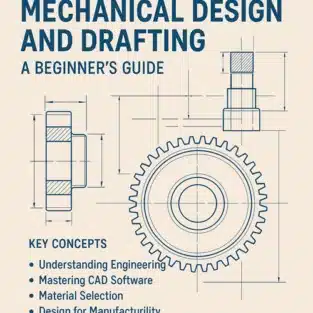
Mechanical design and drafting form the backbone of modern engineering. From the smallest machine components to large-scale industrial equipment, everything begins with a detailed design. If you’re new to the field, diving into mechanical design and drafting might seem overwhelming. But don’t worry—this beginner’s guide will simplify the process and help you build a strong foundation.

What is Mechanical Design and Drafting?

Mechanical design is the process of creating drawings and specifications for mechanical systems and components. It involves understanding how machines function, selecting suitable materials, and optimizing the design for performance and cost.

Mechanical drafting, on the other hand, is the act of translating these design ideas into technical drawings using CAD (Computer-Aided Design) tools. These drawings include precise dimensions, tolerances, materials, and assembly instructions.

Together, mechanical design and drafting ensure that a product can be built accurately, efficiently, and safely.


Key Concepts for Beginners

1. Understanding Engineering Drawings

Engineering drawings are the universal language of engineers. They include multiple views (top, front, side), detailed dimensions, and annotations to communicate how a part or assembly should be built.

Familiarize yourself with:

  • Orthographic projection
  • Isometric views
  • Sectional views
  • Tolerances and GD&T (Geometric Dimensioning and Tolerancing)

2. Mastering CAD Software

CAD software is essential for drafting and designing. Popular tools include:

  • AutoCAD
  • SolidWorks
  • CATIA
  • Fusion 360
  • Siemens NX

Start with 2D drafting before transitioning into 3D modeling. Many software providers offer free student versions, which are perfect for beginners.

3. Material Selection

Understanding material properties is crucial in mechanical design. Factors like strength, weight, corrosion resistance, and cost influence material choices. Common materials include:

  • Steel
  • Aluminum
  • Brass
  • Plastics (ABS, Nylon, etc.)

4. Design for Manufacturability (DFM)

A good design isn’t just functional—it’s also easy and cost-effective to manufacture. DFM principles help avoid over-engineering and reduce production costs. Consider:

  • Minimizing part complexity
  • Standardizing components
  • Reducing the number of parts in an assembly

5. Working with Tolerances

Every manufactured part has some variation. Tolerances define the allowable limits. For instance, a shaft may be designed to be 20mm ± 0.02mm in diameter. Understanding tolerances is essential to ensure parts fit and function correctly.


Tips for Getting Started

  • Start Simple: Begin with basic projects like brackets, bushings, or gears to understand shapes and features.
  • Practice Regularly: Like any skill, drafting improves with practice. Try to replicate existing parts to sharpen your understanding.
  • Learn from Others: Study professional drawings, join online communities, and watch tutorials.
  • Understand Industry Standards: Familiarize yourself with ANSI, ISO, and other relevant drafting standards.

Common Mistakes to Avoid

  1. Skipping the Planning Phase: Always sketch and plan your design before jumping into CAD.
  2. Neglecting Tolerances: Ignoring tolerances can lead to assembly failures.
  3. Overcomplicating Designs: Keep your designs simple and functional.
  4. Not Backing Up Files: Always save and back up your design files to avoid data loss.
  5. Ignoring Manufacturing Constraints: Design with the end process (machining, 3D printing, etc.) in mind.

Tools and Resources

  • Books: “Technical Drawing with Engineering Graphics” by Frederick Giesecke, and “Machine Design” by Khurmi & Gupta.
  • Courses: Free CAD tutorials on platforms like Coursera, Udemy, and YouTube.
  • Communities: Reddit’s r/engineering, GrabCAD, and Autodesk forums.

Mechanical design and drafting are essential skills in today’s engineering and manufacturing industries. By starting with the basics and gradually building your knowledge and portfolio, you’ll be well on your way to a rewarding career in design. Whether you’re aiming to become a product designer, mechanical engineer, or CAD technician, this foundational knowledge is your first step to success.

What is the difference between 2D drafting and 3D modeling?

2D drafting creates flat representations of objects, showing views like top, front, and side. 3D modeling builds digital versions of objects in three dimensions, allowing better visualization and simulation.

Is coding required for mechanical design?

Not necessarily. Most CAD tools are graphical. However, knowledge of programming (like Python or MATLAB) can be useful for automation or simulation tasks.

How long does it take to learn mechanical drafting?

With consistent practice, you can grasp basic 2D drafting in a few weeks. 3D modeling and advanced concepts might take a few months to master.

Do I need a degree to become a mechanical designer?

While a degree helps, many successful designers come from diploma or certification backgrounds. What matters most is your skill, portfolio, and understanding of design principles.


JH

James Hartley

Senior Mechanical Engineer · BEng (Mechanical), UQ · Member, Engineers Australia · ASTCAD, Brisbane

James has 14 years of hands-on experience delivering CAD design, structural drafting, and engineering documentation across Australia’s mining, oil & gas, and manufacturing sectors. He specialises in SolidWorks, Autodesk Inventor, and AutoCAD for complex multi-discipline projects.

More articles by James Hartley →
Sheet Metal Design

Sheet metal design is a vital skill in mechanical and industrial engineering, enabling the creation of durable and functional parts used in products ranging from electronics to automotive and aerospace systems. For CAD beginners, understanding how to approach sheet metal design for fabrication can make the difference between a concept that works in theory and one that performs reliably in the real world.

In this tutorial, we’ll walk you through the key steps of designing for sheet metal fabrication using CAD tools. We’ll also provide helpful tips to avoid common pitfalls and ensure your designs are both manufacturable and cost-effective.


What Is Sheet Metal Design?

Sheet metal design involves creating flat 2D or 3D models that can be fabricated into parts by processes like bending, cutting, punching, and welding. Unlike standard 3D modeling, sheet metal design requires you to account for factors like bend allowances, material behavior, and tool constraints.

CAD software like SolidWorks, AutoCAD, and Fusion 360 often includes dedicated sheet metal modules, making it easier to unfold designs and prepare them for manufacturing.


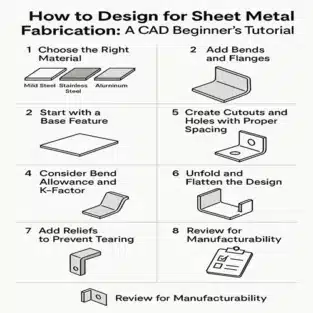
Step-by-Step Beginner’s Guide to Sheet Metal Design

1. Choose the Right Material

Before you start designing, understand the properties of your sheet metal material. Common materials include:

  • Mild steel – affordable and easy to form
  • Stainless steel – corrosion-resistant but harder to bend
  • Aluminum – lightweight and corrosion-resistant
  • Copper and brass – used in decorative and electrical applications

Each material has different thicknesses, minimum bend radii, and strength characteristics, all of which affect your design.


2. Start with a Base Feature

In CAD, a base flange/tab is typically the starting point. This flat profile acts as the foundation for your design.

  • Begin with a 2D sketch on the top plane.
  • Extrude it to the desired thickness of your sheet.
  • Use the Sheet Metal toolset to convert it into a sheet metal part (if not already using a dedicated sheet metal template).

3. Add Bends and Flanges

Using the CAD software’s bend or flange tools, add the necessary folds and edges to your design.

Key bend considerations:

  • Maintain a minimum bend radius (typically equal to the sheet thickness).
  • Avoid bending too close to holes or edges, as this may lead to cracking or deformation.
  • Use uniform bend directions wherever possible to simplify the manufacturing process.

4. Consider Bend Allowance and K-Factor

When metal bends, it stretches and compresses. This needs to be accounted for in your flat pattern layout using bend allowance and K-factor.

  • Bend Allowance: The arc length of the bend, which must be added to the flat length.
  • K-Factor: A ratio that defines how material stretches during bending (commonly between 0.3 to 0.5 for most materials).

Modern CAD software can calculate this automatically when you input the material and bend radius.


5. Create Cutouts and Holes with Proper Spacing

Holes, slots, and cutouts are common in sheet metal parts, but their placement is crucial.

  • Keep holes at least 2x the material thickness away from bends.
  • Ensure minimum hole diameter is not smaller than the thickness of the material to avoid deformation.
  • Use standard hole sizes wherever possible for tooling efficiency.

6. Unfold and Flatten the Design

Once your model is complete, use your CAD software to generate the flat pattern.

This allows you to:

  • Export DXF files for laser cutting or CNC punching.
  • Validate the manufacturability of your part.
  • Check for interference or overlap in bends or flanges.

7. Add Reliefs to Prevent Tearing

When bending corners or edges, bend reliefs help avoid tearing or warping.

  • Use rectangular or obround reliefs where necessary.
  • Most CAD tools offer preset relief options you can apply automatically.

8. Review for Manufacturability

Before finalizing your design:

  • Review for minimum bend radii.
  • Ensure standard tooling can produce the part.
  • Minimize the number of bends and tooling operations where possible.

Sending your design to a fabricator for feedback can help optimize it further.


Best CAD Tools for Sheet Metal Design

  • SolidWorks Sheet Metal Module – Highly intuitive and widely used in industry.
  • AutoCAD Mechanical – Great for 2D layouts and DXF file exports.
  • Fusion 360 – Good for beginners and hobbyists, with built-in flat pattern support.
  • Onshape – Cloud-based and great for collaboration.

Conclusion

Mastering sheet metal design is a valuable skill for any aspiring CAD designer. By understanding the basics—material selection, bending rules, allowances, and proper CAD workflow—you can create parts that are not only functional but also easy and cost-effective to manufacture.

As you grow more confident with your CAD software, you’ll be able to create more complex designs, improve production efficiency, and reduce waste in your fabrication projects.

What is the minimum bend radius in sheet metal design?

The minimum bend radius typically equals the material thickness but may vary based on material type. Always check manufacturer guidelines.

Why is bend allowance important in sheet metal design?

Bend allowance accounts for the stretch that occurs when bending. Without it, flat patterns won’t be accurate.

How do I prevent tearing near bends?

Use bend reliefs and avoid placing holes or slots too close to bends.

Can I use regular 3D CAD tools for sheet metal design?

Yes, but it’s better to use tools with dedicated sheet metal modules to automate flattening and calculations.

What file format should I export for fabrication?

Most fabricators prefer DXF files for flat patterns and 2D cutting.


JH

James Hartley

Senior Mechanical Engineer · BEng (Mechanical), UQ · Member, Engineers Australia · ASTCAD, Brisbane

James has 14 years of hands-on experience delivering CAD design, structural drafting, and engineering documentation across Australia’s mining, oil & gas, and manufacturing sectors. He specialises in SolidWorks, Autodesk Inventor, and AutoCAD for complex multi-discipline projects.

More articles by James Hartley →
Electrical Drafting

In the fast-paced world of industrial design, the role of electrical drafting services has become more vital than ever. As industries continue to integrate advanced technologies into their manufacturing and operations, the need for accurate, efficient, and standards-compliant electrical designs is growing rapidly. Electrical drafting plays a key role in ensuring that industrial systems are functional, safe, and scalable from the planning stage to final execution.

In this blog, we will explore why electrical drafting services are a fundamental component of industrial design, and how they help engineers, manufacturers, and project managers maintain high standards in every stage of development.

What Are Electrical Drafting Services?

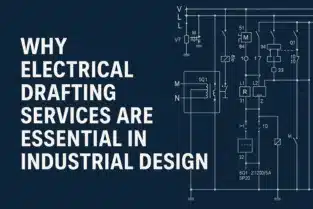
Electrical drafting services involve the creation of detailed technical drawings and documentation for electrical systems. These drawings include wiring diagrams, circuit layouts, panel schedules, conduit layouts, and power distribution systems. They are created using CAD (Computer-Aided Design) software and follow industry standards such as IEC, NEC, or ANSI.

Professionals in this field transform basic design concepts into accurate digital blueprints that electricians, engineers, and construction teams rely on for implementation.

The Role of Electrical Drafting in Industrial Design

1. Accurate Representation of Electrical Systems

Industrial design often involves large-scale electrical systems with complex interconnections between machines, control systems, and power sources. Electrical drafting services provide precise diagrams that detail every component, wire, and connection. This level of accuracy minimizes guesswork and ensures smooth execution during installation.

2. Compliance with Industry Standards

Industrial electrical systems must comply with strict safety and regulatory standards. Drafting professionals understand national and international codes and incorporate them into their designs. Whether it’s the National Electrical Code (NEC) in the United States or the International Electrotechnical Commission (IEC) standards globally, compliance is ensured through professional drafting.

3. Improved Project Planning and Communication

Electrical drafting documents serve as a universal language between designers, engineers, contractors, and clients. These clear and standardized drawings enhance collaboration and reduce misunderstandings during planning, installation, and maintenance.

4. Time and Cost Efficiency

By utilizing electrical drafting services, companies can save time and reduce costs. Well-drafted electrical plans prevent errors during construction, avoid material wastage, and reduce downtime during maintenance. Early detection of design flaws through drafting can prevent costly rework later in the project.

5. Integration with Mechanical and Structural Systems

In industrial design, electrical systems do not function in isolation. They must be integrated with mechanical and structural components. Electrical drafting services ensure that power supply, grounding, and control systems are correctly coordinated with other disciplines to avoid conflicts during installation.

6. Support for Automation and Smart Technologies

Modern industrial environments are increasingly automated. From programmable logic controllers (PLCs) to IoT-enabled sensors, electrical systems must be compatible with digital technologies. Electrical drafting helps visualize these integrations clearly, allowing for seamless implementation of smart systems.

Industries That Benefit from Electrical Drafting Services

Several industrial sectors rely heavily on electrical drafting services, including:

  • Manufacturing Plants – For power distribution, automation, and control panels.
  • Oil and Gas Facilities – For hazardous area electrical systems and instrumentation.
  • Construction and Infrastructure – For electrical layouts in industrial buildings.
  • Water Treatment Plants – For control systems and power management.
  • Energy and Renewable Sectors – For solar, wind, and electrical substation designs.

Key Deliverables in Electrical Drafting Services

A comprehensive electrical drafting package typically includes:

  • Single-line diagrams
  • Wiring diagrams and schematics
  • Power distribution layouts
  • Panel schedules
  • Lighting and outlet plans
  • Grounding and earthing plans
  • Conduit and cable tray layouts
  • Bill of materials (BOM)

These documents are crucial for installation, inspection, and future maintenance.

The Rise of CAD and BIM in Electrical Drafting

Today’s electrical drafting services rely heavily on advanced tools like AutoCAD Electrical, Revit MEP, and SolidWorks Electrical. These tools allow for 2D and 3D representations of systems, clash detection with other services, and integration with Building Information Modeling (BIM).

By using these technologies, electrical drafters can create intelligent, data-rich drawings that improve accuracy and adaptability in evolving project environments.

Why Outsourcing Electrical Drafting Services Makes Sense

Many industries choose to outsource their drafting needs to specialized providers. Here’s why:

  • Access to skilled professionals without the cost of full-time staff.
  • Quick turnaround time for urgent projects.
  • Cost-effective solutions that reduce overhead.
  • Scalability for handling both small and large-scale projects.

Outsourcing ensures that companies focus on core activities while drafting experts handle technical documentation with precision.

Conclusion

Electrical drafting services are not just technical documentation—they are the backbone of safe, compliant, and efficient industrial design. From concept to execution, electrical drafts bring clarity, accuracy, and standardization to every project. With the complexity of modern industrial systems, having professionally created electrical drawings is no longer optional—it is essential.

Whether you’re setting up a new manufacturing plant, automating an existing facility, or planning a major infrastructure upgrade, investing in reliable electrical drafting services can dramatically enhance project outcomes.

What are electrical drafting services?

Electrical drafting services involve creating detailed technical drawings and schematics for electrical systems. These drawings include layouts for power distribution, lighting systems, wiring diagrams, panel schedules, and circuiting, which are essential in planning and implementing electrical infrastructure in industrial design.

Why are electrical drafting services important in industrial projects?

In industrial design, precision is critical. Electrical drafting ensures accuracy, safety, compliance with electrical codes, and efficient use of resources. These services support the coordination between engineers, contractors, and manufacturers to avoid costly errors and rework.

What industries benefit most from electrical drafting services?

Industries such as manufacturing, oil and gas, automotive, aerospace, pharmaceuticals, and construction heavily rely on electrical drafting to design safe and effective electrical systems for plants, factories, and production facilities.

How do electrical drafting services contribute to safety?

Electrical drafting provides exact blueprints for system installation and maintenance, minimizing the risk of electrical faults, overloads, and fire hazards. Clear documentation ensures proper insulation, grounding, and circuit protection are in place.

What types of drawings are included in electrical drafting services?

Typical drawings include:u003cbru003ePower and lighting layoutsu003cbru003eCable and wiring diagramsu003cbru003eSingle-line and multi-line diagramsu003cbru003eControl panel layoutsu003cbru003eSchematic diagramsu003cbru003eLoad schedules and panel board details

How does electrical drafting improve project efficiency?

Accurate drafting streamlines communication between project stakeholders, prevents design clashes, enables faster permitting, and accelerates construction timelines. It also allows early detection of issues, reducing delays and costs.

Can electrical drafting help with regulatory compliance?

Yes. Electrical drafting services ensure designs follow local and international standards such as NEC, IEC, or IEEE. This compliance is crucial for securing permits and passing inspections in industrial setups.

Is CAD software used in electrical drafting?

Absolutely. Modern electrical drafting heavily relies on CAD software like AutoCAD Electrical, Revit, or EPLAN to create precise and editable drawings, enhancing accuracy, integration, and documentation.

What’s the difference between electrical drafting and electrical design?

Electrical design involves engineering decisions such as load calculation, equipment selection, and system layout planning. Electrical drafting translates those decisions into detailed drawings used for implementation, installation, and maintenance.

Why outsource electrical drafting services?

Outsourcing offers access to skilled drafters, cost savings, quicker turnaround, and the latest software tools. It allows industrial firms to focus on core operations while ensuring high-quality, code-compliant electrical documentation.

What is electrical drafting and why is it important in industrial design?

Electrical drafting is the process of creating precise technical drawings and documentation for electrical systems. In industrial design, electrical drafting ensures that all electrical layouts, components, and systems are correctly designed and documented. It helps in visualizing the project before implementation, saving time, cost, and preventing errors during construction.

How does electrical drafting contribute to industrial efficiency?

Electrical drafting improves efficiency by clearly detailing where each component goes and how systems are interconnected. This minimizes confusion during installation and maintenance. It streamlines collaboration between engineers, architects, and technicians, reducing downtime and eliminating expensive rework in industrial environments.

3. u003cstrongu003eWhat are the main components of electrical drafting in industrial design?u003c/strongu003e

In industrial settings, electrical drafting includes:u003cbru003eElectrical layouts and wiring diagramsu003cbru003eLighting plansu003cbru003ePower distribution layoutsu003cbru003eControl systems schematicsu003cbru003ePanel board schedulesu003cbru003eLoad analysis and circuiting plansu003cbru003eThese components help engineers ensure the electrical infrastructure aligns with industrial needs and safety regulations.


JH

James Hartley

Senior Mechanical Engineer · BEng (Mechanical), UQ · Member, Engineers Australia · ASTCAD, Brisbane

James has 14 years of hands-on experience delivering CAD design, structural drafting, and engineering documentation across Australia’s mining, oil & gas, and manufacturing sectors. He specialises in SolidWorks, Autodesk Inventor, and AutoCAD for complex multi-discipline projects.

More articles by James Hartley →
HVAC Service

Choosing the right HVAC service provider is essential for maintaining a comfortable and energy-efficient home or workplace. With so many companies in the market, finding a reliable and professional provider can be overwhelming. This step-by-step guide will walk you through everything you need to know to make an informed decision when selecting an HVAC service provider.

Step 1: Understand Your HVAC Needs

Before you start searching for an HVAC service provider, you need to understand what type of service you require. Are you looking for:

  • Routine maintenance?
  • Emergency repair?
  • Installation of a new HVAC system?
  • Energy efficiency consultation?

Understanding your specific needs will help you narrow down your choices and ensure the provider you select specializes in the service you require.

Step 2: Research Local HVAC Service Providers

Start your search by looking for HVAC service providers in your area. Use online platforms like Google, Yelp, or Angi (formerly Angie’s List) to find customer reviews and ratings. Ask friends, family, or neighbors for recommendations. Look for companies that:

  • Have consistently high ratings
  • Are well-established in your area
  • Offer the services you need

Check whether the company has a professional website with detailed information about their offerings.

Step 3: Verify Licensing and Certification

An essential step in choosing the right HVAC service provider is verifying their credentials. Make sure the provider has:

  • Valid state licenses
  • Insurance (liability and worker’s compensation)
  • Certifications like NATE (North American Technician Excellence)

These credentials ensure the technicians are qualified and that you are protected in case of accidents or poor workmanship.

Step 4: Check Experience and Expertise

Experience matters when it comes to HVAC systems. Look for companies that have been in business for several years and have experience with your type of system. Ask if they:

  • Have experience with residential, commercial, or industrial systems
  • Handle your brand or model of HVAC equipment
  • Keep their technicians trained on the latest technology and standards

Experienced professionals are more likely to identify issues quickly and provide long-term solutions.

Step 5: Compare Quotes and Services

Request quotes from at least 3 HVAC service providers. Make sure each quote includes:

  • Labor and material costs
  • Warranties on parts and labor
  • Timeframe for completion
  • Details of services offered

Be cautious of quotes that are significantly lower than others. It may indicate a lack of experience, hidden fees, or subpar materials.

Step 6: Evaluate Customer Service

Good customer service is a sign of a reputable HVAC provider. Pay attention to how they treat you during initial communications. Are they:

  • Responsive to calls or emails?
  • Willing to answer your questions?
  • Transparent about pricing and services?

A company that values its customers will be upfront, helpful, and polite.

Step 7: Check Warranties and Maintenance Plans

Quality HVAC services should come with warranties on parts and labor. Ask about:

  • Manufacturer warranties on equipment
  • Service guarantees
  • Maintenance plans or service agreements

A maintenance plan can save you money in the long run by providing regular system checkups and priority service during emergencies.

Step 8: Review Contracts Before Signing

Before agreeing to any HVAC service, read the contract carefully. Look for:

  • Scope of work
  • Payment terms
  • Warranties and guarantees
  • Cancellation policy

Make sure everything discussed is documented. Never rely on verbal agreements alone.

What should I look for in a good HVAC service provider?

Look for licensed, insured, and certified providers with a solid reputation, good reviews, and experience in the services you need.

Is it necessary to get multiple quotes?

Yes, comparing quotes helps you understand the average cost and avoid overpaying or choosing a provider with hidden fees.

Should I choose the cheapest HVAC service provider?

Not always. Low prices can be a red flag for poor service or unqualified technicians. Consider value, not just cost.

How often should I schedule HVAC maintenance?

Twice a year—once before summer for cooling systems and once before winter for heating systems—is ideal.

What is a service agreement, and is it worth it?

A service agreement includes routine maintenance and priority service for emergencies. It’s worth it for long-term savings and peace of mind.


JH

James Hartley

Senior Mechanical Engineer · BEng (Mechanical), UQ · Member, Engineers Australia · ASTCAD, Brisbane

James has 14 years of hands-on experience delivering CAD design, structural drafting, and engineering documentation across Australia’s mining, oil & gas, and manufacturing sectors. He specialises in SolidWorks, Autodesk Inventor, and AutoCAD for complex multi-discipline projects.

More articles by James Hartley →
Get a free quote — 1800 287 223