
3D Printing
Digital preservation of works for books, and arts, were stored while talking about music, pictures and movies. One advantage of storing information in digitized format is it transports electronically. It comes with backup copies for data placed in many remote locations. Another benefit it includes is the fidelity of the information preserved indefinitely.
Unfortunately, it’s likely to provide significant amounts of movies, music, and works of art that are lost forever. It comes with using reliable methods for preserving music that wasn’t available previously. For example, much music is stored on wax discs played on phonographs or other old movies. However, original recordings come with digitized, natural degradation of wax recordings and tapes made with large amounts of music and films unrecoverable.
Though old movies and music are digitally remastered, using true fidelity of the multimedia data that are lost quickly. Works of art come with longevity and are preserved in several forms. Some artifacts remain as carvings on stone and wood, some artifacts remain as statues, and some artifacts remain as stylus-based ink recordings on papyri, scrolls, paper, and other media. Except for stone carvings and statues, which could be considered to a reasonable extent as naturally non-destructible, recordings on wood-based products such as papyri, scrolls and paper degrade quickly in high humidity environments. Recordings on wood-based media need low humidity or vacuum storage conditions to survive over long periods.
Using lost objects for cultural and historical value forever takes natural or artificial disasters. It needs to preserve musical data that asks, “How does 3D printing impact the music industry?” To answer this query, it helps to address the topics like:
  • What methods to use historically to store music?
  • What modern methods are utilised for storing music?
  • How useful is it to support 3D Printing for the music industry?

What methods have been used historically with store music?

It’s a traditional method used to store music that relies on writing music on sheets of paper. Let’s say classical orchestral works by Mozart, Bach, Beethoven and others are published as sheet music.

The method used to store music cannot offer good longevity and permanence using a medium for storing music over time and storing music that can easily be lost due to fire or floods.

It adds improvements with storing music that utilise an audio format together with physical recording media.

Over the last 100 years, musical storage relies on the below methods:

A few years ago, audio data came in the form of sound waves that transcribe to glass, paper, and wax cylinders as mechanical analog signals recorded as lateral grooves. Also, the stylus motion adds grooves used to render the recorded audio data. The products in this era cover the Edison phonograph, the Dictaphone and the phonograph disk.

1900 and 1948 came with many improvements that utilized magnetization and electrical amplification for analog signals with high fidelity audio. The products cover magnetic tape, audio cassettes, and vinyl phonograph discs.

They are moving on with 1948 and 1970, the powerful audio signal process techniques that utilised Dolby noise reduction covering stereophonic rendition. The products in this era come with 4-track and 8-track stereo, the microcassette, minicassette and compact cassette.

After 1970, the digital processing tech used advanced products that utilise audio formats, including MPEG, MLP, and other audio formats found in products that provide CDs, DVDs, HD DVDs, and various Blu-ray technology.

What modern methods are utilised for storing music?

The music library grows at an alarming rate, where the compression methods develop to store the volume of audio data used in the cloud by making it available to users and using them as web streaming technology.

Well-known competitors in this audio storage and streaming marketplace include the following:

Apple’s iTunes stores over 43 million songs using downloaded on iPad, iPhones, iPods or other Apple-based products. The audio formats offer Apple style, adding conversion software that primarily uses services that do not use web streaming.

The Amazon Cloud Player uses services that are similar to Apple iTunes. It uses Amazon Player that utilises a compression than iTunes. Being lossy means the original music that’s not rendered with true fidelity. The portions of the audio signal dropped when rendering so that the human ear cannot easily detect the difference between the actual and rendered sound.

Google Play Music offers free access to over 30 million songs. The services are free and are considered a bargain compared with the other paid services. Both Google and Amazon services utilise web streaming with ease.

How useful is 3D printing for the music industry?

A fantastic benefit includes 3D Printing, which brings musical recordings stored in digital format recalled and reprinted at will. For sentimental reasons, some people like to play music available on phonographs. Using 3D Printing, both old and modern music can be stored in digital form, retrieving 3D printed used on improved durable media. More sophisticated materials are available for 3D printers, and high-quality audio recordings are used to get outstanding audio fidelity and rendition. Apart from this printing musical recordings, the 3D printers are used primarily to print musical instruments like drums, guitars, pianos and saxophones. The list covers musical instruments that grow as 3D printing materials like:

To summarise, 3D Printing makes it possible to:

  • Store music digitally with reproduce it faithfully
  • Print a variety of musical instruments.

We at Australian Design & Drafting Services company offer excellent service used for 3D Printing and Prototype Design. Contact Us to get more information.


Who uses 3D printing services?

A wide range of individuals and industries use 3D printing services for various purposes:u003cbru003eu003cbru003eu003cstrongu003ePrototypingu003c/strongu003e: Many product designers, engineers, and inventors use 3D printing services to create prototypes of their designs before mass production. This allows them to test the functionality, form, and fit of their products before investing in expensive tooling.u003cbru003eu003cbru003eu003cstrongu003eManufacturingu003c/strongu003e: Some businesses utilize 3D printing services for small-scale manufacturing of customized or niche products. This can include items like jewelry, dental implants, prosthetics, and aerospace components.u003cbru003eu003cbru003eu003cstrongu003eArchitecture and Constructionu003c/strongu003e: Architects and construction professionals use 3D printing services to create scale models of buildings and structures for design visualization and client presentations. Some are even exploring the use of 3D printing for constructing building components.u003cbru003eu003cstrongu003eMedicalu003c/strongu003e: The medical industry leverages 3D printing services for various applications, including creating patient-specific implants, prosthetics, surgical guides, and anatomical models for surgical planning and education.u003cbru003eu003cbru003eu003cstrongu003eEducation and Researchu003c/strongu003e: Universities, research institutions, and educational programs use 3D printing services for teaching purposes and conducting research across a wide range of disciplines, from engineering to biology.u003cbru003eu003cbru003eu003cstrongu003eHobbyists and Makersu003c/strongu003e: Individuals who enjoy DIY projects, crafting, and tinkering use 3D printing services to bring their ideas to life. They may create anything from custom phone cases to cosplay props.u003cbru003eu003cbru003eu003cstrongu003eArt and Designu003c/strongu003e: Artists and designers use 3D printing services to explore new forms of expression and create intricate sculptures, jewelry, and other art pieces that would be difficult or impossible to make using traditional methods.u003cbru003eu003cbru003eu003cstrongu003eAutomotiveu003c/strongu003e: Automotive companies use 3D printing services for rapid prototyping of car parts, creating custom components, and even producing limited edition or concept vehicles.u003cbru003eu003cbru003eu003cstrongu003eFashionu003c/strongu003e: Fashion designers and enthusiasts use 3D printing services to create unique clothing, accessories, and footwear, pushing the boundaries of traditional fashion design.u003cbru003eu003cbru003eu003cstrongu003eConsumer Productsu003c/strongu003e: Some consumers utilize 3D printing services to create custom household items, gadgets, toys, and personalized gifts.

What is the scope of 3D printing?

u003cstrongu003eThe scope of 3D printing is continuously expanding across various industries and applications. Here’s a broad overview:u003c/strongu003eu003cbru003eu003cbru003eu003cstrongu003ePrototypingu003c/strongu003e: This was one of the earliest and still most common uses of 3D printing. It allows for rapid prototyping of products and designs, saving time and money in the development process.u003cbru003eu003cstrongu003eManufacturingu003c/strongu003e: 3D printing is increasingly being used for manufacturing final products, especially in industries where customization or small batch production is beneficial, such as aerospace, automotive, and healthcare.u003cbru003eu003cstrongu003eHealthcareu003c/strongu003e: In healthcare, 3D printing is revolutionizing patient care through the creation of custom prosthetics, implants, surgical tools, and even tissue and organ scaffolds for regenerative medicine.u003cbru003eu003cstrongu003eEducationu003c/strongu003e: 3D printing is being integrated into educational curricula at various levels, from elementary schools to universities, to teach students about design, engineering, and manufacturing processes.u003cbru003eu003cstrongu003eArchitecture and Constructionu003c/strongu003e: Architects and construction firms are using 3D printing to create detailed models, prototypes, and even full-scale structures, offering new possibilities in design and construction.u003cbru003eu003cstrongu003eAutomotiveu003c/strongu003e: The automotive industry employs 3D printing for rapid prototyping, tooling, and even manufacturing of certain parts, offering flexibility and reducing lead times.u003cbru003eu003cstrongu003eFashion and Designu003c/strongu003e: Designers and artists are exploring 3D printing for creating intricate and unique fashion pieces, accessories, and home decor items that would be difficult or impossible to produce using traditional methods.u003cbru003eu003cstrongu003eConsumer Goodsu003c/strongu003e: Some companies are exploring 3D printing for producing consumer goods, such as customized jewelry, electronics accessories, and household items.u003cbru003eu003cstrongu003eFood Industryu003c/strongu003e: While still in its early stages, 3D printing is being experimented with in the food industry to create novel food products, personalized nutrition, and intricate culinary designs.u003cbru003eu003cstrongu003eSpace Explorationu003c/strongu003e: NASA and other space agencies are researching and using 3D printing to manufacture components and tools in space, reducing the need for transporting materials from Earth and enabling long-term space missions.u003cbru003eu003cstrongu003eDefense and Militaryu003c/strongu003e: 3D printing is utilized in defense for prototyping, creating custom equipment, and repairing parts on-demand, offering greater agility and cost-effectiveness.

JH

James Hartley

Senior Mechanical Engineer · BEng (Mechanical), UQ · Member, Engineers Australia · ASTCAD, Brisbane

James has 14 years of hands-on experience delivering CAD design, structural drafting, and engineering documentation across Australia’s mining, oil & gas, and manufacturing sectors. He specialises in SolidWorks, Autodesk Inventor, and AutoCAD for complex multi-discipline projects.

More articles by James Hartley →
difference between IGES and STEP Files

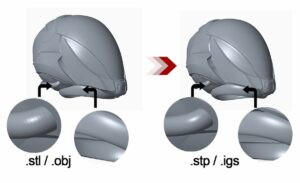
IGES and STEPFILES both are “neutral file formats”. They are compatible with using different 3D packages. The IGES (Initial Graphics Exchange Specification) is the oldest developed in the mid ’70s used to solve compatibility issues between different software packages. Let’s discuss about each of them in brief:

STEP (Standard for the Exchange of Product data) created in the ’80s and uses ISO as an improvement on IGES. It’s most widespread format in IGES and can contain basic 2D or 3D data. It is more versatile and contains additional data using material information and tolerances.

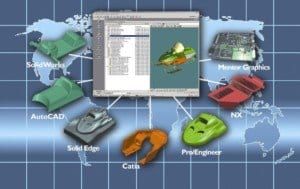
For most design engineers, the scenario looks familiar: Let’s say, Person 1, the lead designer of company X, require to send a CAD model to Person 2, the design engineer for company Y. Person 1 designed the part and Person 2 works in Pro Engineer. Person 1’s file can’t be opened in person 2’s software, therefore, it become simple to transfer a part file and become a problem.

The issue of non-interchangeable proprietary file formats for CAD data have work for decades. The software companies promote the use of modelling packages and ensure that only their package can open a file that created in their software. Unfortunately, all major 3D modelling software company can communicate between them is an issue.

Also, a solution exists in the form of neutral file formats where one canpass between different modelling software packages. One can use a neutral file format to pass CAD mode and then open it and work with it as required. The most common variants of all neutral file formats are the IGES and STEP formats. User recognise these formats by understanding the file name that ends with. iges, .igs, .stp, or .step.

The history of neutral file formats

Talking about mid-seventies, the United States government realised that it had an issue. With using the unique proprietary CAD programs adds different contractors, millions of dollars and countless hours in it. They wasted the tedious process for sharing and converting data between all the systems. One can imagine how many times the scenario has played out on a large project such as an aircraft carrier or missile delivery system using hundreds of suppliers. Moving on with Air Force launched project in conjunction with Boeing.

There are large industry partners that create a neutral file format. The result was IGES (Initial Graphics Exchange Specification).It comes with flexible file format that can code drawing, 3d geometry, and add critical CAD data in a format can be shared between major CAD systems. The US Department of Defence require IGES format that is used for all weapons that has been adopted in other industries as well.

STEP (Standard for the Exchange of Product data) was created in the eighties along with an improvement on the IGES standard by ISO (the International Standards Organization). The goal creates global standard based on awide range of CAD-related data types. It adds complexity that undertake years of development and still continuously upgrade it. It offers largest ISO’s standards.

DIFFERENCE BETWEEN IGES AND STEP

IGES uses widespread standard, that supports all major CAD systems worldwide.

An IGES file contains basic CAD information including 2D and 3D geometry such as surfaces, curves, and wireframes.

  • It comes with presentation elements including drafting elements like lines and annotations.
  • It offers electronic and pipe schematic elements along with finite element modelling.
  • It comes with language and product definition data.

STEP comes with newer standard whereas IGES is not widespread. There are major CAD programs that is well-recognise as STEP and it’s steadily grown as their standard improves.

STEP documents contain the same product definition information as IGES, with the following additions such as Topology, Tolerances, Material properties and various other complex product data.

Practical considerations

In several cases there are solid models or drawings shared with either file format that work fine. It comes with compatibility that is safest to start with IGES. It comes in most common format that is most likely to work by receiving party’s software. However, a designer considers the data to be shared with ease. If the file contains more product definition (for example, geometric dimensioning and tolerancing data, material properties, etc), then STEP would be a better choice.

It is not uncommon for supplier to trouble work with one format. Whereas it requests its alternative by depending on your software. It became familiar in most situations. We are the best ASTCAD company to provide excellent CAD conversions for IGES and STEP file to native file format. Contact Us to get more information.


What is the difference between IGES and STEP files?

u003cstrongu003eIGES (Initial Graphics Exchange Specification) and STEP (Standard for the Exchange of Product model data) are both standard file formats used for exchanging 3D CAD (Computer-Aided Design) data between different CAD systems. Here are the main differences between them:u003c/strongu003eu003cbru003eu003cbru003eu003cstrongu003eFormat and Structure:u003c/strongu003eu003cbru003eIGES: IGES files are based on a neutral file format that represents geometric data (such as points, curves, surfaces) and also includes information about the structure of the CAD model (such as hierarchy and assembly relationships).u003cbru003eSTEP: STEP files are more comprehensive and structured compared to IGES. They can include geometric data, as well as product and manufacturing information (PMI), such as tolerances, annotations, materials, and other properties.u003cbru003eu003cstrongu003eComplexity and Capability:u003c/strongu003eu003cbru003eIGES: IGES is an older format and is less capable of representing complex CAD data compared to STEP. It may have limitations in representing certain types of geometry and features accurately.u003cbru003eSTEP: STEP is a more modern and versatile format that can handle complex CAD data more effectively. It supports a wider range of geometric entities and features, making it suitable for more advanced CAD applications.u003cbru003eu003cstrongu003eIndustry Adoption:u003c/strongu003eu003cbru003eIGES: IGES has been widely used since the 1980s and is still supported by many CAD systems. However, its usage has declined over time as STEP became more prevalent.u003cbru003eSTEP: STEP has become the de facto standard for exchanging CAD data in many industries, including aerospace, automotive, and manufacturing. It is supported by most CAD software vendors and is preferred for its advanced capabilities and comprehensive data exchange.u003cbru003eu003cstrongu003eFile Size and Efficiency:u003c/strongu003eu003cbru003eIGES: IGES files may be smaller in size compared to STEP files because they may not include as much metadata and detailed information.u003cbru003eSTEP: STEP files can be larger in size due to the inclusion of additional information beyond just geometry. However, this additional information can be valuable for downstream processes such as manufacturing and simulation.

What is an IGES file?

An IGES (Initial Graphics Exchange Specification) file is a standard file format used for exchanging 3D CAD (Computer-Aided Design) data between different CAD systems. It was developed in the 1970s and has been widely used since then for interoperability between various CAD software packages.u003cbru003eu003cbru003eIGES files are based on a neutral file format that represents geometric data, such as points, curves, surfaces, and solid models. Additionally, IGES files can also include information about the structure of the CAD model, such as hierarchy, assembly relationships, and basic attributes like colors and layers.u003cbru003eu003cbru003eThe purpose of IGES files is to facilitate the exchange of CAD data between different software systems without losing important geometric or structural information. This makes it easier for users to collaborate and share CAD models across different platforms.u003cbru003eu003cbru003eHowever, it’s important to note that IGES is an older format and may have limitations in representing certain types of geometry and features accurately, especially compared to more modern formats like STEP (Standard for the Exchange of Product model data). Despite this, IGES remains in use, particularly in legacy systems and for simpler CAD models.


JH

James Hartley

Senior Mechanical Engineer · BEng (Mechanical), UQ · Member, Engineers Australia · ASTCAD, Brisbane

James has 14 years of hands-on experience delivering CAD design, structural drafting, and engineering documentation across Australia’s mining, oil & gas, and manufacturing sectors. He specialises in SolidWorks, Autodesk Inventor, and AutoCAD for complex multi-discipline projects.

More articles by James Hartley →
Electrical Design Evolution

how electrical engineers moved from paper sketches to 3d

Electrical Design Evolution – Hi Folks! Its chilling winter here in Australia, so let’s have some warms up from electrical design and drafting news..

Over the past 260 years, the way we light our homes and power our businesses has changed dramatically. We’ve traded candles for light bulbs, abandoned the abacus for super computers, and swapped selenium wafers for energy-efficient solar panels. We now have a generation of products that are connected to the internet to improve the quality of our lives-think smart appliances, fitness monitors, and intelligent trash cans.  These innovations reflect advances in scientific thinking-and advances in the way engineers design increasingly complex electrical design systems.

1752: Lightning in a … Kite?electrical design

Benjamin Franklin was an inventor, writer and statesman, but he was also an engineer who developed electrical systems using hand sketches. His best-known feat? Verifying that lightning is actually electricity.

In June 1752, history says that Benjamin Franklin sent a key attached to a homemade kite into the air. “As soon as any of the thunder clouds come over the kite,” he wrote, “the pointed wire will draw the electric fire from them, and the kite, with all the twine, will be electrified.” While there’s a good chance Franklin made up the tale, his theory was “electrifying.”

1879: A Little Menlo Park Magic

Picking up where Franklin left off, Thomas Alva Edison (aka the Wizard of Menlo Park) held more than 1,000 patents. In 1879, he introduced the electric light bulb. It lasted longer than previous models and employed a carbonized cotton thread filament.

Edison made a host of other contributions to electrical design, including the system of power stations now called General Electric, and schematics continued to be the planning tool of choice.

Although a true technological genius, Edison wasn’t all butterflies and rainbows- he electrocuted puppies, a horse, and an elephant in an attempt to label alternating

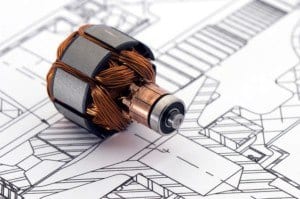
current (AC) power as dangerous. He lost this campaign and Nikola Tesla’s AC induction motor won, mechanizing factory work and powering household solidworks electrical designappliances.

But that (admittedly creepy) anecdote hardly tells the full story of Edison’s life. He went on to improve life for generations of Americans with the phonograph, motion pictures, the storage battery, and more.

1907: Vacuum Tubes

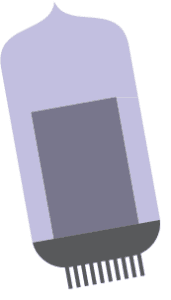
Throughout the 20th century, electrical engineers used schematics to represent increasingly complicated systems for radio, medical devices, and computers. In 1907, Lee De Forest patented the audion, which enabled clearly audible sounds such as a human voice to be relayed and amplified using a three-electrode vacuum tube-the world’s first triode.

1929: Machine Packs Serious Voltage

Wiring diagrams based on physical connections entered the electrical engineering vocabulary in 1929, when Alabama native Robert Jemison Van de Graaff built the first working model of an electrostatic accelerator.

Its purpose: accelerate particles, break apart atomic nuclei, and unlock

the secrets of individual atoms. Van de Graaff’s invention is used widely in science classrooms and paved the way for future electrical research.

1947: Transistor Transition

Schematics advanced yet again when electrical engineers began creating them based on logical connections. A major breakthrough occurred in 1947 when John

Bardeen, Walter Brattain, and William Shockley collaborated to demonstrate the transistor- which amplifies or switches electrical signals-at Bell Laboratories. The semiconductor, which paired two gold contacts and a germanium crystal, represented an upgrade from cumbersome vacuum tubes.

1977: We’ve Gone Digital!

By the late 1970s, functions such as placement and routing became available in automatic physicalElectrical design Drawings

electronic design automation (EDA)- marking the birth of the digital schematic. Bell Labs, along with companies such as IBM and RCA, held advanced tools that operated on mainframes or 8-bit minicomputers. In 1977, super minis provided massive amounts of memory for designs.

Today: Entering a New Dimension

For decades, companies have developed products that feature both mechanical and electrical components. The traditional product development process for an electromechanical product has created long design cycles due to sequential electrical and mechanical design, as well as the discontinuities which occur when different groups use different names for common elements.

There are challenges in keeping the Bill of Materials (BOM) accurate through the use of so many spreadsheets. Often, once the electrical design piece has been completed,

it is then handed off to the mechanical design team. After they complete their part of the design, the entertaining part happens when it comes to figuring out how the electrical pieces fit into the product. A physical prototype is built at this point and

the designers get out a ball of string or a measuring tape to figure out how the wiring will fit. Given all the powerful software design tools we have, it’s ironic that we have fallen back to low-tech ways of integrating the electrical and mechanical pieces of the design. As you might expect, this method is prone to introducing lots of errors

and delays into the production process, product documentation, and BOM.

Things have evolved a bit over the last couple years. Electrical schematics entered the third dimension in 2012, when SOLIDWORKS introduced powerful and affordable 3D electrical CAD software for Windows, merging the logical connections championed by Benjamin Franklin with the modern day need to build 3D physical connections.

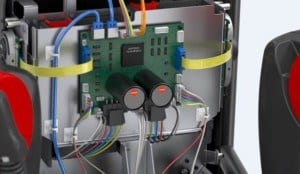
Using SOLIDWORKS® Electrical software, you can easily design electrical schematics and transform the logical schematics into 3D physical models which integrate into the overall design. SOLIDWORKS Electrical 3D™ integrates with SOLIDWORKS 3D CAD modeling software to enable bi-directional and real-time integration of electrical components within the 3D model maintaining design synchronization and an accurate BOM. In this way, the entire engineering team can collaboratively work on a project concurrently, which not only produces a more integrated design; it can also lower project costs, and shorten time to market.

New Dimension in Electrical Design Evolution

Another benefit of the integrated SOLIDWORKS solution for electro-mechanical design is the ability to analyze or simulate the operation of the entire model against real-world conditions, such as thermal stress or physical vibration-all without having to build a physical prototype. This seems like “common-sense” (which even a man like Benjamin Franklin would appreciate if he were alive today).

From light bulbs to intelligent trash cans-and from handwritten notes on paper napkins to 3D modeling-one thing is clear: electrical design has entered the next dimension.

ASTCAD services provides excellent quality Electrical Design and drafting services around Australia in major cities like Brisbane, Sydney, Melbourne, Perth, Gold Coast, Newcastle etc.. Feel free to contact us for any requirements.

What is the concept of electrical design?u003cbru003e

Electrical design is a crucial aspect of engineering that involves planning, creating, and implementing systems that utilize electricity. It encompasses a broad range of activities, including:u003cbru003eu003cstrongu003eSystem Planningu003c/strongu003e: Understanding the requirements of the electrical system, considering factors such as power demand, voltage levels, safety regulations, and environmental conditions.u003cbru003eu003cstrongu003eComponent Selectionu003c/strongu003e: Choosing appropriate components such as wires, cables, switches, transformers, circuit breakers, and other devices based on the system requirements and constraints.u003cbru003eu003cstrongu003eCircuit Designu003c/strongu003e: Creating electrical circuits that fulfill specific functions, ensuring proper connectivity, load balancing, voltage regulation, and protection against faults like short circuits and overloads.u003cbru003eu003cstrongu003eLayout Designu003c/strongu003e: Determining the physical arrangement of electrical components within a building, facility, or system to optimize performance, accessibility, and safety.u003cbru003eu003cstrongu003eSafety Considerationsu003c/strongu003e: Incorporating safety measures to protect against electrical hazards, such as insulation, grounding, overcurrent protection, and emergency shutdown systems.u003cbru003eu003cstrongu003eEnergy Efficiencyu003c/strongu003e: Implementing strategies to minimize energy consumption and maximize the efficiency of electrical systems, including the use of energy-efficient components and control systems.u003cbru003eu003cstrongu003eIntegration with Other Systemsu003c/strongu003e: Coordinating electrical design with other disciplines such as mechanical, structural, and architectural engineering to ensure seamless integration and functionality of all systems within a project.u003cbru003eu003cstrongu003eCompliance with Codes and Standardsu003c/strongu003e: Adhering to local, national, and international electrical codes and standards to ensure that the design meets regulatory requirements and industry best practices.

What are the basic steps in electrical design?

u003cstrongu003eThe electrical design process typically involves several key steps, which may vary depending on the specific project requirements and complexity. Here are the basic steps commonly followed in electrical design:u003c/strongu003eu003cbru003eu003cbru003eu003cstrongu003eRequirement Analysisu003c/strongu003e: Understand the electrical needs and requirements of the project, including power demand, voltage levels, environmental conditions, safety regulations, and any special considerations.u003cbru003eu003cstrongu003eSystem Planningu003c/strongu003e: Develop a conceptual plan for the electrical system, including the distribution of power, layout of electrical components, and overall system architecture. Consider factors such as load distribution, redundancy, and future expansion.u003cbru003eu003cstrongu003eLoad Calculationu003c/strongu003e: Determine the total electrical load for the system by calculating the power requirements of individual components and devices, taking into account factors such as peak demand, diversity, and efficiency.u003cbru003eu003cstrongu003eComponent Selectionu003c/strongu003e: Choose appropriate electrical components and equipment, such as wires, cables, switches, circuit breakers, transformers, and protective devices, based on the project requirements, load calculations, and applicable standards.u003cbru003eu003cstrongu003eCircuit Designu003c/strongu003e: Design electrical circuits that meet the functional requirements of the system, ensuring proper connectivity, voltage regulation, current carrying capacity, and protection against faults such as short circuits and overloads.u003cbru003eu003cstrongu003eLayout Designu003c/strongu003e: Develop a layout plan for the placement of electrical components within the facility or system, considering factors such as space constraints, accessibility, safety requirements, and ease of maintenance.u003cbru003eu003cstrongu003eSafety Planningu003c/strongu003e: Incorporate safety measures into the design to protect against electrical hazards, including insulation, grounding, overcurrent protection, arc flash mitigation, and emergency shutdown systems.u003cbru003eu003cstrongu003eEnergy Efficiencyu003c/strongu003e: Implement strategies to minimize energy consumption and maximize the efficiency of the electrical system, such as selecting energy-efficient components, optimizing equipment sizing, and using advanced control systems.u003cbru003eu003cstrongu003eDocumentationu003c/strongu003e: Create detailed drawings, schematics, and specifications that accurately depict the electrical design, including circuit diagrams, panel layouts, wiring diagrams, and equipment specifications.u003cbru003eu003cstrongu003eTesting and Verificationu003c/strongu003e: Perform testing and verification procedures to ensure that the electrical system operates as intended, including functional testing, continuity testing, insulation resistance testing, and safety inspections.u003cbru003eu003cstrongu003eCommissioningu003c/strongu003e: Install and configure the electrical system according to the design specifications, and conduct commissioning tests to verify proper operation and performance before handing over the system to the client or end-user.u003cbru003eu003cstrongu003eMaintenance and Supportu003c/strongu003e: Provide ongoing maintenance and support for the electrical system, including periodic inspections, troubleshooting, repairs, and upgrades to ensure continued reliability and safety.


JH

James Hartley

Senior Mechanical Engineer · BEng (Mechanical), UQ · Member, Engineers Australia · ASTCAD, Brisbane

James has 14 years of hands-on experience delivering CAD design, structural drafting, and engineering documentation across Australia’s mining, oil & gas, and manufacturing sectors. He specialises in SolidWorks, Autodesk Inventor, and AutoCAD for complex multi-discipline projects.

More articles by James Hartley →
Solidworks

SolidWorks Drafting & Modelling Services

At ASTCAD, we provide expert SolidWorks drafting and SolidWorks modelling services to support engineering, manufacturing, and construction projects across Australia and globally. Our CAD specialists deliver accurate technical drawings, parametric 3D models, and production-ready documentation to help you move from concept to manufacture with confidence.


Professional SolidWorks Drafting Services

Our SolidWorks drafting services focus on creating precise, standards-compliant 2D drawings that meet industry and manufacturing requirements. We work closely with engineers, fabricators, and product designers to ensure every drawing is clear, accurate, and ready for production.

Our SolidWorks drafting services include:

  • Manufacturing and fabrication drawings
  • Assembly and exploded views
  • GD&T and tolerance documentation
  • Sheet metal, structural, and mechanical drafting
  • Conversion of hand sketches, PDFs, or legacy drawings into SolidWorks

We ensure all drawings comply with relevant Australian and international standards, helping reduce errors, rework, and production delays.


Advanced SolidWorks Modelling Services

Our SolidWorks modelling services deliver robust, parametric 3D models tailored to your project requirements. Whether you are developing a new product or improving an existing design, our team provides accurate, scalable, and editable SolidWorks models.

Our SolidWorks modelling capabilities include:

  • Part and assembly modelling
  • Surface and solid modelling
  • Sheet metal and weldment modelling
  • Design for manufacture (DFM) and design for assembly (DFA)
  • Conversion of 2D drawings into 3D SolidWorks models

We use best practices in feature-based modelling to ensure your designs remain flexible for future modifications and design iterations.


Why Choose ASTCAD for SolidWorks Services?

  • Experienced CAD professionals with industry knowledge across mechanical, structural, and manufacturing sectors
  • High accuracy and attention to detail, reducing costly downstream errors
  • Fast turnaround times without compromising quality
  • Flexible engagement models – project-based, hourly, or long-term support
  • Confidential and secure handling of all design data

Our goal is to act as an extension of your engineering team, delivering dependable SolidWorks drafting and SolidWorks modelling services that support your project success.


Industries We Serve

We provide SolidWorks CAD services to a wide range of industries, including:

  • Manufacturing and fabrication
  • Mining and heavy equipment
  • Automotive and transport
  • Construction and infrastructure
  • Renewable energy
  • Consumer products and industrial equipment

No matter your industry, we tailor our SolidWorks solutions to meet your technical and operational needs.


Our SolidWorks Workflow

  1. Project Review – We understand your scope, standards, and deliverables.
  2. Design & Modelling – Our team develops accurate SolidWorks models and drawings.
  3. Client Review – You review and provide feedback.
  4. Final Delivery – We supply production-ready CAD files and documentation.

This structured approach ensures clarity, efficiency, and high-quality outcomes.


Frequently Asked Questions

What is SolidWorks drafting?

SolidWorks drafting involves creating detailed 2D technical drawings from 3D models or design concepts using SolidWorks software, suitable for manufacturing, fabrication, and construction.

What is SolidWorks modelling?

SolidWorks modelling refers to building accurate 3D digital models of parts and assemblies using parametric features, enabling design validation, simulation, and production planning.

Can you work with existing drawings or models?

Yes, we can update, modify, or convert your existing CAD files, PDFs, or hand sketches into high-quality SolidWorks drawings and models.

Do you support Australian standards?

Yes, we prepare drawings in compliance with Australian Standards (AS) and other international standards as required.


Get Expert SolidWorks Drafting & Modelling Support

If you are looking for reliable SolidWorks drafting and SolidWorks modelling services, ASTCAD is ready to support your next project. Whether you need short-term CAD assistance or long-term design support, we deliver accurate, efficient, and professional results.

📞 Contact us today to discuss your SolidWorks CAD requirements.


JH

James Hartley

Senior Mechanical Engineer · BEng (Mechanical), UQ · Member, Engineers Australia · ASTCAD, Brisbane

James has 14 years of hands-on experience delivering CAD design, structural drafting, and engineering documentation across Australia’s mining, oil & gas, and manufacturing sectors. He specialises in SolidWorks, Autodesk Inventor, and AutoCAD for complex multi-discipline projects.

More articles by James Hartley →
Intellectual Property

Several companies in the engineering and manufacturing field use Autodesk inventors in their process, including sensitive and confidential data. Today, there are millions of files coming and going in cyberspace in this modern business world. Companies should protect their Intellectual Property (IP).

Protect Design Intellectual Property

It’s essential when manufacturing a product. As it takes countless hours of engineers’ time, not to mention a company’s reputation if a “knockoff “product adds a lesser classic hit to the market. We have found that as industries work, we see the need to work with Architects or architectural design firms with bringing solid mechanical models.

There are boilers or mezzanines into Revit that represent placement, shape and size. Regardless of the situation, we would like to keep all intellectual property safe. This is why Autodesk worked so hard to prevent this with Autodesk Inventor simplification. It allows the user to create a simple version for the consumer by providing critical design information. We help you learn this crucial tool by using it in a great way.

The full model

Below is the section that creates internal and external items that provide the customer with the model for planning purposes in Autodesk. They require few connection points. One can do it in a few ways, and the first is to create the shell of the original model as its single part. Another one is to create basic shapes to represent the model.

Components included

The first step is to protect your intellectual property from simplifying the tab. It helps to choose the components that include what we do with the Include Components command.

After selection cover

The components come with a mini toolbar. It allows you to choose various options from the dropdown menu. The first drop down comes with an opportunity to view all components. It included internal and external constituents. We find it most helpful to switch between the three viewing options while making my selections. It allows reviewing any missing parts which should not be included. As shown in the screen, it captures below what each option does. The dropdown option mainly refers to choosing part, component, or other parent priority. After choosing your options and selecting what needs to be included, click the checkmark to finish this part of the process.

View-master

Once you finish including components, you’ll notice that you can no longer see any items that aren’t included. If we look at our View-Master, the command automatically creates a view called Simple View 1. Get the right click on this view in the browser with editing the selections.

The third step is to select “Simplified Part”. This launches a new dialogue box and the standard new part creation options. It primarily uses a file that saves location and name. It includes options for what type of part you create and combining style buttons. The options are:

  • A single solid body that seems between faces merged.
  • It helps to maintain the body separately.
  • It primarily uses single solid body with seems between faces maintained
  • It’s used for our purposes and now see the BIM tab opened for further simplification.

Note: It uses simple View 1 along with the current view. It always helps to create a Simple Folder for all simplified parts.

Further simplification and BIM tab

At this point, the model is simplified with a great deal. One can simplify it more using the Simplify section of the BIM Tab. We will include the other half of the BIM Tab in the following paper.

Remove details

The first look removes details commands that recognize fillets and chamfers and custom selected faces. It utilizes a mini toolbar for any options. It looks at the mini toolbar. We provide a few options for items to remove. The All Faces Selectable allows selecting faces. We added Fillet and Chamfer selection box set by default. Our last Option is Auto Select. Use the screen that captures below with understanding how these options work.

Fill voids

The second option here covers simplification with Fill Voids. It uses a prospect that fills holes and spaces with surface patches. This leaves a smooth surface that selects besides the auto Select by select loop, select edge, select face and more.

Check below to view how these tools function.

Define envelopes

The third option simplifies the parts further with the Defined Envelopes option. The option replaces a part or object used in the solid object form of a cylinder or box. Our choices on this toolbar are used for the bounding box and the bounding cylinder for the first button. Join or add new solid in the second button, and our selection methods faces are solid. See below for examples.

If you all need any help regarding the design and drafting services, please don’t hesitate to connect with us. We are the best leading ASTCAD company in Australia. Call us 1800 287 223 (Toll-Free) Australia Wide.

What protects the intellectual property created by design?u003cbru003e

Intellectual property (IP) law protects various aspects of designs, depending on the type of protection sought and the jurisdiction. Here are some common forms of IP protection for designs:u003cbru003eu003cbru003eu003cstrongu003eCopyrightu003c/strongu003e: Copyright protects original works of authorship fixed in a tangible medium of expression. In the context of designs, it can protect artistic or creative elements of a design. However, copyright generally doesn’t protect functional aspects of a design, only the expression of those ideas.u003cbru003eu003cstrongu003eDesign Patentu003c/strongu003e: A design patent protects the ornamental design or visual appearance of an object. Unlike utility patents, which protect functional aspects, design patents protect the way an article looks.u003cbru003eu003cstrongu003eTrademarku003c/strongu003e: Trademarks protect symbols, names, slogans, and other identifiers that distinguish the source of goods or services. While trademarks primarily protect brands, they can also protect certain design elements that serve as identifiers.u003cbru003eu003cstrongu003eTrade Dressu003c/strongu003e: Trade dress refers to the overall appearance and image of a product, including its packaging, design, shape, or color, that signifies the source of the product to consumers. Trade dress protection can be similar to trademark protection.u003cbru003eu003cstrongu003eTrade Secretsu003c/strongu003e: Trade secrets protect confidential information that provides a business with a competitive advantage. This can include certain aspects of a design, manufacturing processes, or other proprietary information.

Which protection is designed to protect intellectual property?

Intellectual property (IP) in design refers to the legal rights and protections granted to the creators or owners of original designs. It encompasses various forms of intangible assets that result from human creativity and innovation in the field of design. Intellectual property rights enable designers to protect their creations from unauthorized use, reproduction, or exploitation by others.u003cbru003eu003cbru003eu003cstrongu003eIn the context of design, intellectual property can include:u003c/strongu003eu003cbru003eu003cstrongu003eVisual Designsu003c/strongu003e: The aesthetic aspects of a design, including its appearance, shape, configuration, ornamentation, and other visual characteristics.u003cbru003eu003cstrongu003eFunctional Designsu003c/strongu003e: The functional aspects of a design, such as its usability, ergonomics, and technical features, which may be protected by patents or utility models.u003cbru003eu003cstrongu003eBranding Elementsu003c/strongu003e: Logos, symbols, and other visual identifiers associated with a brand or product, which may be protected by trademarks or trade dress.u003cbru003eu003cstrongu003eCreative Worksu003c/strongu003e: Artistic or creative works incorporated into a design, such as graphics, illustrations, or artistic elements, which may be protected by copyright.u003cbru003eu003cstrongu003eInnovative Conceptsu003c/strongu003e: Novel concepts, ideas, or innovations in design that offer unique solutions to problems or improve existing products or processes, which may be protected by patents or trade secrets.


JH

James Hartley

Senior Mechanical Engineer · BEng (Mechanical), UQ · Member, Engineers Australia · ASTCAD, Brisbane

James has 14 years of hands-on experience delivering CAD design, structural drafting, and engineering documentation across Australia’s mining, oil & gas, and manufacturing sectors. He specialises in SolidWorks, Autodesk Inventor, and AutoCAD for complex multi-discipline projects.

More articles by James Hartley →
Cad Drafting Software

Best CAD Drafting Software

We at the Australian design and drafting company use excellent computer-aided drafting tools. The CAD Drafting wiped out and replaced almost all traditional hand drafting techniques. They are used in several industries, especially in mechanical engineering and design. They are faster to conduct, and computer-aided drawings are used to modify the vulnerable to physical damage.

It comes with the sheer advantages, where the CAD drafting has become the essential standard for mechanical engineers. It formulates comprehensive strategies that add mechanical components to products and demonstrate a visual illustration.

Users need to know how to construct it as it allows flawless and effective functioning. To cash the ever-rising popularity of the drafting techniques, one needs to use global brands that stepped forward and dished out their sophisticated CAD drafting software. Eventually, it makes it more difficult for customers to make up their minds and choose a program.

Here, we will have a closer look at the three best CAD drafting software around in the market. It covers:

  • AutoCAD
  • MicroStation
  • CATIA 

What makes AutoCAD the best CAD drafting software

AutoCAD has made its way into the market by providing excellent CAD Drawing Software almost three decades back, in 1982. Ever since, it’s been on the top that continuously rules the charts. It offers the best utility for documenting your design ideas and comes with a wide range of features and tools. It adds the whole drafting process becomes more like a walk in the park.

How CATIA made to the list of best CAD drafting software

CATIA – Computer-Aided Three-dimensional Interactive Application adds up in the three best CAD drafting software lists. It is a multi-platform suite that is written in the C++ language. Even though the first stable was released in March 2011. It’s the origin of CATIA that traced back to 1977.

CATIA comes with a leading product development solution for manufacturing organizations across industries. This covers automotive, aerospace, electrical, industrial machinery, electronics, plant design, shipbuilding, etc. A few of its highlighted aspects include:

Real-time drafting adds adequate security that comes with integrity and traceability.

It has an accessible drafting context of using large products or configurations. Later, it supports multi-disciplinary collaboration on diverse systems and various products. Additionally, it comes with cross-platform support.

Three decades of excellence make MicroStation the best tool

MicroStation is a computer-aided design software suite that allows 2D and 3D design and drafting. It is a popular product in multiple industries and has been available since the 1980s. Earlier, most of us were focusing on Apple’s Mac platform. The recent releases of the CAD Drawing tool were exclusively aimed at Windows OS.

The DGN comes in native format, where the MicroStation extends its compatibility into other forms such as DXF, DWG, AVI, BMP, JPEG, PDF, VRML etc. It comes with the best CAD drafting software, where the Micro-station facilitates includes:

  • Extensive format compatibility includes DGN, DXF, PDF, 3DS, IGES, IFC, and CGM.
  • Real-time sharing of live design data
  • The ability to render and viewpoint clouds

If you’re looking for help regarding design and drafting services, then contact us. We are ASTCAD; call us at 1800 287 223 (Toll-Free) Australia Wide.

What is drafting in CAD software?

Drafting in CAD (Computer-Aided Design) software refers to the process of creating technical drawings or plans using specialized software tools. These drawings typically include detailed information about the dimensions, geometry, materials, and other specifications of a product, structure, or component.u003cbru003eu003cbru003eCAD drafting allows designers, engineers, architects, and other professionals to create accurate representations of their designs in a digital format. This digital format can then be easily modified, shared, and used for various purposes such as manufacturing, construction, visualization, and analysis.u003cbru003eu003cbru003eu003cstrongu003eCAD drafting software provides a range of tools for creating and editing drawings, including:u003c/strongu003eu003cbru003eu003cstrongu003eDrawing toolsu003c/strongu003e: These tools allow users to create basic shapes, lines, arcs, and other geometric elements.u003cbru003eu003cstrongu003eDimensioning toolsu003c/strongu003e: Dimensioning tools are used to add precise measurements and annotations to the drawing, indicating the size and location of various features.u003cbru003eu003cstrongu003eEditing toolsu003c/strongu003e: Editing tools enable users to modify and manipulate existing elements of the drawing, such as moving, rotating, scaling, and mirroring objects.u003cbru003eu003cstrongu003eLayer managementu003c/strongu003e: CAD software often allows users to organize drawing elements into layers, making it easier to control visibility and manage complex drawings.u003cbru003eu003cstrongu003eSymbol librariesu003c/strongu003e: CAD software may include libraries of standard symbols, components, and annotations commonly used in technical drawings, such as electrical symbols, architectural symbols, and mechanical parts.

What are the 4 types of CAD?

u003cstrongu003eThe four main types of CAD (Computer-Aided Design) systems are:u003c/strongu003eu003cbru003eu003cbru003eu003cstrongu003e2D CADu003c/strongu003e: Two-dimensional CAD software is primarily used for creating and editing flat, two-dimensional drawings or plans. These drawings represent objects or structures as seen from a top-down view and typically include details such as dimensions, annotations, and geometric shapes. 2D CAD software is commonly used in disciplines such as architecture, engineering, and manufacturing for tasks like drafting floor plans, schematics, and diagrams.u003cbru003eu003cstrongu003e3D CADu003c/strongu003e: Three-dimensional CAD software allows users to create, visualize, and modify three-dimensional models of objects or structures. 3D CAD models represent objects with length, width, and height, providing a more realistic and immersive representation compared to 2D drawings. 3D CAD is widely used in industries such as product design, automotive, aerospace, and entertainment for tasks like product modeling, prototyping, simulation, and rendering.u003cbru003eu003cstrongu003e3D Wireframe Modelingu003c/strongu003e: This type of CAD software represents objects using lines and curves to define their shape in three-dimensional space. While less common than other types of CAD, wireframe modeling can be useful for quickly sketching out basic concepts or for certain specialized applications.u003cbru003eu003cstrongu003eSolid Modelingu003c/strongu003e: Solid modeling CAD software represents objects as solid, three-dimensional entities with volume and mass. Solid models define the geometry of objects using features such as faces, edges, and vertices, allowing for precise control over their shape, size, and properties. Solid modeling is widely used in engineering, manufacturing, and product design for tasks like creating detailed parts, assemblies, and simulations.


JH

James Hartley

Senior Mechanical Engineer · BEng (Mechanical), UQ · Member, Engineers Australia · ASTCAD, Brisbane

James has 14 years of hands-on experience delivering CAD design, structural drafting, and engineering documentation across Australia’s mining, oil & gas, and manufacturing sectors. He specialises in SolidWorks, Autodesk Inventor, and AutoCAD for complex multi-discipline projects.

More articles by James Hartley →
Google Sketchup

If we talk about AutoCAD, then it’s well-suited for 2D and 3D mechanical, architectural design engineering, or civil. Sketchup also works excellent with 3D modelling and basic rendering objects. If you most spend time using designing tools, then Google Sketchup works best for you.

Does Sketchup work similarly to AutoCAD?

Sketchup and AutoCAD can be used in architecture and product design. It is based on precise 2D drawings and adds a great set of tools. Additionally, Sketchup is known for its easy to learn and user-friendly tool. It does manage architectural projects very well. Google Sketchup does offer minimized look and feel at first glance. It seems to lack the horsepower modelling software with ease. However, it’s like an old-school muscle car that’s been supercharged with real power. Though the user interface and capabilities come with Sketchup, it might give AutoCAD a run for its money. Additionally, two large limitations need to be overcome before Sketchup take on the big dogs. 

Let’s understand a few limitations of how Google Sketchup can replace AutoCAD.

Limitation: Compatibility

Sketchup is wrestling with a few debilitating bugs. The textures imported into Maya 6.0 or 6.5 tend to reverse themselves. The mesh system can transfer the Sketchup with recreating on the receiving machine. If you thinking about exporting to someplace and forget about it, this can be listed in the bug. These issues will need to be addressed and remedied before Sketchup gains serious market traction against AutoCAD.

Limitation: Naming Conventions

It comes with more limitations where the forced truncation of file names for Google Sketchup textures poses a problem for users. It commands large, complex, or sophisticated projects requiring specific naming conventions.

The antiquated 8.3 DOS character maximums limit Google Sketchup. Therefore, the file names must be shortened to eight characters or less. It poses a significant problem for high-end designers that juggle hundreds or thousands of textures. It swapped in and out quickly and easily. It is far less intuitive with Sketchup, which would be with AutoCAD with naming conventions.

Advantage: Free Models

Google Sketchup hooks up to 3D Warehouse. It contains a massive assortment of pre-designed models of all shapes and sizes with hundreds of thousands of them. The AutoCAD typically ships about 4,000 pre-designed model templates. The users can easily access few thousand or more AutoCAD user sites. The availability of pre-designed models from Sketchup is jaw-dropping.

When Google correct the compatibility and naming convention problems with Sketchup, AutoCAD has a tough and determined competitor. Until then, serious designers stick with the big dogs. If you require any support regarding design and drafting services, don’t hesitate to contact us at ASTCAD or call us at 1800 287 223 (Toll-Free) Australia Wide.

you spend any time at all using designing tools or rendering and model software, whether professionally or as a hobby in your free time, you’ve no doubt heard of Google Sketchup by now.

A fast, free, easy to learn designing tool that competes with AutoCAD (or does it?), Google Sketchup offers an extremely friendly user interface and a minimized look and feel that might, at first glance, seem to lack the horsepower of more well-known modeling software. However, like an old-school muscle car that’s been supercharged, the real power can only be seen when you pop the hood. But even though the user interface and capabilities of Sketchup might seem to be giving AutoCAD a run for its money, there are two large limitations that will need to be overcome before Sketchup can hope to take on the big dogs.

Limitation: Compatibility

If we talk about AutoCAD, then it’s well-suited for 2D and 3D mechanical, architectural design engineering, or civil. Sketchup also works excellent with 3D modelling and basic rendering objects. If you most spend time using designing tools, then Google Sketchup works best for you.

Does Sketchup work similarly to AutoCAD?

Sketchup and AutoCAD can be used in architecture and product design. It is based on precise 2D drawings and adds a great set of tools. Additionally, Sketchup is known for its easy to learn and user-friendly tool. It does manage architectural projects very well. Google Sketchup does offer minimized look and feel at first glance. It seems to lack the horsepower modelling software with ease. However, it’s like an old-school muscle car that’s been supercharged with real power. Though the user interface and capabilities come with Sketchup, it might give AutoCAD a run for its money. Additionally, two large limitations need to be overcome before Sketchup take on the big dogs. 

Let’s understand a few limitations of how Google Sketchup can replace AutoCAD.

Limitation: Compatibility

Sketchup is wrestling with a few debilitating bugs. The textures imported into Maya 6.0 or 6.5 tend to reverse themselves. The mesh system can transfer the Sketchup with recreating on the receiving machine. If you thinking about exporting to someplace and forget about it, this can be listed in the bug. These issues will need to be addressed and remedied before Sketchup gains serious market traction against AutoCAD.

Limitation: Naming Conventions

It comes with more limitations where the forced truncation of file names for Google Sketchup textures poses a problem for users. It commands large, complex, or sophisticated projects requiring specific naming conventions.

The antiquated 8.3 DOS character maximums limit Google Sketchup. Therefore, the file names must be shortened to eight characters or less. It poses a significant problem for high-end designers that juggle hundreds or thousands of textures. It swapped in and out quickly and easily. It is far less intuitive with Sketchup, which would be with AutoCAD with naming conventions.

Advantage: Free Models

Google Sketchup hooks up to 3D Warehouse. It contains a massive assortment of pre-designed models of all shapes and sizes with hundreds of thousands of them. The AutoCAD typically ships about 4,000 pre-designed model templates. The users can easily access few thousand or more AutoCAD user sites. The availability of pre-designed models from Sketchup is jaw-dropping.

When Google correct the compatibility and naming convention problems with Sketchup, AutoCAD has a tough and determined competitor. Until then, serious designers stick with the big dogs. If you require any support regarding design and drafting services, don’t hesitate to contact us at ASTCAD or call us at 1800 287 223 (Toll-Free) Australia Wide.

Sketchup is still wrestling with a few debilitating bugs. At last check, textures imported into Maya 6.0 or 6.5 had a tendency to reverse themselves. Any mesh system being transferred out of Sketchup will need to be recreated on the receiving machine. And if you’re thinking about exporting to Vasari, forget about it – the list of bugs is too long to list here. These issues will need to be addressed and remedied before Sketchup can hope to gain any kind of serious market traction against AutoCAD.

Limitation: Naming Conventions

Perhaps more than any other limitation, the forced truncation of file names for Google Sketchup textures poses a problem for users commanding large, complex, or sophisticated projects that require specific naming conventions. Google Sketchup is limited by the antiquated 8.3 DOS character maximums, so file names have to be shortened to eight characters or less. This poses a significant problem for high-end designers juggling hundreds or thousands of textures that have to be swapped in and out quickly and easily, since naming conventions will be far less intuitive with Sketchup than they would be with AutoCAD – or just about any other form of computer aided design software.

Advantage: Free Models

Google Sketchup hooks up to 3D Warehouse, which contains a seriously massive assortment or pre-designed models of all shapes and sizes. Hundreds of thousands of them. While AutoCAD typically ships with around 4,000 pre designed model templates – and users can easily access a few thousand more on one of the many AutoCAD user sites out there – the availability of pre-designed models from Sketchup is absolutely jaw dropping.

If and when Google manages to correct the compatibility and naming convention problems with Sketchup, AutoCAD will have a tough and determined competitor. Until then, serious designers are smart to stick with the big dogs.

If you all need any help regarding  design and drafting services, Please don’t hesitate to contact us at ASTCAD or call us 1800 287 223 (Toll Free) Australia Wide.


How do I convert AutoCAD to SketchUp?

Converting AutoCAD files to SketchUp involves a few steps, but it’s generally straightforward. Here’s a basic guide:u003cbru003eu003cbru003eu003cstrongu003eExport from AutoCADu003c/strongu003e:u003cbru003eOpen your AutoCAD file.u003cbru003eUse the u0022Save Asu0022 or u0022Exportu0022 function to save your drawing in a format that SketchUp can read. The recommended format is u0022.DWGu0022 (AutoCAD Drawing), but SketchUp can also import other formats like DXF.u003cbru003eu003cstrongu003eImport into SketchUpu003c/strongu003e:u003cbru003eOpen SketchUp.u003cbru003eGo to u0022Fileu0022 u003e u0022Importu0022.u003cbru003eBrowse to find your exported AutoCAD file (DWG or DXF), select it, and click u0022Openu0022.u003cbru003eu003cstrongu003eAdjust settings (if needed)u003c/strongu003e:u003cbru003eSketchUp will present you with options for importing the file. Depending on the complexity of your drawing and your preferences, you may want to adjust settings such as units and layers.u003cbru003eu003cstrongu003eReview and Clean-upu003c/strongu003e:u003cbru003eAfter importing, review your model in SketchUp. Sometimes, certain elements might not import perfectly or may require clean-up.u003cbru003eYou might need to reapply materials, adjust scaling, or edit components for better compatibility with SketchUp’s modeling environment.u003cbru003eu003cstrongu003eSave your SketchUp fileu003c/strongu003e:u003cbru003eOnce you’re satisfied with your model, save it in SketchUp’s native format (.SKP) for future editing and sharing.u003cbru003eu003cstrongu003eCheck for Compatibilityu003c/strongu003e:u003cbru003eIt’s important to note that not all elements or features from AutoCAD may translate perfectly to SketchUp. Complex 3D objects or specialized CAD features may require additional adjustments or manual modeling in SketchUp.

Can I use SketchUp instead of AutoCAD?

Whether you can use SketchUp instead of AutoCAD depends on your specific needs and the tasks you’re aiming to accomplish. Here are some factors to consider:u003cbru003eu003cbru003eu003cstrongu003eComplexity of Projectsu003c/strongu003e: SketchUp is great for creating 3D models, especially for architectural and interior design purposes. It’s intuitive and user-friendly, making it suitable for beginners. AutoCAD, on the other hand, offers more robust tools for technical drawings and precise drafting, making it preferable for engineering and construction professionals working on complex projects.u003cbru003eu003cstrongu003eCompatibilityu003c/strongu003e: Consider the compatibility of file formats with other software and collaborators. AutoCAD files (DWG format) are widely used in the industry, and SketchUp can import and export DWG files, but there might be some limitations or loss of data during conversion.u003cbru003eu003cstrongu003eLearning Curveu003c/strongu003e: SketchUp is generally easier to learn and use compared to AutoCAD, which has a steeper learning curve due to its extensive feature set and technical capabilities.u003cbru003eu003cstrongu003eCostu003c/strongu003e: SketchUp offers a free version (SketchUp Free) with limited features and a paid version (SketchUp Pro) with more advanced tools. AutoCAD requires a paid subscription, which can be expensive, especially for individual users.u003cbru003eu003cstrongu003eWorkflow Preferencesu003c/strongu003e: Consider your workflow preferences and the specific requirements of your projects. Some users might prefer the flexibility and ease of use offered by SketchUp, while others might require the precision and advanced features of AutoCAD.


JH

James Hartley

Senior Mechanical Engineer · BEng (Mechanical), UQ · Member, Engineers Australia · ASTCAD, Brisbane

James has 14 years of hands-on experience delivering CAD design, structural drafting, and engineering documentation across Australia’s mining, oil & gas, and manufacturing sectors. He specialises in SolidWorks, Autodesk Inventor, and AutoCAD for complex multi-discipline projects.

More articles by James Hartley →
3D CAD Drafting

Choosing Between 2D and 3D CAD Applications

It’s an argument covering 2D vs. 3D CAD applications that rages with developers and designers. It works on both sides, touting the merits and preferences with opposing CAD choices’ flaws. There would be a time when the argument seems academic to operations. Also, the project managers would have minimal exposure to its actual CAD interface. This article provides a clear perspective of the debate.

To begin with, the main difference between 2D and 3D applications should instead be self-explanatory. The 2D works solely on a single plane, while 3D allows the construction to realize three-dimensional surfaces fully. It is essential to note that 3D CAD makes proper usage of all image building techniques available within most 2D CAD applications.

It should allow users to open the third dimension and construct solid objects. It might seem that the signal at the end of the debate from the outset adds, why to argue that 2D CAD is superior in any setting if 3D CAD offers symmetrical capabilities. Therefore, the two other factors to consider when choosing 2D and 3D CAD software are required.

The first thing to note here is the price for how businesses prefer 3D CAD over 2D CAD drafting software. 3D CAD applications can inarguably be more expensive than older 2D software. It can sometimes tune to thousand dollars also. If you want to manage a small business or sole proprietorship, all you need is 2D CAD functionality. It’s a software upgrade with making the wisest choice.

Secondly, 3D CAD applications are far more complex. The users overcome a much steeper learning curve. Since it moves an object from a 2D environment into a 3D environment, it can increase the surface areas adding detail exponentially. Along with this, the control systems in 3D CAD applications are more difficult to master.

If you run a small shop with less than four CAD users, you need to consider the immediate decrease in capability where the shop experiences the software changeover from 2D to 3D. It staggers 3D implementation by adding the best choice. It allows half of the design force with upgrade while keeping others working on 2D applications. It should give an overall output nominal. As soon as your designers have acclimated to a 3D workspace, one can continue upgrading in segments.

In short, there’s no actual argument here. The 3D CAD applications are way superior in any design situation. However, implementation can cost more and would be time-consuming. Managers should be aware of this and plan CAD software upgrades accordingly.

Choosing between 2D and 3D CAD applications depends on your specific needs and the nature of your projects. Both 2D and 3D CAD software have their advantages and are suitable for different purposes. Here’s a breakdown of their characteristics to help you decide:

2D CAD Applications:

  1. Simplicity: 2D CAD software is generally easier to learn and use, making it a good choice for beginners or for simple drafting tasks.
  2. Drafting and Schematics: If your primary focus is on creating technical drawings, schematics, floor plans, or electrical diagrams, 2D CAD is often sufficient.
  3. Faster Production: 2D drawings can be quicker to produce, making them a better choice for projects where speed is crucial.
  4. Less Resource-Intensive: 2D CAD software typically requires fewer system resources, making it suitable for older hardware or less powerful computers.
  5. Cost-Effective: Many 2D CAD applications are more affordable than their 3D counterparts.

3D CAD Applications:

  1. Design Visualization: If you need to create realistic models, visualize designs in 3D, or simulate real-world scenarios, 3D CAD is essential.
  2. Prototyping and Testing: 3D models allow for virtual prototyping and testing before physical production, which can save time and resources.
  3. Complex Geometry: For intricate designs or products with complex shapes, 3D modeling provides greater accuracy and detail.
  4. Interdisciplinary Collaboration: 3D models are more comprehensive and can facilitate better communication and collaboration among various teams, such as design, engineering, and manufacturing.
  5. Animation and Rendering: If you want to create animations or high-quality renderings for presentations or marketing purposes, 3D CAD is necessary.

Considerations for Your Decision:

  1. Project Requirements: Assess the specific needs of your projects. Are you creating simple drawings, or do you need intricate 3D models?
  2. Learning Curve: Consider your skill level and the time you can invest in learning the software. 2D CAD is generally simpler to pick up.
  3. Collaboration: If you’re working with others, determine whether 2D or 3D models are more suitable for effective communication and collaboration.
  4. Future Growth: Consider whether your projects might evolve to require 3D capabilities in the future. Investing in 3D CAD now could save you from switching software later.
  5. Budget: Evaluate the cost of the software, including any ongoing licensing fees or subscriptions.
  6. Hardware: Check the system requirements of the software to ensure your computer can handle it.

If you’re looking for any help regarding design and drafting services, well, we are here. Please don’t hesitate to contact us at ASTCAD or call us at 1800 287 223 (Toll-Free).

What are the advantages of 3D over 2D CAD drafting?

u003cstrongu003eUsing 3D CAD drafting offers several advantages over traditional 2D drafting:u003c/strongu003eu003cbru003eu003cbru003eu003cstrongu003eVisualizationu003c/strongu003e: 3D CAD allows you to create realistic visualizations of your designs, which helps in better understanding and communication of the design intent.u003cbru003eu003cstrongu003eError Detectionu003c/strongu003e: With 3D CAD, you can detect errors and interferences more easily compared to 2D drafting. This helps in reducing design flaws and streamlining the design process.u003cbru003eu003cstrongu003eImproved Design Communicationu003c/strongu003e: 3D models provide a clearer representation of the final product, making it easier to communicate design ideas to stakeholders, clients, and team members.u003cbru003eu003cstrongu003eVirtual Prototypingu003c/strongu003e: 3D CAD enables the creation of virtual prototypes, which can be used for testing and simulation before physical prototypes are built. This helps in identifying and rectifying issues early in the design process, reducing time and cost.u003cbru003eu003cstrongu003eDesign Iterationsu003c/strongu003e: Iterating on designs is faster and more efficient in 3D CAD compared to 2D drafting. Modifications can be made to the 3D model with ease, allowing for rapid prototyping and experimentation.u003cbru003eu003cstrongu003eDocumentationu003c/strongu003e: 3D CAD software often includes tools for automatically generating detailed drawings, bills of materials, and other documentation, which can save time and reduce errors compared to manually creating these documents in 2D.u003cbru003eu003cstrongu003eIntegration with Other Softwareu003c/strongu003e: 3D CAD models can be easily integrated with other software tools such as analysis software, CAM (Computer-Aided Manufacturing) software, and simulation software, allowing for a more comprehensive design and manufacturing process.u003cbru003eu003cstrongu003eCost Savingsu003c/strongu003e: While the initial investment in 3D CAD software and training may be higher compared to 2D drafting, the long-term cost savings can be significant due to reduced errors, faster design iterations, and improved efficiency.

What is the difference between CAD and 3D CAD?

Computer-Aided Design (CAD) is a broad term that refers to the use of computer technology to assist in the creation, modification, analysis, or optimization of a design. CAD software allows engineers, architects, and designers to create precise drawings and models of objects, buildings, or systems in a digital environment.u003cbru003eu003cbru003e3D CAD, on the other hand, specifically focuses on creating three-dimensional models of objects or structures. While traditional CAD software may include 2D drafting capabilities, 3D CAD software primarily revolves around creating and manipulating 3D models. These models can be viewed from any angle, rotated, scaled, and even simulated to assess factors like structural integrity, performance, or aesthetics.u003cbru003eu003cbru003eIn summary, while CAD encompasses a broader range of design tools and techniques, 3D CAD specifically deals with the creation and manipulation of three-dimensional models.u003cbru003eu003cbru003eu003cbru003eu003cbru003eu003cbru003eu003cbru003e


JH

James Hartley

Senior Mechanical Engineer · BEng (Mechanical), UQ · Member, Engineers Australia · ASTCAD, Brisbane

James has 14 years of hands-on experience delivering CAD design, structural drafting, and engineering documentation across Australia’s mining, oil & gas, and manufacturing sectors. He specialises in SolidWorks, Autodesk Inventor, and AutoCAD for complex multi-discipline projects.

More articles by James Hartley →
CAD Design and Drafting

Less than two decades ago, the primary goal of most CAD Design and Drafting organizations was to provide up-to-date CAD workstations and a pleasant working environment for their CAD engineers and designers. Even today, the training of a CAD engineer focuses on equipping the engineer with the ability to define engineering problems and to use CAD tools to solve the problems.

When a new CAD engineer is recruited by a CAD company, some of the most important lessons that the engineer may learn during orientation and training include the following:

  • Design projects should be performed with specific company-approved Suitable CAD workstations, and design tasks should be performed under well-defined company guidelines,
  • Security guidelines should be followed religiously in order to protect company information, and the exchange of design information should occur within well-established protocols,
  • Workstations and the work environment are fenced by a company firewall, and any attempts to work outside the system are considered as a violation of company policy.

The fact is that within the last decade, cyber terrorism has become prevalent and sophisticated. It is not only national governments and national defence systems, financial institutions, or infrastructure systems which are targets for cyber terrorism. CAD Design and Drafting companies also spend money and resources to protect themselves from cyber terrorism.

CAD Design and Drafting

In this article, we try to answer the question: “How CAD Design and Drafting Industry fighting New Cyber Threats?” Because a complete answer to the question is not within the scope of this article, only these topics will be considered:

  • What is a cyber-attack?
  • How could a cyber-attack be waged on a CAD system?
  • What damages could a CAD company suffer from cyber terrorism?
  • How could cyber-attacks on CAD organizations be prevented or minimized?

What is a Cyber-Attack?

A cyber-attack is a malicious action which is designed to disrupt or cripple the computer systems of infrastructures, computer networks, or personal computing devices. The attacker or cyber-terrorist uses sophisticated methods to avoid detection because of the attacker’s intention to establish a foothold in the targeted computer system in order to steal, alter or destroy information in the system.

The methods used by cyber-terrorists include the planting of malicious software (malware) or viruses in the targeted system. When a cyber-attack on a CAD organization succeeds, the criminal or intruder could do the following:

  • Steal software or identities from the CAD organization,
  • Create denial of service to CAD engineers,
  • Steal or destroy intellectual property.

How Could a Cyber-Attack Be Waged on a CAD System?

Because methods of cyber-attacks have become increasingly sophisticated, it is necessary for IT engineers who work for CAD organizations to stay up to date with new cyber-attack methods.

The CAD engineer is too busy performing design tasks to become pre-occupied with cyber- attacks. Nevertheless, the CAD engineer should be keenly aware of avenues or entry points which could be open to the cyber-terrorist. These avenues could become open to the cyber-terrorist by performing these seemingly innocent practices:

  • Opening email attachments which could include malicious malware,
  • Downloading software, multimedia material, or unknown data from the web.
  • Inserting flash drives into USB ports.

Once a cyber-terrorist accesses the intended target, the criminal can quickly accomplish several tasks.

  • Probe for vulnerabilities and additional network access within the organization,
  • Use malware to establish additional breach points, so that the cyber-attack will be difficult to remove completely, even if the original point of attack is removed.
  • Establish network access; gather data such as account names and passwords. If the cyber-terrorist succeeds in cracking passwords, data can easily be collected from the victimized target.
  • Disguise the presence of planted malware on the network, in order to make it easier to return and steal more information, or to cause damage to the network.

What Damages Could a CAD company Suffer From Cyber terrorism?

It is not too difficult to imagine what types of damage a cyber-terrorist can cause to a CAD organization.

The main types of damage which could ruin or severely damage a CAD organization include:

  • Having designs stolen or destroyed. Even designs which are backed up within a cloud system will lose their proprietary status and could be exploited by competing organizations.
  • Suffering a denial-of-service attack which prevents CAD engineers from performing their work,
  • Having the network system brought down

Rather than try to enumerate other types of damage, it will suffice to mention vulnerabilities within CAD systems which have been exploited, or could be exploited by cyber terrorists.

  • The Stuxnet worm virus was used to target and damage Iranian centrifuges used to enrich uranium. The malware was sophisticated enough to make the technicians believe that the centrifuges were operating normally, while they were actually destroying themselves.
  • Malware in Bluetooth-enabled insulin pumps altered the dosage of insulin administered to a patient, with the intention of causing injury or death to the patent.
  • Malware planted within the software of a production machine could create defective parts while deceiving the production personnel into believing that they were producing acceptable parts.
  • The STL file format used for 3D Printing or AM (Additive Manufacturing) can be easily altered by malware so that 3D printers produce defective parts.

How Could Cyber-Attacks on CAD Organizations Be Prevented Or Minimized?

Cybersecurity or the ability to prevent new cyber-attacks or threats is a never-ending battle for IT professionals, because cyber crooks and terrorists are well trained, and they are always looking for new methods to practice their criminal behaviour. According to the viewpoint of a cybersecurity expert at CBIS (Washington DC-based Center for Strategic and International Studies), it may be more profitable for businesses to concentrate on detecting malware and on minimizing the damage they can cause.
CAD organizations could take additional steps to thwart the efforts of cyber terrorists. Some of these steps are:

  • CAD engineers should stay vigilant and should report any changes in the software environment to IT personnel.
  • CAD engineers should not open email attachments which do not come from well-known sources.
  • CAD engineers should not download data from sources outside their organization without the approval of IT personnel.
  • All USB or flash drives should be scanned for malware before they communicate with workstations.
  • CAD organizations should create segmented networks.
  • CAD organizations should promptly identify and quarantine unrecognized data within the network until the data has been cleared for safety.

If you all need any help regarding design and drafting services, please don’t hesitate to contact us at ASTCAD or call us 1800 287 223 (Toll-Free) Australia Wide.

What are the 4 types of CAD?

u003cstrongu003eComputer-Aided Design (CAD) encompasses various types of software used for designing, drafting, and modeling. The four primary types of CAD software are:u003c/strongu003eu003cbru003e2D CAD: These programs are used for creating two-dimensional drawings and designs. They are often employed in fields such as architecture, engineering, and manufacturing for tasks like creating floor plans, schematics, and technical drawings.u003cbru003eu003cbru003e3D CAD: 3D CAD software enables users to create three-dimensional models of objects or structures. This type of software is widely used across industries like automotive, aerospace, product design, and entertainment for visualizing and simulating designs before production.u003cbru003eu003cbru003eParametric CAD: Parametric CAD software allows designers to create models with parameters and constraints, enabling them to easily modify and update designs. Changes made to one part of the model can automatically propagate throughout the design, maintaining consistency and reducing errors. This type of CAD software is particularly useful for complex designs where interdependencies between components are critical.u003cbru003eu003cbru003eSolid Modeling: Solid modeling CAD software represents objects as solid entities with volume and mass. Users can manipulate these solid objects to create complex shapes and assemblies. Solid modeling is commonly used in product design, mechanical engineering, and architecture for creating detailed and realistic 3D models of components and structures.


JH

James Hartley

Senior Mechanical Engineer · BEng (Mechanical), UQ · Member, Engineers Australia · ASTCAD, Brisbane

James has 14 years of hands-on experience delivering CAD design, structural drafting, and engineering documentation across Australia’s mining, oil & gas, and manufacturing sectors. He specialises in SolidWorks, Autodesk Inventor, and AutoCAD for complex multi-discipline projects.

More articles by James Hartley →
Civil Engineering

Any big projects success depends on cost effective CAD solutions. Project Managers are very careful when it comes to spending money and it should be that way since its one of the best important resource of projects. Increasing the profitability and decreasing the overhead cost becomes most important factors for any successful projects. We are going to examine how Civil engineering firm can able to achieve cost effective solution with 3D CAD design and drafting.

When cutting down cost implement successfully, Engineering firm already half on their mark to achieve goals. some of them can get the fact wrong, Cost controlling is not just not doing certain things to save money, but it is doing things more efficiently. Most engineering firms would use 3D CAD for designing and drafting purposes to do things more efficiently, and thus, control the costs. It is easier said than done, so let’s see how it’s done.

Cost Effective CAD Solutions for Civil Engineering

With 3D CAD, things are built virtually from scratch. Prototyping is made easier. Even before the building is built, you can virtually check the strength of the building. But, what has this got to do with costs? There’s a relation, suppose if you just didn’t do calculate the strength of the building properly, and the building collapsed due to some minor natural forces. It can cost you a lot, isn’t it? There are instances where this has happened, we will discuss that in some other article later on.  So, my point is that with 3D CAD, we can simulate environmental factors. And when important elements are factored in, flaws can be eliminated. You are avoiding heavy costs.

In 3D CAD, you can start working on elements individually. You can make changes to an element individually. So, chances of screwing some element when working on another are rare. And revisions are easy. 3D CAD comes along with 3D mouse, this would enable you to govern the tasks better with more precision. With more precision, the design cycles will be shorter. And when design cycles are shorter, you are saving the time, Again! Yes, people are performing the tasks at a great speed with 3D CAD.

This is saving you time, and if you are saving time, you can work on additional projects. You would require fewer people with 3D CAD relatively. There, you are saving bucks again! Someone who says he doesn’t want to save time would be lying.  It’s all about being efficient and saving time. And saving time is cutting down costs. And one who does save the time will be a champion.

Cost Effective CAD Solutions for Civil Engineering

Are you looking for an expert who could probably take care of your CAD drafting and designing concerns in civil engineering? ASTCAD services is in the CAD drafting and drawing industry from last 10 years. So, no worries about the quality of the work ASTCAD has to offer. ASTCAD can help you out in cost control with its 3D CAD services. ASTCAD just does the job like an extended in-house team with a lower turn-around time. And yes, we have advanced tools like Revit, Civil 3D, Tekla, etc.

So, want to save costs and grow your business? We can even offer you a free trial project that will help you understand the quality of the work that we have to offer with CAD.

There are numerous within your means Computer-Aided Design (CAD) options accessible for civil engineering professionals. These tools provide a vary of aspects for designing, analyzing, and documenting civil engineering projects. Here are some alternatives to consider:

AutoCAD LT: This is a lighter and greater low priced model of AutoCAD, which is a broadly used CAD software. AutoCAD LT affords 2D drafting and detailing tools, making it appropriate for developing technical drawings and documentation.

DraftSight: DraftSight is a 2D drafting and 3D plan software program that affords a acquainted person interface for these transitioning from different CAD platforms. It gives vital aspects for creating, editing, and annotating drawings.

LibreCAD: LibreCAD is an open-source 2D CAD utility that is appropriate for small to medium-sized civil engineering projects. It’s simple and gives fundamental drawing and enhancing tools.

BricsCAD: BricsCAD provides a comparatively cheap choice to AutoCAD with complete 2D and 3D drafting capabilities. It’s recognized for its compatibility with AutoCAD archives and presents a vary of specialised modules for civil engineering design.

FreeCAD: FreeCAD is an open-source parametric 3D CAD modeler. While it is extra centered on 3D modeling, it can be used for primary civil engineering duties and is specifically beneficial for designing buildings and components.

NanoCAD: NanoCAD is a free and budget-friendly CAD software program that presents 2D drafting and graph tools. It’s appropriate for growing technical drawings, schematics, and architectural plans.

CMS IntelliCAD: CMS IntelliCAD is an low cost CAD software program with AutoCAD compatibility. It presents 2D and 3D drafting competencies and is regularly used with the aid of civil engineers and architects.

SketchUp Free: While notably regarded for architectural design, SketchUp Free can additionally be used for fundamental civil engineering projects. It’s a 3D modeling device that is handy to research and affords each free and paid versions.

QCAD: QCAD is a 2D CAD software program it is easy and intuitive. It’s mainly beneficial for growing technical drawings, schematics, and plans.

Tinkercad: Tinkercad is a browser-based 3D modeling device that is basic and appropriate for fundamental civil engineering format tasks. It’s free and handy online.

To schedule a personal meeting with our  Representative or contact Sales Team on: 1800 287 223 (1800AUSCAD)

For more information, log on to: www.astcad.com.au or drop an e-mail at: info@astcad.com.au

What are 7 types of civil engineers?

u003cstrongu003eCivil engineering is a broad field with various specializations. Here are seven types of civil engineers:u003c/strongu003eu003cbru003eu003cbru003eu003cstrongu003eStructural Engineers: u003c/strongu003eThey design and analyze structures such as buildings, bridges, dams, and towers to ensure they can withstand environmental loads and remain safe and stable.u003cbru003eu003cstrongu003eGeotechnical Engineers:u003c/strongu003e These engineers study the behavior of earth materials like soil and rocks and their interaction with structures. They assess site conditions for construction projects and design foundations and earthworks.u003cbru003eu003cstrongu003eTransportation Engineers: u003c/strongu003eThey focus on designing and improving transportation systems, including roads, highways, railways, airports, and public transit systems, to ensure efficient and safe movement of people and goods.u003cbru003eu003cstrongu003eEnvironmental Engineers: u003c/strongu003eEnvironmental engineers work to protect the environment and public health. They deal with issues like water and air pollution, waste management, and environmental remediation, designing solutions to minimize negative impacts and promote sustainability.u003cbru003eu003cstrongu003eWater Resources Engineers:u003c/strongu003e These engineers manage water resources such as rivers, lakes, groundwater, and stormwater. They design systems for water supply, flood control, irrigation, and wastewater treatment.u003cbru003eu003cstrongu003eConstruction Engineers:u003c/strongu003e Construction engineers manage construction projects from planning to completion. They coordinate resources, schedules, and budgets to ensure projects are completed safely, on time, and within budget.u003cbru003eu003cstrongu003eCoastal Engineers: u003c/strongu003eCoastal engineers specialize in managing coastal areas and addressing challenges related to erosion, flooding, and coastal infrastructure. They design coastal protection structures, such as seawalls and breakwaters, to mitigate the impacts of coastal hazards.

what is civil engineering?

Civil engineering is a branch of engineering that deals with the design, construction, and maintenance of infrastructure and built environments. It encompasses a wide range of projects, including buildings, bridges, roads, railways, airports, dams, water supply systems, wastewater treatment plants, and more.u003cbru003eu003cbru003eCivil engineers are responsible for ensuring that these structures and systems are safe, sustainable, and efficient. They work on projects from the planning and design stages through construction and maintenance, considering factors such as materials, environmental impact, economic feasibility, and regulatory requirements.u003cbru003eu003cbru003eKey areas within civil engineering include structural engineering, geotechnical engineering, transportation engineering, environmental engineering, water resources engineering, construction engineering, and coastal engineering, among others. Civil engineers play a crucial role in shaping the physical infrastructure of societies and improving the quality of life for communities around the world.


JH

James Hartley

Senior Mechanical Engineer · BEng (Mechanical), UQ · Member, Engineers Australia · ASTCAD, Brisbane

James has 14 years of hands-on experience delivering CAD design, structural drafting, and engineering documentation across Australia’s mining, oil & gas, and manufacturing sectors. He specialises in SolidWorks, Autodesk Inventor, and AutoCAD for complex multi-discipline projects.

More articles by James Hartley →
Get a free quote — 1800 287 223