
Reverse engineering for caravan parts.
Case study: reverse engineering and virtual prototype development for caravan parts and accessories — ASTCAD scanned physical parts and built parametric SolidWorks models for an Australian caravan manufacturer.

Reverse engineering and virtual prototyping for caravan parts and accessories
Engineering Design & Drafting | CAE Services: CFD & FEA | Reverse Engineering | Rapid Prototyping | Product Design | Value Engineering | PLM Services | Technical Documentation
Case Study Highlights
Reverse engineering and virtual prototyping
The Client:
- Industry : Premium Supplier of Caravan Parts and Accessories
- Location : Australia
The Objective:
- Reverse Engineering and CAD modelling for Caravan parts and accessories.
The Solution:
- Reverse engineering was performed to record digital information of Caravan doors and windows along with detailed fabrication drawings and BOM metadata sheet. More than 500 different sizes and variants of doors and windows were modelled using SolidWorks.
The Challenges:
- Recording complex geometries of the Caravan parts that were unable to be measured through manual measurements
- Maintaining quality and accuracy in modelling to minimise end client responsibilities
- Delivering final models within short duration
The client is a premium supplier of Caravan, RV parts, and accessories with offices all across Australia. Having worked for premium quality brands, the manufacturer is a major sponsor and supporter of the national and state associations of the Caravan Industry of Australia, and is a member of the RVMAA and BIA in Australia and the RVIA in the USA. The manufacturer approached ASTCAD looking for the right partner for reverse engineering of Caravan parts.
The Solution: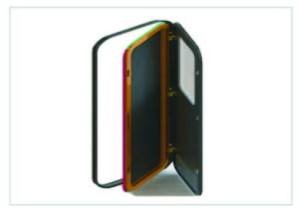
- After careful study of the information; it was decided to use SolidWorks 2012, 2013 for effective reverse engineering services for windows and doors of automobile. Our engineers prepared models, detailed manufacturing drawings, BOM, Metadata sheet, and inventory list for windows and delivered different types of 3D models for the same. ASTCAD’s engineering team generated more than 500 different sizes and variants of doors and windows within the specified deadline.
Benefits: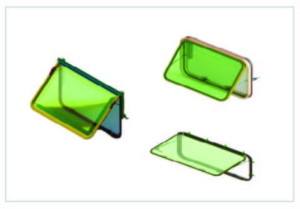
- Created digital record of the door and windows of Caravan for future use
- Safe, secure and flexible data allowed manufacturer to implement design changes easily
- Reduced the cost of maintaining inventory
About Australian Design And Drafting Services
ASTCAD Services is a specialist firm providing engineering solutions to organisations across Australia. We have extensive experience in providing concept to manufacturing and post-manufacturing solutions to clients with a team of expert design engineers, CAD professionals and simulation analysts. We are based in Australia, serving with responsive turnaround, with a world-class infrastructure, hardware and software capabilities to address complex engineering problems with least turn around time.
How virtual prototype development works
Virtual prototype development front-loads the learning that physical prototypes deliver late: full CAD assembly modelling with real tolerances, motion studies for mechanisms, interference checking across the full range of motion, and FEA where loads matter. Design problems surface as model conflicts costing hours instead of prototype failures costing weeks. The physical prototype still gets built — but it is the second iteration, not the fifth, because the first three happened in the model.
Product developers and equipment manufacturers use our virtual prototype development to compress development cycles and to de-risk tooling decisions. If your current process discovers problems in physical prototypes, the model-first workflow typically pays for itself in the first avoided rebuild.
The economics are straightforward: a virtual iteration costs hours of engineering time; a physical prototype iteration costs weeks and workshop money. Programs that shift three iterations from physical to virtual typically fund the entire modelling engagement from the first avoided rebuild — and ship earlier besides.