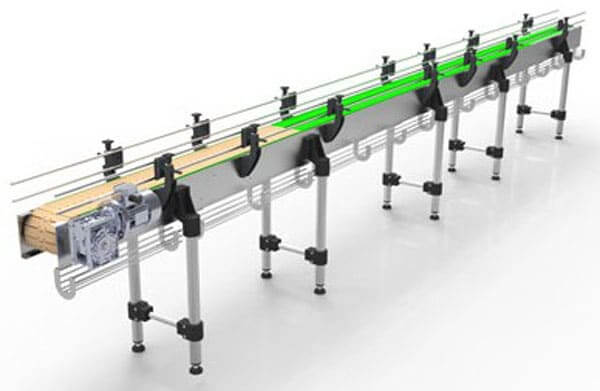
Overland conveyor system design and structural detailing.
Case study: ASTCAD delivered the full mechanical design, structural detailing and shop drawings for an overland conveyor system serving a Western Australian iron ore operation — including idler frames, drive heads, take-up stations and gallery structures.
Project overview
ASTCAD provided complete mechanical and structural engineering documentation for a 4.2 km overland conveyor system commissioned by a Western Australian iron ore producer. The project covered idler frames, drive heads, take-up stations, transfer towers and elevated gallery support structures, all designed to operate in cyclonic-region wind loading and high-dust conditions.
The challenge
The conveyor route crossed three watercourses, ran through cyclonic-region terrain rated to Region D, and required maintenance access under live-belt conditions. The client needed a single contractor to deliver structural, mechanical and idler design as one coordinated package, with all documentation aligned to AS 4324 and AS 4100.
Our approach
- Idler frame design with 5° trough angle and rotating impact stations at transfer points
- Drive head and tail pulley mechanical layouts to ISO 5048 for power calculation
- Gallery support structures with 24 m spans and Region D wind loading per AS/NZS 1170.2
- Transfer chute design with replaceable wear liners and chute lift access
- Take-up station mechanical and structural design with safety cages and lockouts
Deliverables
- 1,240 fabrication shop drawings — galleries, idler frames, transfer towers
- Drive head and pulley assembly drawings with bearing schedules
- Tekla Structures model of all elevated steelwork and supports
- Concrete footing details and anchor bolt setting plans
- AS 4324 compliance documentation and load schedules
Outcome
The overland conveyor was fabricated and installed within the client’s 11-month delivery window. ASTCAD’s coordinated mechanical-and-structural model eliminated rework typical of two-supplier engineering, and the Tekla model fed directly into the fabricator’s CNC profiling machines. The system has been operating to design throughput since commissioning.
How we approach overland conveyor system design
Overland conveyor system design is dominated by the route: terrain drives the tension profile, and the tension profile drives everything else. We model the conveyor from the mine plan’s survey data, run the tension and power calculations across the full route for the design tonnage, and select belt class, drive configuration and take-up arrangement from the results. Horizontal and vertical curves are designed within the belt manufacturer’s limits, transfer stations are engineered for material flow rather than guesswork, and structural design of gantries, trestles and modules follows AS 4100 with fabrication economy in mind.
Conveyor engineering deliverables
Documentation typically includes route plans and profiles, tension and power calculation reports, mechanical general arrangements for drives, pulleys and take-ups, structural fabrication drawings for the supporting steelwork, and transfer chute geometry. We coordinate the electrical and control interfaces so the drives, brakes and safety systems the electrical team designs match the mechanical intent, and we support fabrication and site queries through construction.
For miners and materials-handling contractors, we can scope conveyor design work as a complete system package or as overflow engineering support to your in-house team — route studies, upgrades to existing conveyors, or full new-line documentation.
Existing conveyor upgrades are a growing part of this work: mines extending pit life often need more tonnes through a conveyor designed for less, and the question is whether belt, drives or structure limit first. We assess upgrade headroom from the original design data and current condition, and document the cheapest sequence of interventions — often a belt class change and drive upgrade buys years before structural work is needed. An engineering answer to that question costs a fraction of the conservative default of building new.
This project was delivered as part of our Structural Design and Drafting Services Australia | ASTCAD. Talk to us about a similar scope.