
PLC control panel design food processing plant.
Case study: electrical and PLC control panel design for a Sydney-based food processing line — including I/O schedules, schematic drawings, ladder diagrams and panel-builder shop drawings to AS/NZS 3000, AS 61439 and HACCP food-grade requirements.
Project overview
ASTCAD designed the electrical and PLC control panels for a new food processing line at a Sydney facility. The system controls weighing, pasteurising, filling and packaging stations with Allen-Bradley PLCs over EtherNet/IP, integrated into the plant’s existing SCADA.
The challenge
Food-grade hygiene requirements drove panel material specification (304 stainless steel, IP66) and remote-mounted operator interfaces. The integration into existing SCADA required mapping over 800 I/O points without disruption to adjacent operating lines.
Our approach
- I/O schedule development with PLC tag mapping
- Panel design in food-grade stainless steel, IP66
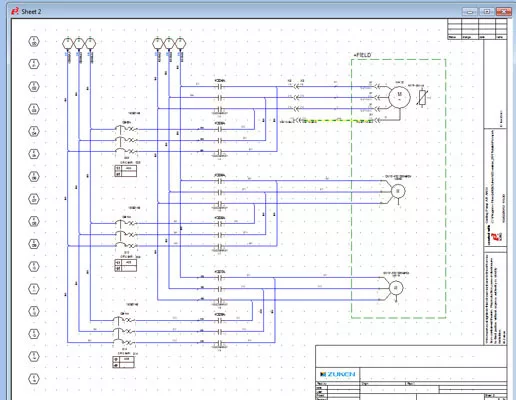
- Schematic and ladder logic drawings
- EtherNet/IP network design and topology drawings
- HACCP-compliant cable management and wash-down provisions
Deliverables
- Electrical schematics (62 drawings)
- PLC I/O list (838 points)
- Panel-builder shop drawings
- Network topology and IP address schedule
- Site installation drawings and cable schedule
Outcome
The line was commissioned with no electrical defects on punch list. The PLC integration into existing SCADA was completed during a single overnight shutdown window. The line has been operating without unplanned electrical downtime since commissioning.
How we approach PLC control panel design projects
Every PLC control panel design we deliver starts with the process, not the panel. We map the I/O schedule against the client’s functional description, confirm segregation requirements between control and power circuits, and design the layout to AS/NZS 61439 and AS/NZS 3000. Thermal management is calculated rather than assumed — heat dissipation from drives, PSUs and PLC racks is modelled so enclosure sizing and ventilation are right the first time. Schematics are produced in AutoCAD Electrical with a structured cross-reference system, so every relay, terminal and cable core is traceable from the drawing set to the physical panel. For food processing environments we also design for washdown ratings, hygienic gland plates and stainless enclosures where the zone demands it.
Typical deliverables for control panel projects
A complete package usually includes general arrangement drawings of the enclosure and door layout, multi-page power and control schematics, terminal and cable schedules, a bill of materials with approved-equivalent options, label schedules, and as-built revisions after commissioning feedback. We supply native DWG plus PDF sets, and can align drawing numbering to the client’s existing plant documentation system so maintenance teams find what they need years later. Where the panel feeds safety functions, we document the safety circuits separately to make validation and periodic inspection straightforward.
Key design considerations for PLC panels
Three decisions dominate panel reliability in service. First, spare capacity: we allow spare I/O, DIN rail space and terminal ways as a deliberate percentage, because every plant changes and a full panel forces an expensive second enclosure. Second, segregation: keeping 24 V DC control, 240 V control and motor power physically separated reduces noise problems that are miserable to diagnose after commissioning. Third, documentation discipline: field changes happen during commissioning on every project, so we build an as-built markup process into the handover rather than leaving the drawings to drift from reality. Panels designed this way stay maintainable for the decade or more they will actually be in service, and electricians who have never seen the plant can navigate them from the drawing set alone.
This project was delivered as part of our Electrical Drafting Services Australia | AutoCAD Electrical | ASTCAD. Talk to us about a similar scope.